



Lacquered Table Light
Lacquered table light designs bring rich surface finishes and painted scenes to domestic interiors, combining functional illumination with decorative depth.
Lacquered Table Light
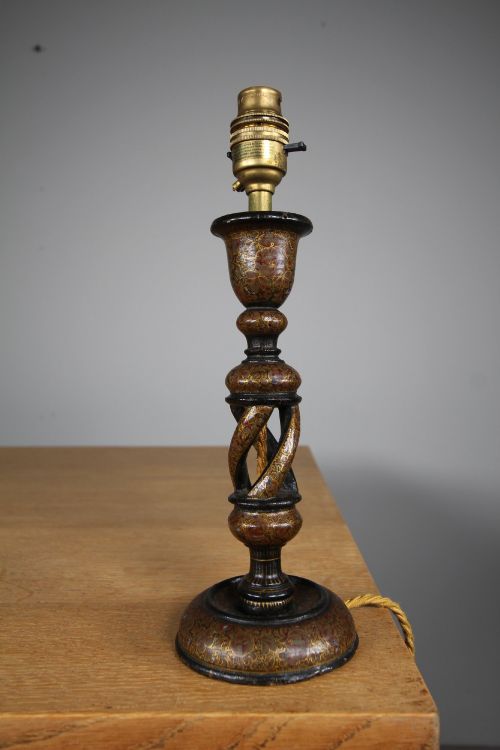
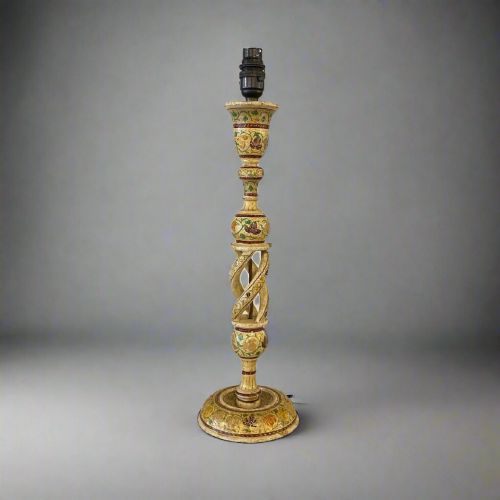
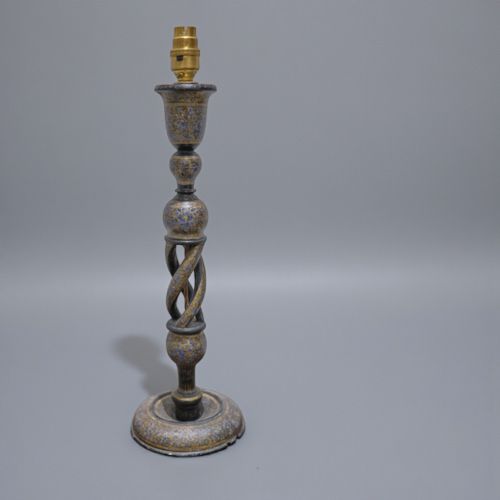
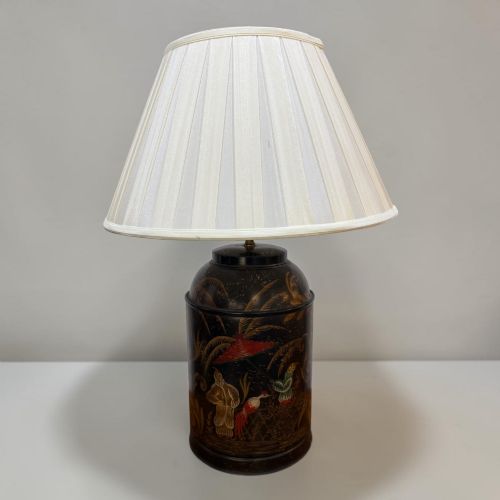
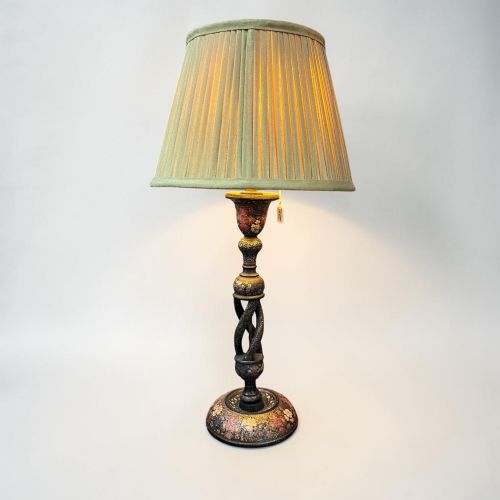
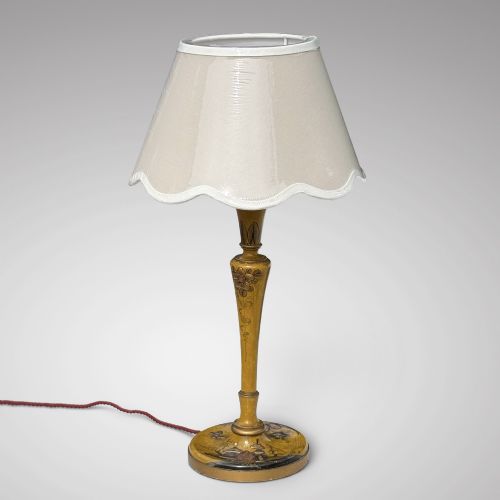
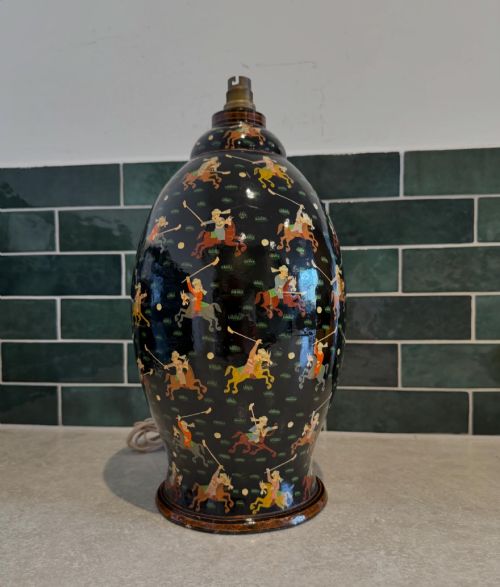
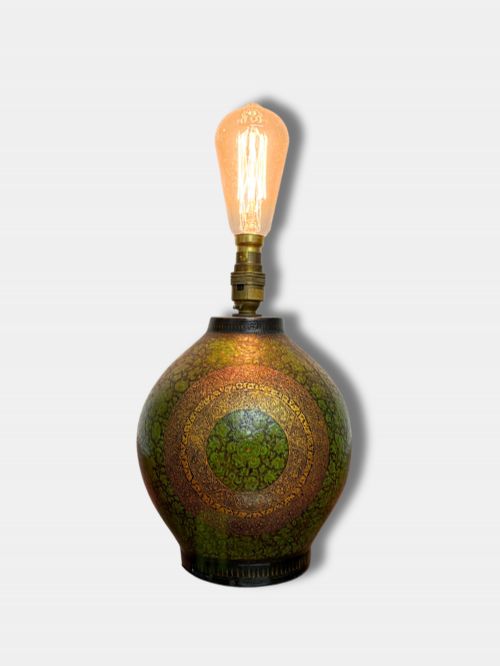
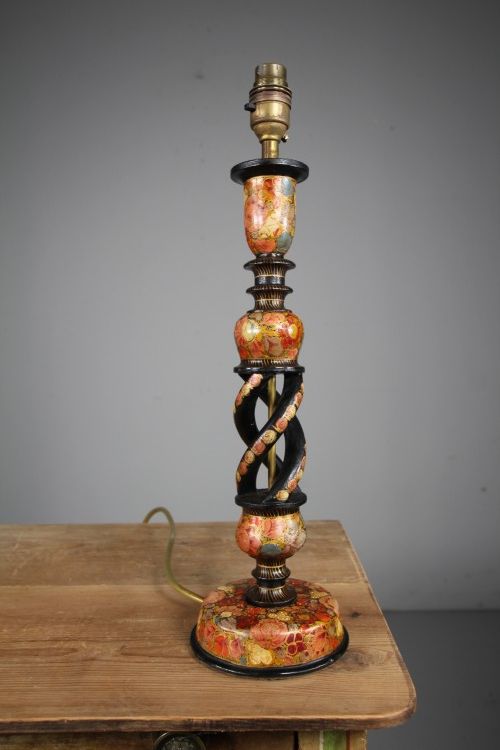
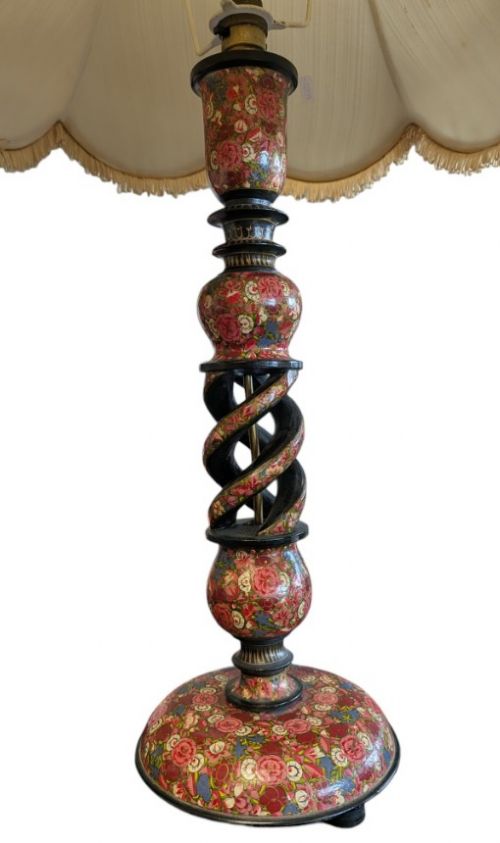
A lacquered table light serves to illuminate a room while introducing a decorated surface to a desk, side table or sideboard. These pieces range from upright candlesticks to converted tea canisters and dedicated lamp bases.
The selections span various periods including the Victorian era, Edwardian period, and the 1920s and 1930s. Styles lean heavily towards Chinoiserie, Kashmiri folk art, and French Empire influences.
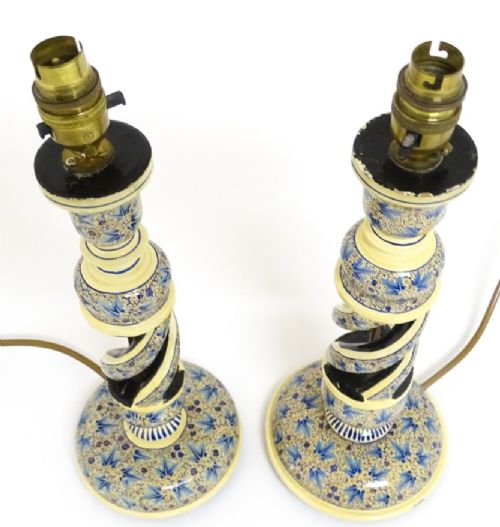
Most examples found here utilise hand-painted decoration on lacquered wood, metal, papier-mache, or toleware. Buyers will encounter both solitary statement lamps and matching pairs designed for balanced placement.
How they were made
Construction relies upon rigid substrates such as wood, brass, papier-mache, and metal formed into candlesticks or lamp bodies. These surfaces receive coats of lacquer to build a smooth base before any ornamentation is applied.
Decoration is achieved through hand-painting and gilding, frequently displaying gilt gold motifs against backgrounds of black, ochre, mandarin orange, red, or green. Certain nineteenth-century pieces incorporate boulle-work details in brass and tortoiseshell.
Many older lamps have been modernised with updated electrical wiring and lamp holders to suit contemporary domestic use while retaining their original decorative exteriors.
Lacquered Table Light Retail Price Guide 2026
Typical asking prices for lacquered table light among the pieces listed under this phrase on Sellingantiques today, from the lower quarter to the upper quarter. They describe what is for sale here now, not the wider market.
Tea canisters were sometimes retired from the tea caddy and given a second life as a lit companion on the desk.
What varies in quality
Quality rests in the precision of the hand-painted detailing and the depth of the lacquer finish. Pieces with intricate gilt work and carefully rendered Chinoiserie or Kashmiri scenes demonstrate superior craftsmanship.
The choice of base material influences the physical substance of the lamp, with solid brass, substantial turned wood, and papier-mache forming distinct categories of manufacture. The integrity of the lacquered surface and the preservation of the underlying pigments dictate the visual strength of each piece.
The Lacquered Table Light Glossary
- Chinoiserie
- European decorative style reflecting Chinese artistic influences, frequently seen in painted lacquer scenes on furniture and lighting.
- Papier-mache
- Composite material made from paper pulp or layers of paper bound with glue, moulded and lacquered to form durable decorative objects.
- Toleware
- Painted or enamelled metalware, often finished in black or coloured lacquer with gilt highlights.
- Bouillotte lamp
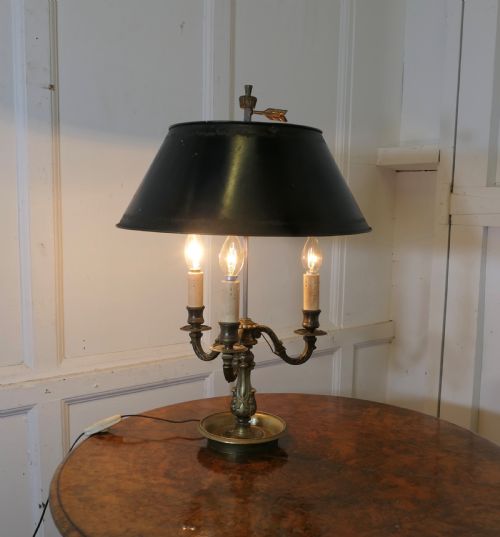
- French desk lamp featuring a central standard, an adjustable metal shade, and multiple candle arms or lamp holders.
- Gilt
- Application of gold leaf or gold paint to a surface to produce a metallic decorative finish.
Lacquered Table Light: Frequently Asked Questions
What periods do these lamps come from?
The pieces span the Victorian era, the Edwardian period, and the early decades of the twentieth century, particularly the 1920s and 1930s.
Craftsmen during these times utilised traditional lacquer and painting techniques, drawing on Kashmiri and Chinoiserie aesthetic traditions.
Are these lamps safe to use today?
Many older lamps have been rewired to meet modern electrical standards, allowing them to be plugged into standard household sockets safely.
Buyers should inspect the specific listing details to confirm if a lamp has been updated with new wiring and lamp holders.
How do I style a lacquered table light?
These lamps function effectively on sideboards, desks, and bedside tables where their decorative painted surfaces can catch the light.
Pairs work well for symmetrical placement on mantelpieces or large consoles, while single tall lamps provide a focal point in a corner.
What materials are used in their construction?
The bodies are built from wood, lacquered wood, brass, metal, papier-mache, and toleware, often paired with fabric shades.
Surfaces are finished with lacquer and embellished with hand-painted details and gilt gold highlights.