



Lacquered Cocktail Cabinet
These lacquered cocktail cabinet pieces are striking drinks furniture designed for entertaining, combining rich surface decoration with practical storage.
Lacquered Cocktail Cabinet
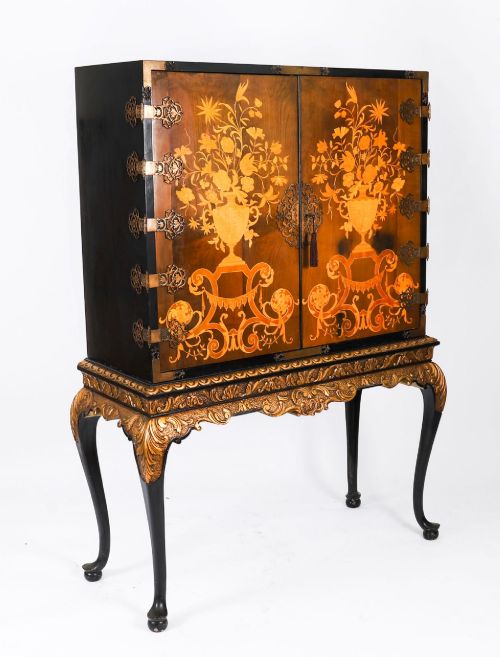
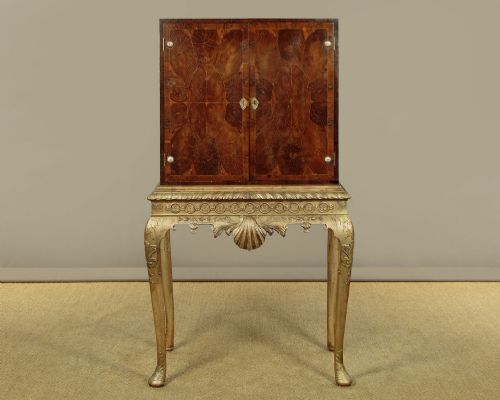
When you search for a lacquered cocktail cabinet, you enter a world of decorative drinks furniture that spans from the early twentieth century back to the nineteenth century. These pieces appear in forms such as cabinets on stands, side cabinets, and dedicated cocktail bars designed to house bottles and glassware.
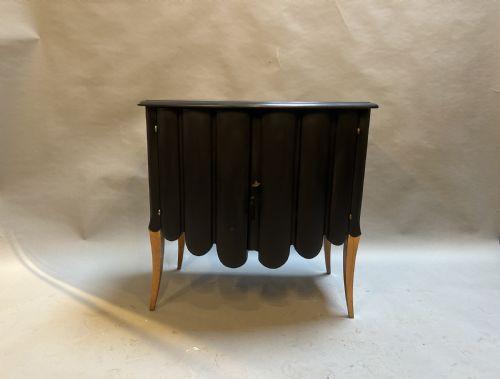
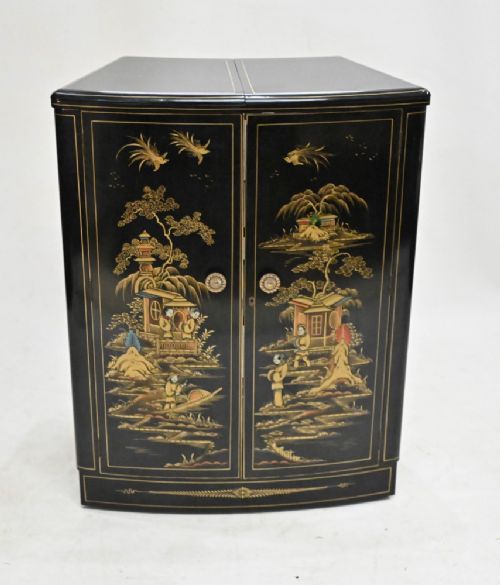
The most common examples on this page date from the Art Deco period of the 1920s and 1930s, alongside earlier nineteenth-century and nineteen-hundreds interpretations. They frequently adopt Chinoiserie aesthetics, featuring oriental motifs applied to timber carcasses.
Objects range from compact cabinets on silver gilt stands to large blonde maple and black lacquer cocktail bars. Makers such as H&L Epstein and retailers like Harrods contributed to this lineage, producing distinctive items that remain central to period interior schemes.
How they were made
Makers constructed these cabinets using wood substrates, incorporating materials like walnut, blonde maple, and brass hardware. Soapstone inlay also appears on selected surfaces to create textural contrast.
The defining characteristic is the application of lacquer, seen in black, red, green, blue, and gold finishes. Artisans built up these decorative surfaces using traditional Chinoiserie and Japanese Meiji techniques, often pairing the main body with carved or giltwood stands.
Lacquered Cocktail Cabinet Retail Price Guide 2026
Typical asking prices for lacquered cocktail cabinet among the pieces listed under this phrase on Sellingantiques today, from the lower quarter to the upper quarter. They describe what is for sale here now, not the wider market.
Some cabinets hide entire drinking dens behind unassuming doors, proving that polite oriental landscapes make excellent accomplices for secret gins.
What varies in quality
The distinction between tiers of quality rests on the execution of the surface finish and the integrity of the underlying woodwork. Superior examples exhibit deep, lustrous layers of lacquer with intricate hand-painted or gilt detailing that remains crisp across the panels.
Structural complexity also dictates worth, separating simple side cabinets from elaborate cabinets on carved stands with fitted glass tops and original hardware. The reputation of the workshop, such as H&L Epstein or retailers like Harrods, further elevates certain pieces.
H and L Epstein·Harrods
The Lacquered Cocktail Cabinet Glossary
- Chinoiserie
- European decorative style reflecting Chinese artistic influences. It frequently employs gold and coloured lacquer depicting figures, pagodas, and landscapes.
- Cabinet on stand
- A freestanding storage compartment elevated on a separate support structure. These stands range from carved wooden frames to silver gilt legs.
- Art Deco
- Design movement prominent in the 1920s and 1930s emphasising sleek lines and modern materials. It merged traditional lacquerwork with contemporary forms.
- Meiji Period
- Japanese historical era spanning from 1868 to 1912 known for refined metalwork and lacquer production. Pieces from this time display exceptional decorative precision.
Lacquered Cocktail Cabinet: Frequently Asked Questions
What is a lacquered cocktail cabinet?
It is a specialised piece of furniture designed to store and serve drinks, featuring a decorative lacquer finish often executed in the Chinoiserie style.
These cabinets typically open to reveal fitted interiors for glassware and bottles, resting either on a dedicated base or a separate stand.
When were these cabinets made?
The examples on this page largely date from the early twentieth century, specifically the 1920s and 1930s Art Deco era.
Earlier pieces extend back into the nineteenth century and the 1900s, drawing on traditional styles like Queen Anne Revival and Japanese Meiji aesthetics.
How do I use a cocktail cabinet at home?
They serve their original purpose as a functional drinks station and a striking focal point in a living room or dining area.
The enclosed shelving and compartments keep glassware and bottles organised while concealing them behind decorative doors when not in use.
How do I identify an Art Deco cocktail cabinet?
Art Deco versions often feature geometric forms combined with contrasting materials like blonde maple and black lacquer.
They frequently date from the 1920s or 1930s and may include original glass tops or specialised hardware associated with makers like H&L Epstein.