



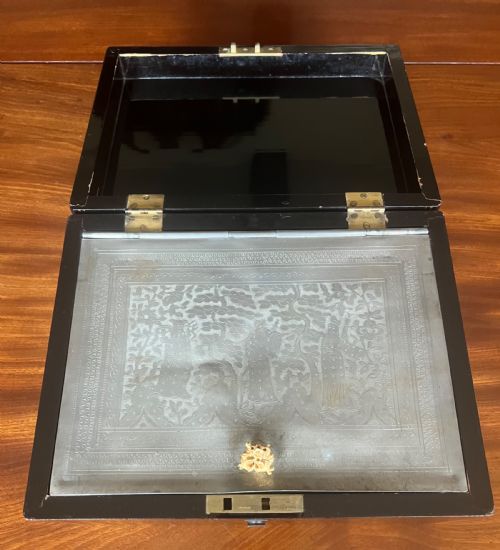


Lacquer Tea Caddy
A lacquer tea caddy is a refined container designed to preserve precious leaves, bringing decorative chinoiserie and japanning into period interiors.
Lacquer Tea Caddy
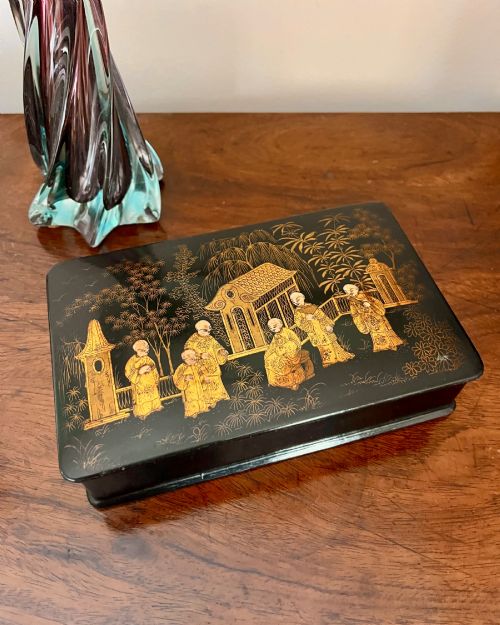
When you search for a lacquer tea caddy, you are looking at small, portable storage chests designed during the Georgian, Regency, and Victorian eras to safeguard expensive tea leaves from dampness and loss of flavour. These boxes range from early nineteenth century Chinese export pieces to English interpretations featuring intricate Chinoiserie motifs and penwork decoration.
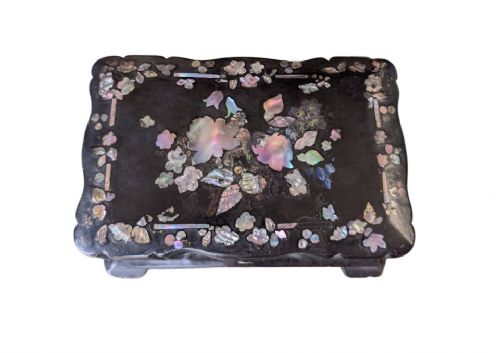
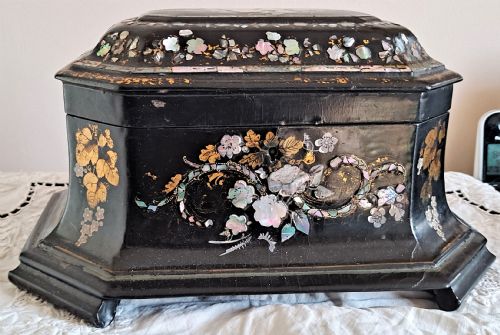
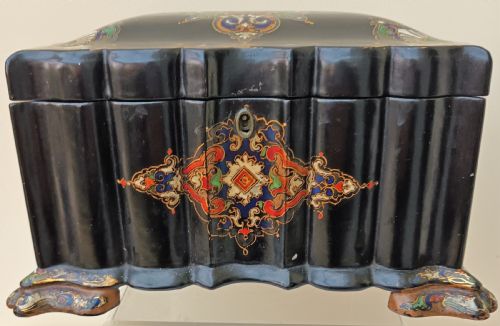
The versions you are most likely to meet on this page belong to the Regency period and the nineteenth century, often taking the form of pagoda style tea canisters, papier-mâché boxes with mother of pearl inlay, or yellow lacquer and painted decorative boxes. Makers shaped these vessels as single or double compartment boxes, and occasionally adapted larger tea canisters into table lamps.
Georgian Chinoiserie and Regency penwork examples demonstrate the period taste for exotic scenery, gilt decoration, and fine surface painting. Whether formed from wood or papier-mâché, each surviving piece reflects how domestic spaces stored dry goods with considerable style.
How they were made
The construction of these pieces relies on wood, papier-mâché, and metal, built up with successive layers of lacquer or paint to create a smooth, hard-wearing surface. Artisans applied gold leaf and detailed paintwork by hand, depicting oriental landscapes, figures, and architectural pagodas in the Chinoiserie and Chinese export traditions.
Penwork technique appears frequently across Regency examples, using fine inked line work on a prepared ground to render delicate ornamentation without relying entirely on raised carving. Hardware components such as brass fittings and bone details complete the construction of the interior compartments.
Lacquer Tea Caddy Retail Price Guide 2026
Typical asking prices for lacquer tea caddy among the pieces listed under this phrase on Sellingantiques today, from the lower quarter to the upper quarter. They describe what is for sale here now, not the wider market.
Object forms include standard tea caddies alongside decorative boxes, tea canisters, and converted table lamps.
What varies in quality
Quality in these pieces rests upon the crispness of the surface decoration and the preservation of the original lacquer, gold leaf, and penwork details. Pieces that retain their depth of colour and sharpness of hand-painted chinoiserie figures stand apart from examples where the surface has suffered extensive rubbing or loss.
The complexity of the interior layout and the survival of original brass mounts or fitted compartments also distinguish finer examples. Regency penwork and detailed papier-mâché with mother of pearl inlay represent higher tiers of craftsmanship compared to plain utility boxes.
The Lacquer Tea Caddy Glossary
- Chinoiserie
- European decorative style reflecting Chinese artistic influences, popular in Georgian and Regency design. It appears on lacquer tea caddies through motifs of pagodas, figures, and gardens.
- Penwork
- Decorative technique using pen and ink on a prepared wooden surface to simulate fine engraving. Regency makers used this method to create intricate geometric and pictorial borders.
- Papier-mâché
- Composite material made from paper pulp mixed with glue and resin, pressed and dried into a rigid form. Victorian makers favoured this for smooth tea caddy bodies suited to inlay and lacquer.
- Tea Canister
- Vessel designed for storing dry tea leaves inside a larger caddy or as a standalone container. Several examples take pagoda styles in maroon finishes.
Lacquer Tea Caddy: Frequently Asked Questions
What is a lacquer tea caddy?
A lacquer tea caddy is a decorative storage box made to keep dry tea leaves fresh in period households. They feature painted or japanned surfaces, often with Chinoiserie designs.
These containers date predominantly from the Georgian, Regency, and Victorian eras. They range from Chinese export pieces to English penwork and papier-mâché boxes.
How were tea caddies used?
Tea was an expensive commodity in the eighteenth and nineteenth centuries, kept under lock and key by the head of the household. Servants brought the caddy to the parlour when tea was served.
The interior compartments held different varieties of tea leaves, allowing hosts to mix blends at the table. Lids and inner covers preserved the aroma of the dry leaves.
How do I date a tea caddy?
Dating relies on stylistic markers such as the presence of Regency penwork, Victorian papier-mâché, or Georgian Chinoiserie motifs. Construction materials and hardware also provide chronological clues.
Early nineteenth century pieces often feature delicate hand-painted Chinese export scenes, while later Victorian versions frequently incorporate mother of pearl inlay.
How do I care for lacquer?
Lacquer surfaces require a stable indoor environment away from direct sunlight, excessive heat, and moisture fluctuations. Dusting should be done gently with a soft, dry cloth.
Avoid using chemical polishes, water, or abrasive cleaners on the painted or gilded surfaces. Proper placement protects the fragile lacquer and gold leaf from further wear.