



Kitchen Chopping Block
A kitchen chopping block brings solid weight and genuine utility to a room, offering a tactile surface shaped by decades of heavy service.
Kitchen Chopping Block
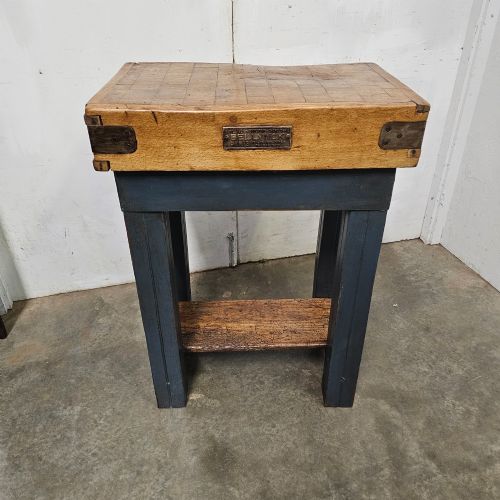
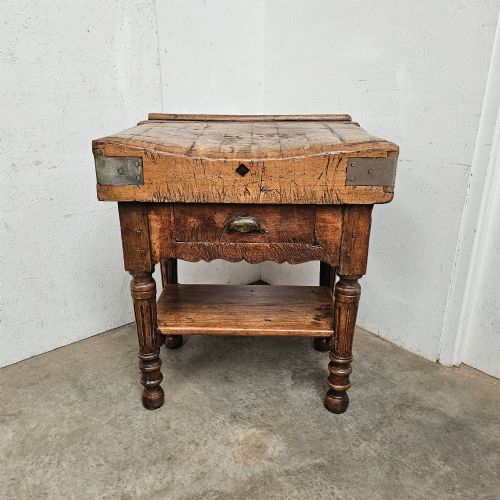
A kitchen chopping block is a heavy-duty preparation surface traditionally used by butchers and domestic cooks for jointing meat and chopping vegetables. The listings on this page span the Victorian era, the Edwardian period, and the early twentieth century up to the 1950s, showing both free-standing items and those mounted on stands.
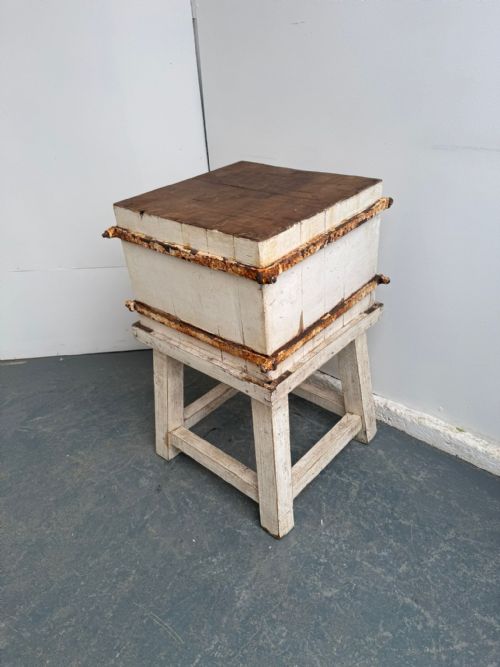
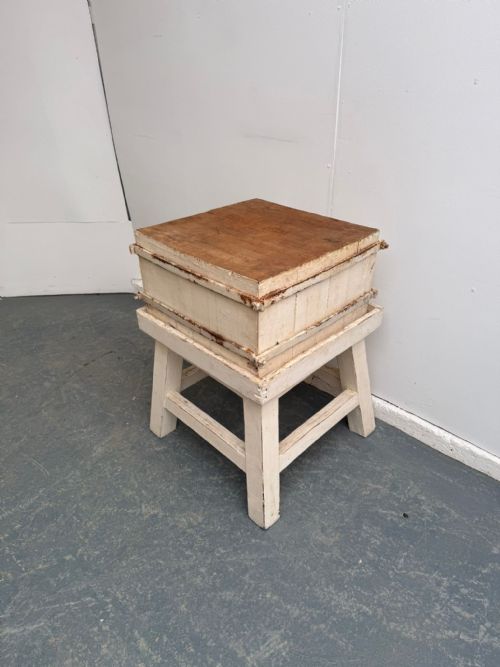
The forms vary from substantial French beech blocks to Hungarian circular tripod examples and elm kitchen chopping blocks. You are most likely to meet French provincial and industrial interpretations featuring thick timber tops paired with painted wooden bases or metal mounts.
Originating primarily from France, Hungary, and domestic British workshops, these utilitarian objects double as kitchen islands. Their presence ranges from rustic vernacular styles to French industrial designs with bronzed mounts.
How they were made
These pieces rely on dense timbers such as beech, oak, elm, and general hardwood to withstand the constant impact of cleavers and knives. The top blocks are constructed from thick, end-grain or side-grain slats tightly bound together to prevent splitting under heavy use.
Supporting structures combine sturdy painted wood, iron, and steel elements. Industrial examples often incorporate metal bracing, decorative bases, and specialised mounts to ensure absolute stability during preparation tasks.
Kitchen Chopping Block Retail Price Guide 2026
Typical asking prices for kitchen chopping block among the pieces listed under this phrase on Sellingantiques today, from the lower quarter to the upper quarter. They describe what is for sale here now, not the wider market.
Listings feature periods spanning from the nineteenth century through the 1950s, utilising beech, oak, elm, and painted wood.
What varies in quality
The distinction between standard examples and superior ones lies in the density and selection of the timber used for the top block. Finer pieces demonstrate dense grain structures that have worn evenly over generations without excessive sinking in the centre.
Quality also shows in the originality and construction of the base, whether a decorative wooden stand, an industrial iron frame, or original painted surfaces. Greater craftsmanship appears where metal mounts, bronzed hardware, and structural framing integrate seamlessly with the main block.
Hennes France
The Kitchen Chopping Block Glossary
- End-grain
- A block construction method where the wood is turned so the growth rings face upward, creating a self-healing surface that resists knife marks. This arrangement protects both the blade and the timber.
- French Provincial
- A style originating from regional France emphasising rustic utility combined with straightforward proportions. It often utilises native timbers like beech and elm.
- Vernacular
- Architecture or object design created to meet immediate local needs using available materials. These pieces prioritize function over formal artistic convention.
- Industrial
- A style characterised by the use of metal, iron, and steel combined with heavy timber, originating from workshops and factories. It values utilitarian durability.
Kitchen Chopping Block: Frequently Asked Questions
What is a kitchen chopping block?
A kitchen chopping block is a thick, solid wooden block designed for heavy food preparation and butchery tasks. They are built to absorb the force of chopping and cleaving.
Most examples include a dedicated base or stand, transforming them into functional kitchen islands that anchor the room.
How were they used historically?
Historically, these blocks served as the primary work surface in butcher shops and large domestic kitchens for jointing carcasses and preparing daily meals. Their immense weight ensured they remained stable during vigorous work.
Over decades of daily service, the wooden surfaces developed distinct dips and patina from constant scraping and cutting.
How do I care for a vintage block?
Care requires treating the exposed timber with food-safe oils to prevent the wood from drying out and cracking. Regular maintenance keeps the surface hygienic and preserves the grain.
Avoid harsh chemical cleaners and excessive water immersion, which can damage both the historic timber and any painted or metal bases.
How do I date a chopping block?
Dating relies on examining the construction methods, tool marks, and materials used in both the top and the base. Victorian and Edwardian pieces often show hand-wrought ironwork or specific timber preparations.
Later mid-century examples from the 1950s incorporate different mounting techniques and standardised hardware compared to nineteenth-century rustic vernacular pieces.