



Jugendstil Lighting
Jugendstil lighting brings organic curves and functional metalwork into your interior through table lamps, floor lamps, and candelabra.
Jugendstil Lighting
Jugendstil lighting encompasses pieces designed in the continental European movement parallel to British Art Nouveau, focusing on fluid lines and natural motifs. When searching for jugendstil lighting, collectors encounter floor lamps, table lamps, pendant lights, and candelabra originating primarily around nineteen hundred. These items combine illumination with sculptural metalwork, often drawing on related Secessionist and Art Nouveau aesthetics.
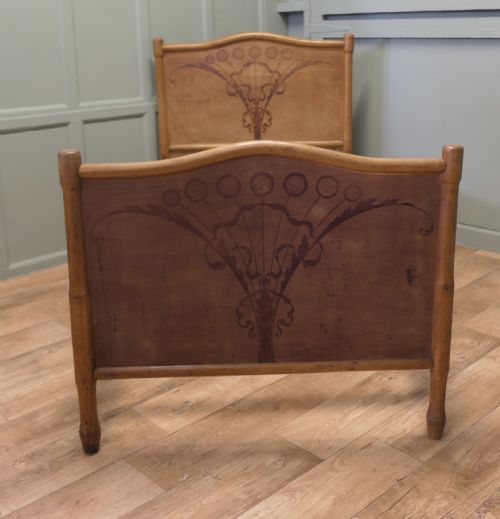
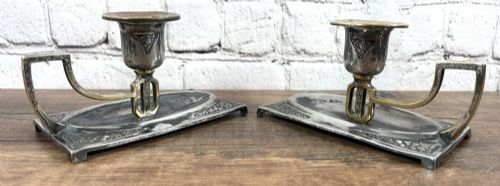
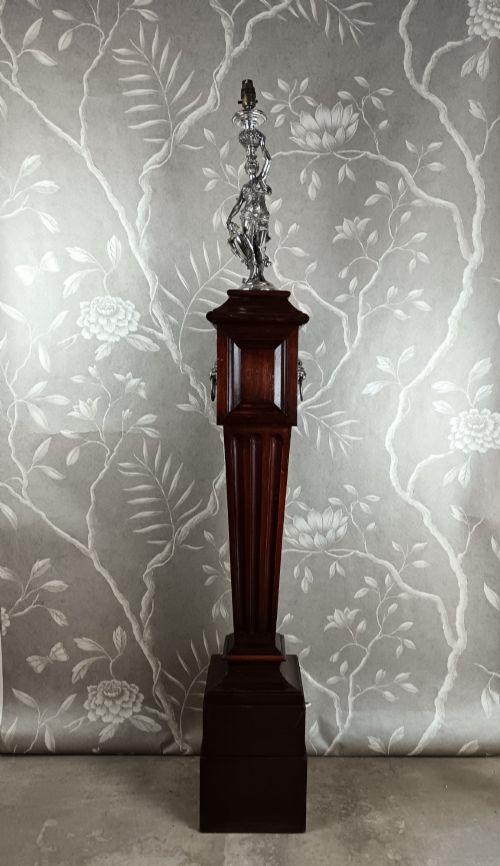
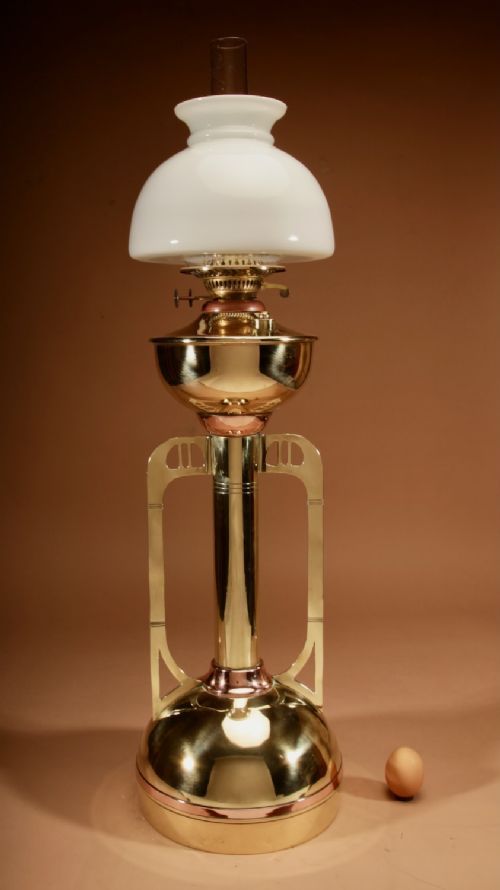
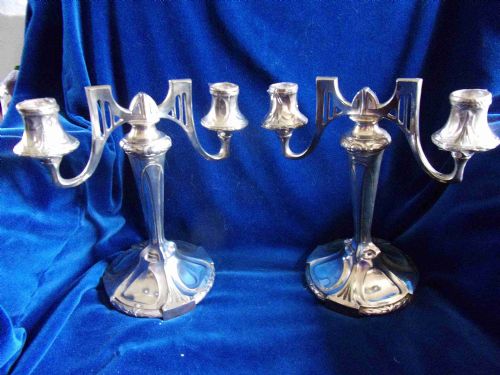
The objects available in this category range from heavy brass and copper table lamps to silver-plated and silvered pewter candlesticks. Makers such as WMF and Hugo Berger produced domestic metalware that defined the period, alongside occasional paraffin lamps and figural torchere floor lamps. Alongside standard lighting fixtures, the broader design vocabulary of the era appears in related pieces of furniture.
Makers utilised specific regional manufacturing centres, particularly in Germany and Austria, to supply domestic interiors with artistic metal goods. The resulting items demonstrate a shift away from historic revivalism towards stylised plant forms and geometric secessionist patterns. Each piece functions as both a light source and a sculptural ornament for the room.
Materials and construction
Makers fashioned jugendstil lighting primarily from cast and sheet metals, including brass, copper, pewter, and bronze. Silver plating and silvered finishes frequently coated base metals like pewter to provide a brighter reflective surface without the cost of solid silver. Glass components, such as cabochons, were integrated into metal frames to add colour and texture to lamp bodies.
Workshops employed techniques like casting, hammering, and plating to achieve the tactile surfaces characteristic of the period. Metal components were joined to accommodate electrical fittings or paraffin burners, depending on the intended fuel source. Artisans also combined metalwork with organic materials, such as beech wood in related furniture, to maintain stylistic consistency across domestic interiors.
Jugendstil Lighting Retail Price Guide 2026
Typical asking prices for jugendstil lighting among the pieces listed under this phrase on Sellingantiques today, from the lower quarter to the upper quarter. They describe what is for sale here now, not the wider market.
Current listings feature items primarily from the nineteen hundreds, spanning brass, glass, pewter, and copper across Art Nouveau and Secessionist styles.
Assessing quality and execution
Quality in jugendstil lighting rests upon the crispness of the metal casting and the depth of the chased or hammered surface details. Superior examples display refined proportions and clean integration of glass elements, whereas lesser items rely on simpler, mass-produced stamping without hand-finishing.
Maker attribution significantly influences valuation, with pieces marked by established firms like WMF or Hugo Berger commanding stronger interest due to documented production standards. The complexity of the figural work, such as maiden motifs on candelabra, also separates standard production items from more ambitious sculptural designs.
Jacob and Joseph Kohn·WMF·Gustave Serrurier Bovy·Hugo Berger Goberg
The Jugendstil Lighting Glossary
- Jugendstil
- The German art movement spanning the late nineteenth and early twentieth centuries, named after the Munich magazine Die Jugend. It translates as youth style and shares roots with international Art Nouveau.
- Secessionist
- A stylistic descriptor associated with artists and designers who broke away from traditional academic academies in Vienna and elsewhere. The term often denotes a geometric approach running parallel to fluid Jugendstil forms.
- Pewter
- A malleable metal alloy primarily composed of tin, frequently utilised for domestic candlesticks and vessels during this era. In this period, pieces were often silvered to enhance their appearance.
- Cabochon
- A polished, convex gem or piece of glass cut without facets, frequently set into metal lamp bases as a decorative accent. These elements catch the light and introduce colour to the design.
- Torchiere
- A tall floor lamp designed to direct light upwards towards the ceiling. In the early twentieth century, these often featured figural statues and heavy pedestals.
Jugendstil Lighting: Frequently Asked Questions
What is jugendstil lighting?
Jugendstil lighting refers to lamps, candelabra, and light fittings produced during the continental European Art Nouveau movement around nineteen hundred. These pieces emphasise organic forms, stylized natural motifs, and artistic metalwork.
Makers utilised materials such as brass, copper, pewter, and bronze to create functional objects that doubled as sculptures. The style reflects a distinct rejection of Victorian historicism in favor of modern, flowing design.
How do I identify a secessionist lamp?
Secessionist lamps typically display geometric rigour combined with stylized floral or plant elements, distinguishing them from purely fluid Art Nouveau designs. Look for clean vertical lines, hammered metal surfaces, and structural honesty.
Many pieces from this tradition bear marks from makers such as Hugo Berger or carry hallmarks indicating continental European manufacture from the early nineteen hundreds.
Were these lights originally electric?
Lighting from this period encompasses a transition from paraffin and gas to electricity, meaning surviving pieces may have used oil or candles initially. Many table lamps and floor lamps designed for paraffin or candles have since been converted for modern electrical use.
When examining a piece, check the burner or candle socket area to understand its original function before any twentieth-century rewiring was undertaken.
What metals are most common?
Brass, copper, and pewter dominate the surviving metalwork from this period, often enhanced with silver plating or silvered finishes. Pewter was especially popular for candlesticks and small holders due to its malleability in casting complex shapes.
Bronze appears on more elaborate table lamps, sometimes accompanied by decorative glass cabochons set directly into the metal frame.
How do I clean silvered pewter?
Silvered pewter requires gentle care to preserve the thin metallic coating over the base metal alloy. Avoid abrasive polishes or harsh chemical dips that can strip the delicate surface finish.
Dusting with a soft, dry cloth is usually sufficient for maintenance, while stubborn grime can be addressed with mild soapy water followed by thorough drying.