

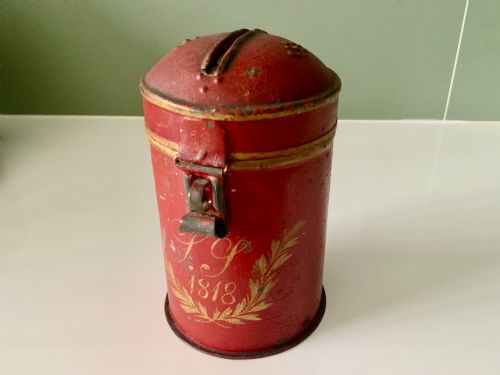
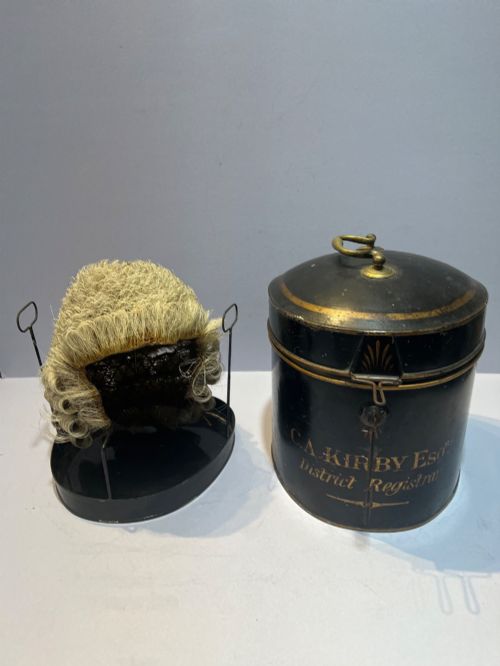
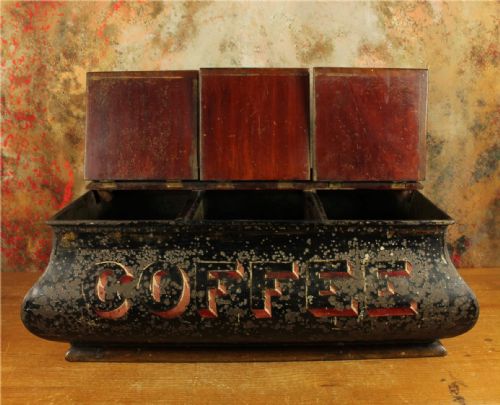
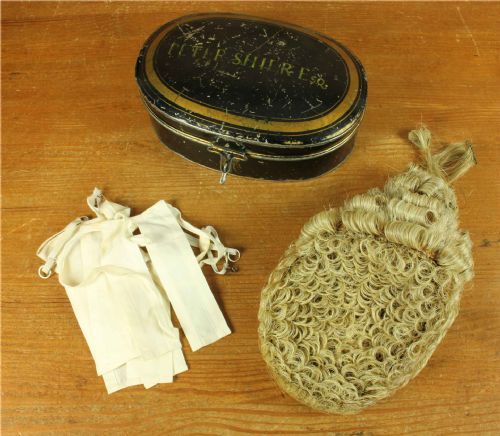


Japanned Tin Box
These japanned tin box examples range from legal wig containers and military hat boxes to toleware spice boxes and folk art storage pieces.
Japanned Tin Box
When you search for a japanned tin box, you encounter sturdy metal containers designed for specialised storage across the Georgian, Victorian, and early twentieth-century periods. These containers serve practical purposes, from housing barristers' wigs and legal documents to storing coffee, tobacco, and spices.
You are most likely to meet Victorian and nineteenth-century examples on this page, often associated with legal collectables, military utility, and toleware. Forms include stacking document tins, hat boxes with horsehair or leather fittings, and hand-painted folk art log boxes.
Originating predominantly from English makers and workshops, these storage tins combine utilitarian metalwork with decorative surface treatments. Each piece reflects the specific professional, military, or domestic requirements of its era.
How they were made
Makers construct these containers using sheet iron and tin, forming rigid metal bodies suited to heavy daily use. Brass fittings such as hinges, latches, and carrying handles are frequently attached to secure the contents and withstand regular handling.
The characteristic surface finish involves layers of dark paint or lacquer, known as japanning, which mimics Asian lacquerware. Artisans often enhance these dark surfaces with hand-painted details and gold leaf, particularly on toleware and folk art pieces.
Japanned Tin Box Retail Price Guide 2026
Typical asking prices for japanned tin box among the pieces listed under this phrase on Sellingantiques today, from the lower quarter to the upper quarter. They describe what is for sale here now, not the wider market.
Listings feature items from the Georgian period, the Victorian era, and the 1930s, constructed from tin, sheet iron, brass, and toleware.
What varies in quality
The distinction between standard utility items and finer examples lies in the execution of the surface decoration and the integrity of the original hardware. Hand-painted motifs and preserved gold leaf elevate the decorative appeal of toleware boxes far above plain industrial storage.
Makers' marks and branded provenance distinguish standard containers from commissioned pieces supplied by established outfitters and legal tailors. The retention of original internal trays, compartments, and fitted horsehair or textile linings also defines the preservation standard of these boxes.
Eade and Son·Ravenscroft Law·Hawkes and Co
The Japanned Tin Box Glossary
- Japanning
- A European imitation of East Asian lacquerwork achieved through the application of dark varnishes and heat-curing. This technique provides a durable, glossy protective finish to metal and wood surfaces.
- Toleware
- Painted or lacquered sheet metal household objects produced from the eighteenth century onwards. The process transforms utilitarian tin and iron into decorative domestic wares.
- Bicorn
- A historical two-cornered cocked hat worn by military and naval officers during the nineteenth century. These hats were typically transported in rigid, shaped tin boxes.
- Barrister
- A lawyer in England and Wales who pleads cases in court. Their traditional courtroom attire includes horsehair wigs housed in specialised metal containers.
Japanned Tin Box: Frequently Asked Questions
What were japanned tin boxes originally used for?
These containers were utilised for safeguarding legal documents, transporting military headwear, and storing dry goods such as tea, coffee, and spices. Their robust metal construction protected contents from moisture, dust, and pests in offices and barracks.
Legal practitioners relied on them for confidential papers, while officers used shaped hat boxes to maintain the condition of bicorn and cocked hats during travel.
How do I care for a japanned tin box?
Keep the metal container in a dry environment away from direct sunlight to protect the aged surface finish and prevent active corrosion. Dust the exterior gently with a dry, soft cloth without applying modern chemical polishes.
Avoid using water or abrasive cleaners on painted toleware or gold leaf decoration, as moisture can lift the historic lacquer layers.
How can I tell a Victorian tin from a Georgian one?
Georgian examples often display simpler utilitarian forms or restrained toleware decoration associated with domestic spice and storage use. Victorian pieces frequently incorporate specialised professional labeling, military outfitter stamps, and more complex compartmentalised interiors.
Examining the construction methods, hinges, and lock mechanisms helps distinguish the earlier hand-finished ironwork from later mass-produced Victorian and twentieth-century items.
What is folk art barge wear?
Folk art barge wear refers to brightly painted household and utility items decorated with traditional floral motifs associated with canal boat culture. These pieces bring vibrant hand-painted colour to utilitarian sheet iron and tin objects.
On storage boxes, this distinctive decorative style transforms plain metal containers into expressive examples of vernacular folk art.