




Japanese Boxwood Netsuke
Japanese boxwood netsuke are miniature carved toggles shaped as animals, figures, and natural forms, offering collectors intimate miniature sculpture from the Edo and Meiji periods.
Japanese Boxwood Netsuke
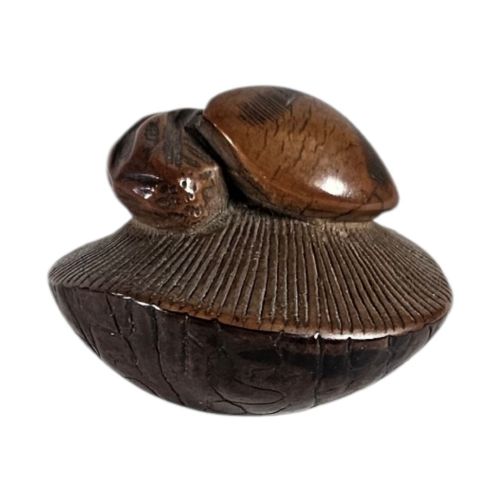
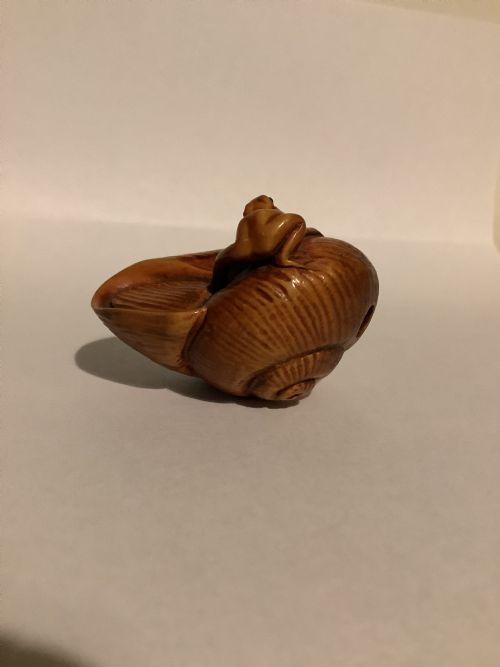
Japanese boxwood netsuke function as traditional clothing toggles designed to secure small pouches and containers worn suspended from the kimono sash. These miniature sculptures depict familiar subjects drawn from nature, folklore, and daily life, ranging from frogs and rats to wise men and dancers. Surviving examples span the Edo and Meiji periods, reflecting centuries of skilled carvers working in hard timbers.
On this page, the predominant forms follow familiar animal and figural themes executed in carved boxwood and occasional horned or inlaid accents. Subjects like rats, toads, mushrooms, and horses appear frequently across the nineteenth-century listings and archive records. Collectors encounter both figural netsuke and circular Manju formats designed for practical daily wear.
The historical context of these items links directly to Japanese dress customs where pockets were absent, making the netsuke an essential daily accessory. Carvers utilised the tight grain of boxwood to render intricate details such as fur texture, shell patterns, and facial expressions without splintering. These miniature carvings demonstrate how utilitarian objects became miniature canvases for master craftsmen.
Materials and carving techniques
The shaping process required hand tools to undercut the wood, hollow out interiors for weight reduction, and form the essential cord holes known as himotoshi. Artisans polished the exterior surfaces through handling and light finishing, creating a smooth patina that developed further with age. Signatures were often carved directly into the base or hidden within the composition using specialised chisels.
Recorded materials span boxwood, horn, and inlaid accents across traditional Edo and Meiji formats.
Distinctions in execution and design
The success of a piece rests upon the anatomical accuracy and expressive life of the carved subject, distinguishing master carvers from standard commercial producers. Finer examples display meticulous attention to muscle tension in animals or naturalistic folds in drapery, whereas lesser pieces appear stiff and formulaic. The integration of the cord holes into the overall design without disrupting the silhouette indicates higher workshop standards.
Depth of undercut and crispness of detail separate superior boxwood carvings from simpler items. Artisans who maintained sharp definition in crowded compositions like nut clusters or complex figure groups achieved a level of relief that survives centuries of handling. A well-preserved tactile surface, free from clumsy repairs or heavy alterations, preserves the integrity of the original carver's intent.
Tomochika·Masayuki·Miwa·Sengai·Masayoshi·Masanao·Kokei·Masakichi·Shumin·Michikawa
The Japanese Boxwood Netsuke Glossary
- Netsuke
- A miniature carved toggle used in traditional Japanese dress to suspend small hanging pouches from the kimono sash. These objects evolved from simple functional fasteners into highly detailed sculptural artworks.
- Himotoshi
- The paired cord holes carved into a netsuke through which the fastening silk passed. Their placement and wear patterns help confirm the utilitarian history of the piece.
- Manju
- A flat, circular style of netsuke named after a rounded Japanese rice cake. They often feature carved or inlaid surface designs rather than fully rounded figural sculpture.
- Sashi
- A long, slender style of netsuke designed to be tucked directly behind the obi sash rather than secured with a cord toggle. This form frequently depicts tall figures or elongated natural motifs.
- Okimono
- A standalone Japanese display figurine intended for interior placement rather than practical daily wear. While distinct in purpose, they share materials and carvers with traditional netsuke.
Japanese Boxwood Netsuke: Frequently Asked Questions
What is a Japanese boxwood netsuke?
A Japanese boxwood netsuke is a small carved wooden toggle used historically to secure hanging pouches from a kimono sash. Carved primarily from dense boxwood timber, these objects depict animals, mythological figures, and daily scenes.
Craftsmen utilised the fine grain of the wood to execute intricate miniature sculptures that combine utility with decorative artistry.
How were netsuke used?
Netsuke functioned as counterweights and fasteners for suspended compartments like medicine boxes and tobacco pouches worn by individuals in traditional Japanese society. A silk cord ran from the pouch, through the himotoshi holes in the netsuke, and tucked behind the sash.
This system kept personal items secure and accessible while leaving the hands free during daily movement.
How do I care for boxwood carvings?
Boxwood requires stable environmental conditions with moderate humidity to prevent the timber from splitting or drying out over time. Gentle handling allows the natural oils from skin contact to maintain the soft patina developed across centuries.
Avoid harsh chemical cleaners or direct sunlight, dusting the intricate undercuts lightly with a soft brush when necessary.
How do I distinguish Edo from Meiji pieces?
Edo period carvings often display a more robust, utilitarian character with deep undercuts and traditional subject matter tied closely to daily customs and folklore. Meiji period examples frequently exhibit heightened naturalism and elaborate detailing as production shifted toward decorative arts for collectors.
Examining the wear patterns, signature styles, and overall sculptural approach helps clarify the chronological origin of individual items.