



Japanese Bird Statue
These japanese bird statue pieces bring naturalistic Meiji period craftsmanship into interiors and gardens through finely cast metal and carved wood.
Japanese Bird Statue
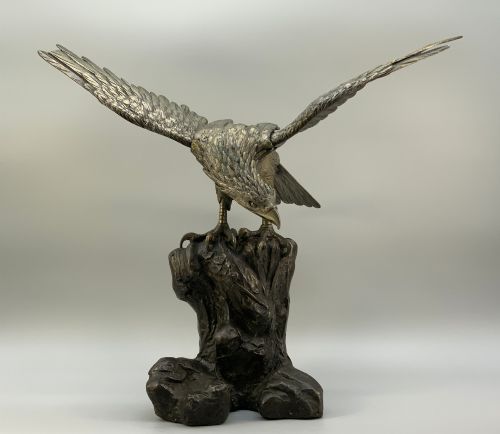
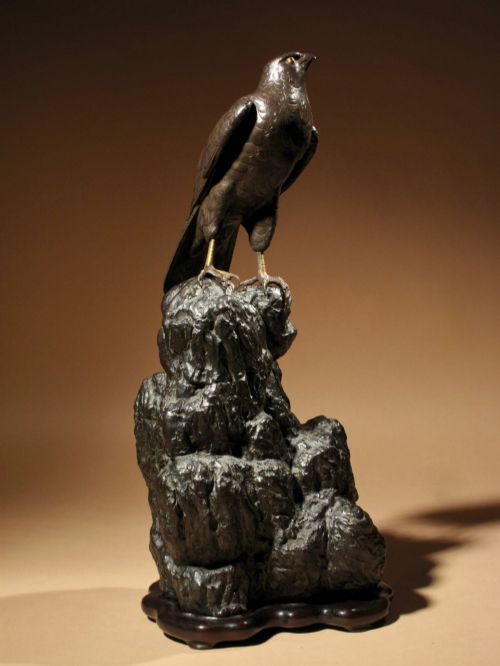
A japanese bird statue captures the sharp detail of eagles, hawks, geese, cranes, ducks, and curlews across forms such as okimono, sculptures, figurines, and garden statuary. These works span the nineteenth century through the early twentieth century, originating in traditional Japanese styles including the Meiji period and Oriental designs.
Buyers most frequently encounter bronze models on this page, ranging from small cabinet okimono to lifesize garden pairs. Sculptures often depict birds perched on natural elements like craggy rocks or root wood bases, reflecting close observation of wildlife.
How they were made
Makers shaped these objects primarily from bronze, utilising patinated or silvered finishes to render realistic feathers and anatomical detail. Artisans combined metal casting with organic materials, mounting heavy bronze figures onto root wood or mahogany bases.
Workshops applied decorative elements such as gold leaf and enamel highlights to accent plumage. Garden statuary and large scale sculptures required substantial casting skill to maintain balance and lifelike posture.
Japanese Bird Statue Retail Price Guide 2026
Typical asking prices for japanese bird statue among the pieces listed under this phrase on Sellingantiques today, from the lower quarter to the upper quarter. They describe what is for sale here now, not the wider market.
Some bronze geese arrive at lifesize proportions, ensuring an unexpected avian presence wherever they stand.
What varies in quality
Quality rests in the fidelity of the naturalistic carving and the precision of the metal patination. Superior examples display convincing feather texture and muscular tension, whereas lesser pieces lack anatomical precision.
The integration of the sculpture with its natural support, such as a root wood base, distinguishes finer works. Scale also dictates presence, with large garden pairs and signed sculptures representing greater ambition.
Makuzu Kozan II·Gyoko
The Japanese Bird Statue Glossary
- Okimono
- A Japanese ornamental statue or object for display, typically placed in a tokonoma alcove or on a shelf. These carvings and castings often depict animals with high realism.
- Patinated bronze
- Metal treated with chemical solutions to produce a specific surface colour and finish. This process highlights feather details and aged depth.
- Root wood
- Natural gnarled timber used as a foundational base for sculptures. It provides an organic plinth that mirrors natural perches.
- Meiji Period
- The era in Japanese history spanning from 1868 to 1912, noted for opening trade and exceptional metalwork. Works from this time emphasise naturalistic wildlife.
Japanese Bird Statue: Frequently Asked Questions
What is a japanese bird statue?
A japanese bird statue is a cast metal, carved wood, or porcelain sculpture depicting avian life such as hawks, eagles, geese, and cranes. These pieces were created as okimono or garden statuary during the nineteenth and early twentieth centuries.
They reflect the naturalistic focus of Meiji period artistry, capturing birds in alert postures upon rocks or wood.
Where were they placed?
Smaller pieces like okimono and figurines were displayed inside homes on flat surfaces or decorative stands. Lifesize pairs and larger sculptures were designed for garden statuary placements.
Their varied scale allowed them to function both as intimate cabinet objects and prominent architectural ornaments.
How do I date a japanese bird statue?
Dating relies on stylistic markers associated with the Meiji period, early twentieth century, and specific materials like patinated bronze or root wood bases. Signatures from makers can also anchor pieces to particular decades.
Examining the casting technique and surface wear helps clarify the period of production.
Are they made of solid bronze?
Many examples are cast in bronze, sometimes featuring silvered surfaces, gold leaf, or enamel highlights. They are frequently mounted on mahogany or root wood bases for stability.
Materials also extend to stone, wood, and porcelain depending on the specific sculpture type.