

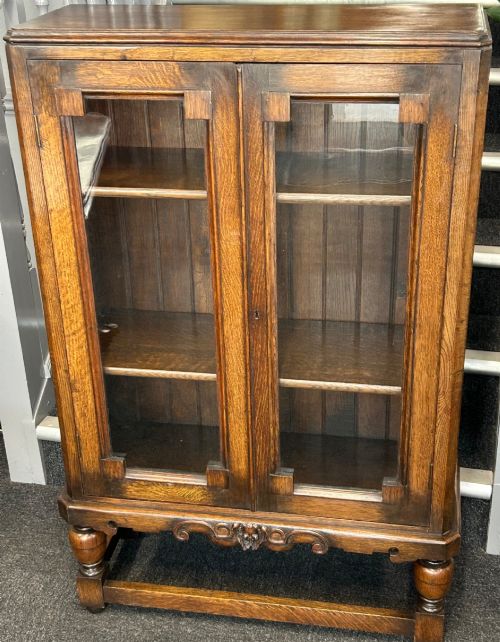


Jacobean Storage Unit
These jacobean storage unit pieces offer sturdy oak construction and period revival design, bringing traditional British character into modern homes.
Jacobean Storage Unit
A jacobean storage unit is a sturdy wooden piece designed for keeping household items, typically built from solid oak and heavily influenced by historical revival styles. When you browse this selection, you encounter items shaped by Victorian, Edwardian, and early twentieth-century hands.
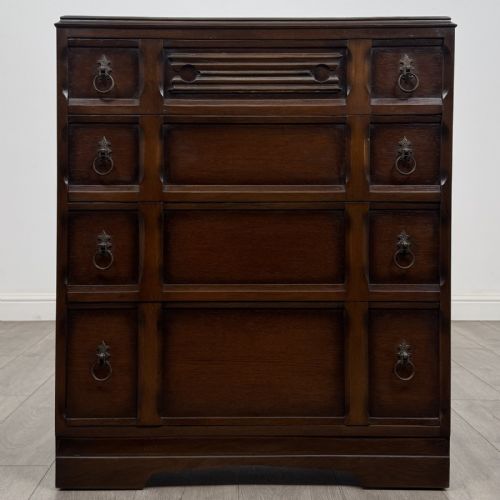
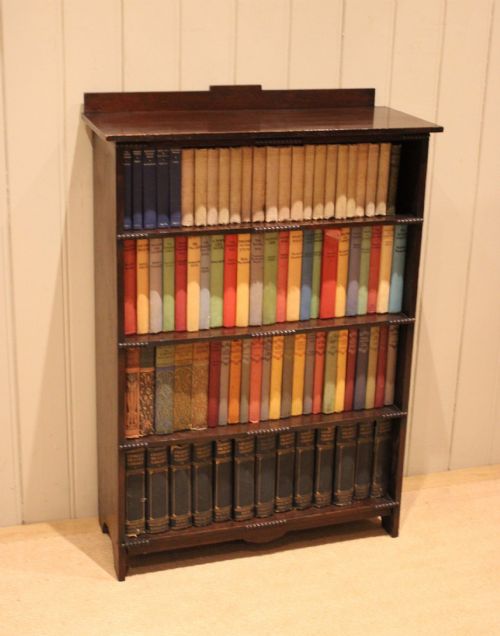
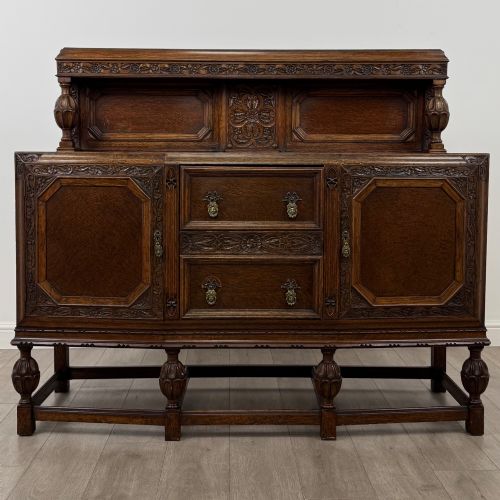
The most common forms you meet on this page are oak chests of drawers, open bookcases, and display cabinets featuring glass panels. Sideboards, dressers, and corner cabinets also appear, reflecting the practical domestic storage needs of past decades.
These items frequently display revival aesthetics such as Jacobean and Tudor motifs, combining heavy timber frames with decorative carving. They serve as functional furniture that anchors a room with dark wood tones and traditional craftsmanship.
How they were made
Makers built these pieces primarily using solid oak and dark oak, shaping timber into substantial carcases and shelves. Iron and brass hardware, including face handles, secured the doors and drawers while adding metallic contrast to the wood.
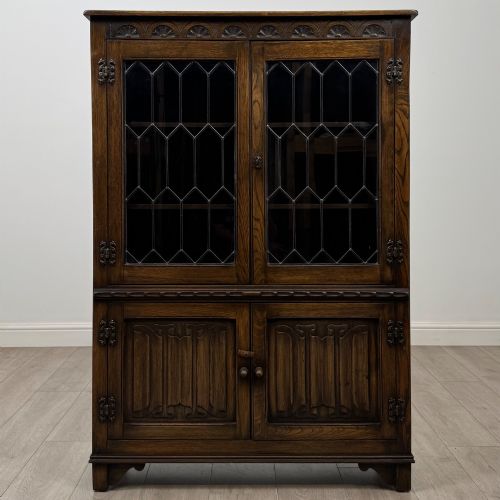
Glazed sections incorporated glass and lead, particularly on display cabinets where leaded glass panels divided the view. Carved details and linenfold panels embellished the surfaces, alongside turned legs and raised galleries that finished the designs.
Jacobean Storage Unit Retail Price Guide 2026
Typical asking prices for jacobean storage unit among the pieces listed under this phrase on Sellingantiques today, from the lower quarter to the upper quarter. They describe what is for sale here now, not the wider market.
Several pieces feature leaded glass panels, which presumably survived decades of enthusiastic door-slamming by generations past.
What varies in quality
The degree of hand-carved detail and the crispness of the linenfold panels set finer examples apart from simpler utilitarian pieces. Elaborate turned legs and carefully fitted brass or iron hardware elevate the visual weight of the furniture.
The choice of timber grain and the depth of the dark oak finish determine the overall presence of the unit. Subtly moulded edges and integrated lower drawers demonstrate a higher standard of period joinery.
The Jacobean Storage Unit Glossary
- Linenfold
- A style of woodcarving that imitates folded linen, commonly seen on panels of cabinets and sideboards. This decorative technique adds texture and historical depth to the wooden surface.
- Raised gallery
- A low decorative railing or shelf positioned along the top surface of a chest of drawers. It prevents items from sliding off the back.
- Leaded glass
- Windowpanes held together by narrow strips of lead, frequently utilised in the doors of display cabinets. This method creates geometric patterns across the glass.
- Tudor Revival
- An architectural and furniture style that borrows heavy timber and structural motifs from the sixteenth century. Pieces in this aesthetic emphasise solid proportions and dark wood.
Jacobean Storage Unit: Frequently Asked Questions
How were these cabinets used?
These units served primary storage functions in dining rooms, living spaces, and hallways. Bookcases held volumes, while sideboards stored dining linens and tableware.
Display cabinets and corner cabinets allowed households to showcase valued ceramics and glassware behind protective glass doors.
How do I style a dark oak cabinet?
Dark oak furniture anchors a room visually, pairing well with neutral wall colours and abundant natural light. Placing decorative objects on top or using open bookcases for books softens the heavy timber appearance.
These pieces work effectively in traditional interiors or as contrasting statement items in modern settings.
How do I identify Edwardian oak furniture?
Edwardian oak pieces often feature lighter structural proportions than their Victorian predecessors while retaining traditional revival motifs. Look for characteristic details such as turned legs, carved panels, and brass face handles.
Makers of this period frequently combined functional storage forms with decorative elements like linenfold carving and leaded glass.