





Jacobean Revival Dining Set
A jacobean revival dining set brings heavy timber and formal symmetry to the room.
Jacobean Revival Dining Set
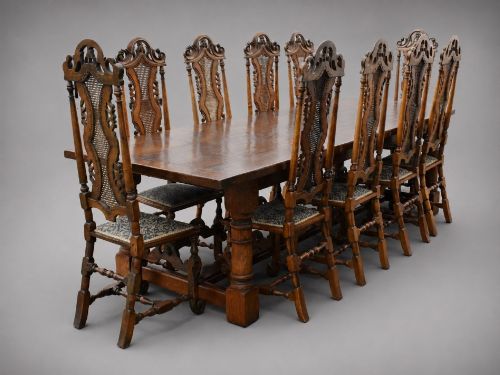
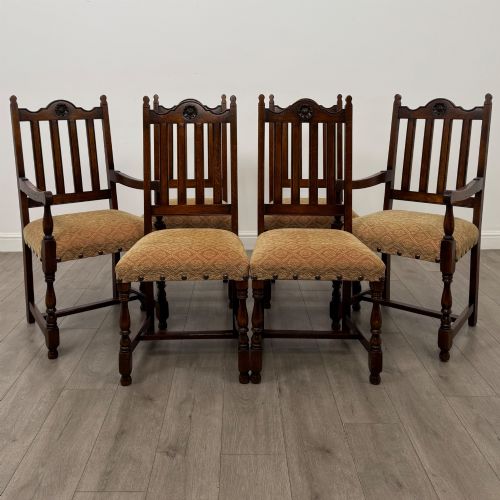
A jacobean revival dining set combines substantial timber tables and matching chair suites designed to echo seventeenth-century forms. Buyers look for matched groups of seating, often paired with extension tables or sideboards, spanning the Victorian era through the early twentieth century. Edwardian examples and pieces from the nineteen-twenties appear frequently on this page.
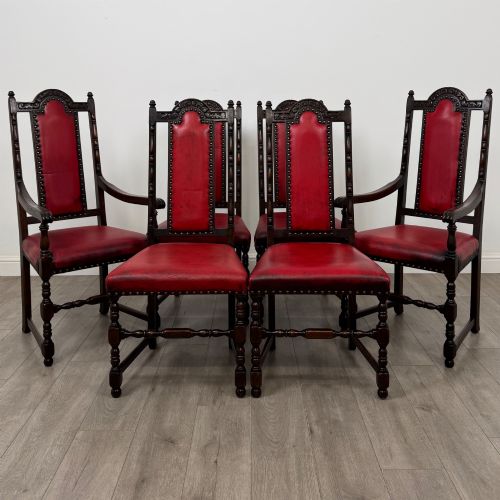
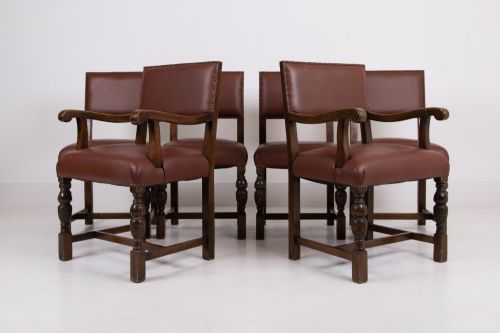
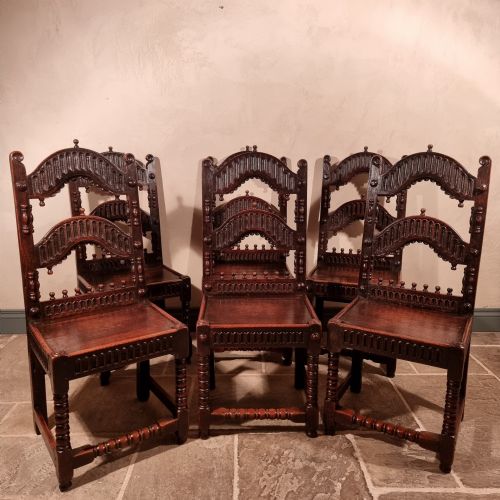
Sets range from small groups of four chairs to large suites numbering ten or twelve pieces, occasionally including carvers with arms. The designs draw heavily on historic precedents such as Derbyshire chairs and high-back seating. Form follows function with robust construction intended for everyday use in large dining rooms.
Materials and Construction
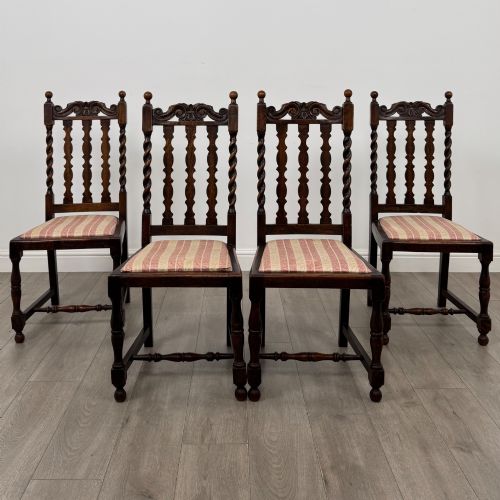
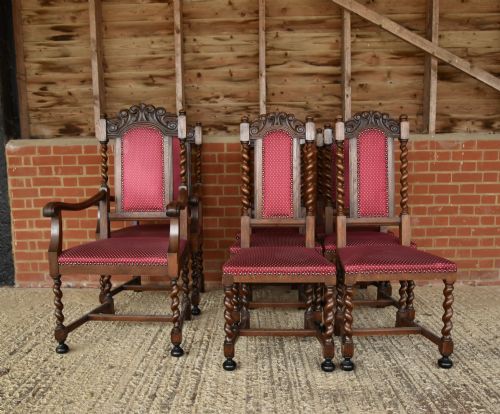
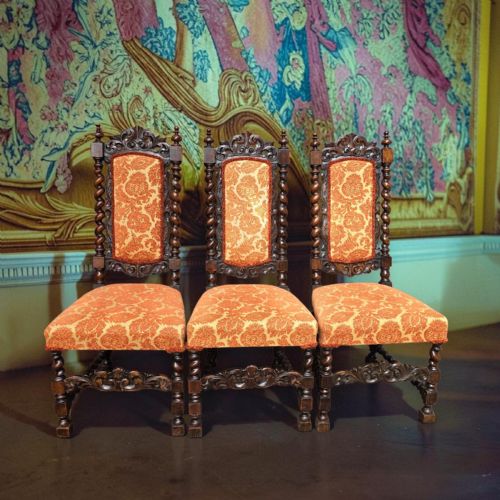
Solid oak serves as the primary structural material across almost all pieces, providing both weight and rigidity. Craftsmen shaped the timber using traditional methods, turning legs into barley twist profiles and applying deep relief carving to chair backs. Joinery relied on mortise and tenon joints to withstand the heavy loads placed on dining furniture.
Seating surfaces incorporate diverse materials including tooled leather, woven cane, brass studs, and various upholstery fabrics or velvet. Metal components appear primarily as brass fixings or decorative nails securing the leather and fabric pads. This combination of turned wood and tactile inserts defines the physical presence of the furniture.
Some dining sets show a fashionable worn look where the leather has softened so thoroughly that family dinners clearly left their permanent impression.
Assessing Quality and Execution
The depth and crispness of the wood carving distinguish finer suites from simpler production models. Carvers who invested time in hand-chisel work produced foliage and geometric patterns with sharp relief, whereas lower-tier examples relied on shallow stamping or plain turned components. The choice of timber grain also marks the distinction between standard utilitarian sets and ambitious revival pieces.
Uniformity across a large set determines its architectural success. Superior suites maintain consistent timber colour and matching grain patterns across all six or eight chairs, while assembled groups show perceptible variations in tone and wear. The structural integrity of the joints and the original tension of the cane or leather further separate standard workshop output from exceptional cabinet work.
Denby and Spinks Leeds
The Jacobean Revival Dining Set Glossary
- Barley twist
- A turned wooden furniture leg resembling the spiral shape of a barley stalk. This decorative turning technique became popular during the seventeenth century and returned strongly in later revival pieces.
- Carver
- An armchair designed with wooden armrests, traditionally placed at the head of a dining table. These pieces usually matched the simpler side chairs in a larger dining suite.
- Derbyshire chair
- A type of seventeenth-century oak chair featuring open spindle backs and carved crest rails. Revival versions replicate this austere regional English style.
- High-back chair
- Seating with an elongated vertical back panel designed to support the entire spine. These pieces emphasise the formal verticality associated with early oak furniture.
- Bergere
- A type of upholstered chair featuring woven cane panels on the back and sometimes the sides. The technique adds texture and lightness to heavy wooden frames.
Jacobean Revival Dining Set: Frequently Asked Questions
How many chairs come in a typical set?
Sets generally range from four to twelve chairs, with six and eight being the most common configurations found in dining rooms. Many larger groups include a mix of standard side chairs and one or two carvers with arms.
Buyers often select the size based on their table length and available space. Matching suites ensure visual consistency around the room.
What is barley twist furniture?
Barley twist refers to a specific lathe-turned wooden leg or stretcher shaped into a continuous spiral. This decorative motif appears frequently on the uprights and legs of revival dining chairs and tables.
The style originates from seventeenth-century cabinet making and was revived during the Victorian and Edwardian periods to add movement to solid oak furniture.
How do I care for antique oak dining chairs?
Solid oak requires minimal maintenance beyond dusting with a dry cloth and occasional application of appropriate wood wax. Keeping the timber away from direct heat sources prevents the wood from drying out and splitting.
Leather and fabric inserts need gentle cleaning appropriate to their specific material. Ensuring stable room humidity protects both the wooden joints and the upholstery.