
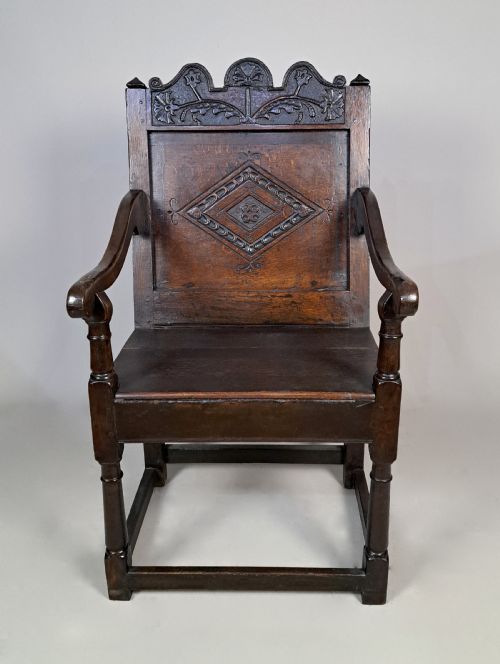
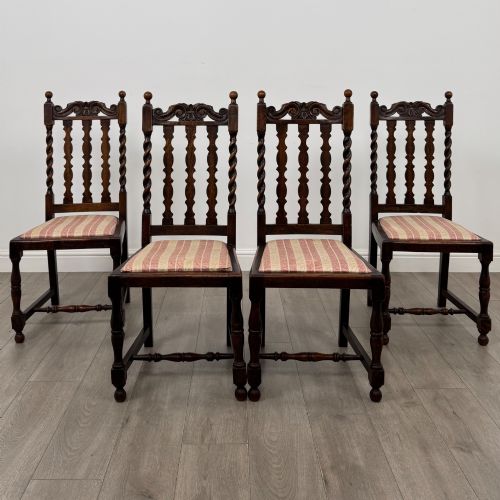
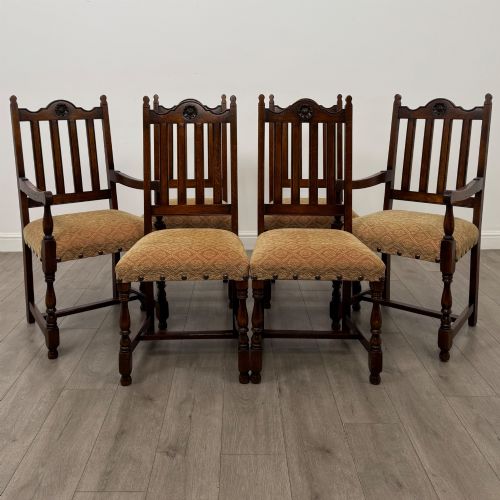
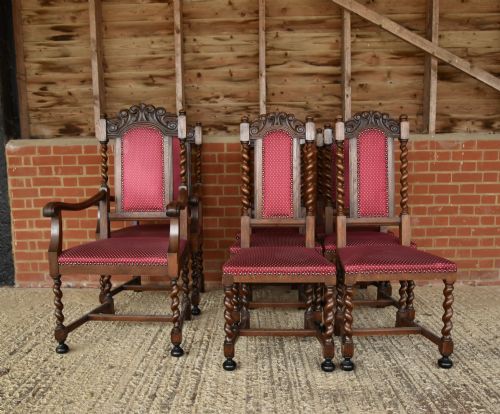
Jacobean Dining Chairs
These jacobean dining chairs bring substantial timber construction and historic form into a room, offering durability alongside centuries of design lineage.
Jacobean Dining Chairs
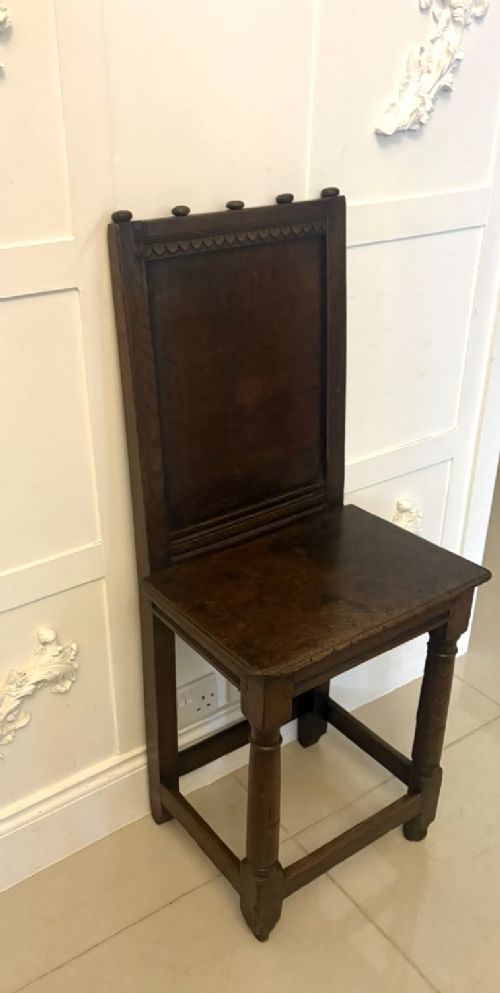
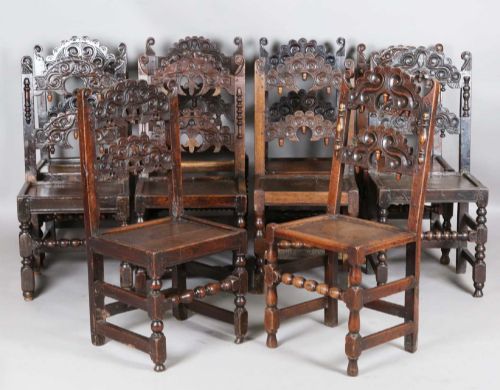
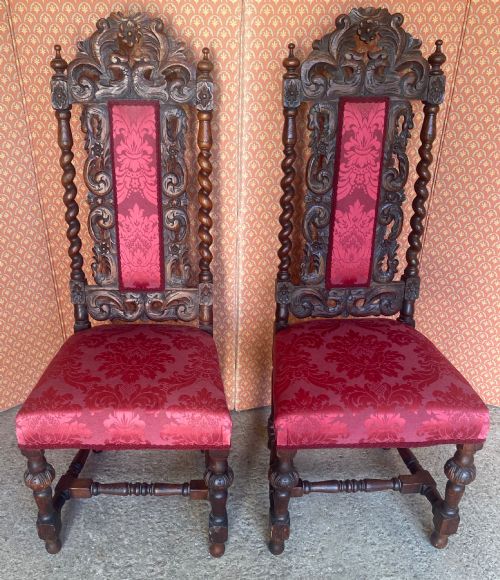
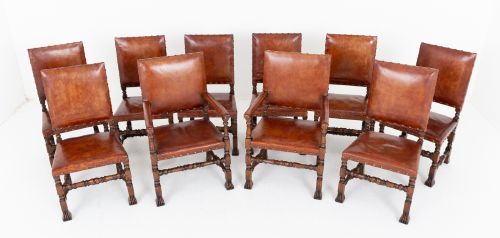
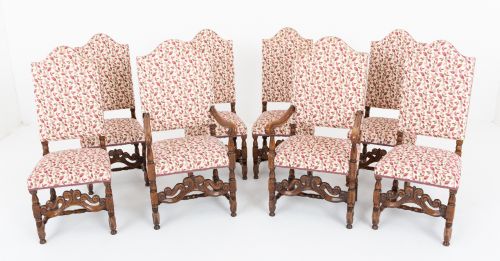
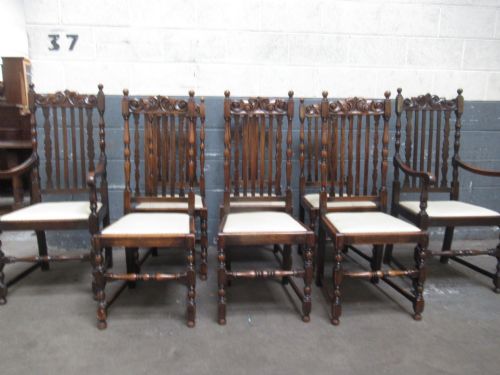
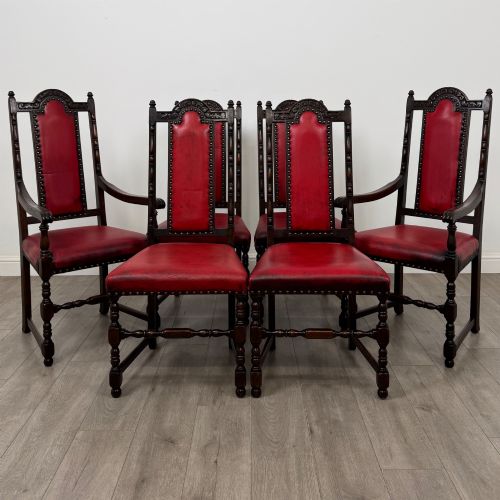
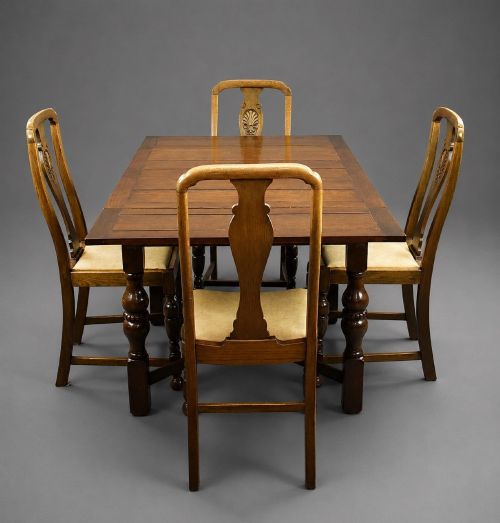
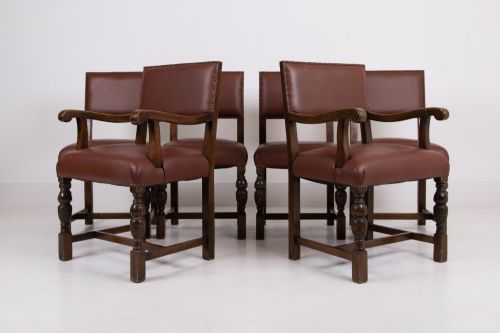
Forms range from high-backed side chairs and armchairs to wainscot chairs, joined backstools, and hall chairs. Many pieces arrive as matched sets or pairs, incorporating carved top rails and substantial uprights typical of early English seating.
Origins trace from seventeenth-century English workshops through to later revival movements in Victorian and twentieth-century cabinet making. Buyers most frequently meet revival sets produced in oak during the nineteen-twenties alongside genuine seventeenth-century single items.
Materials and Construction
Oak forms the primary structural material across nearly every piece, providing the heavy frame and dense grain characteristic of the style. Joinery relies on traditional pegged mortise and tenon joints to secure the uprights and rails.
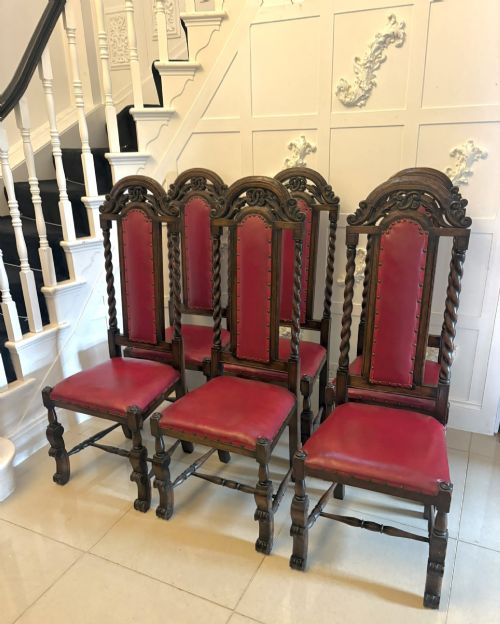
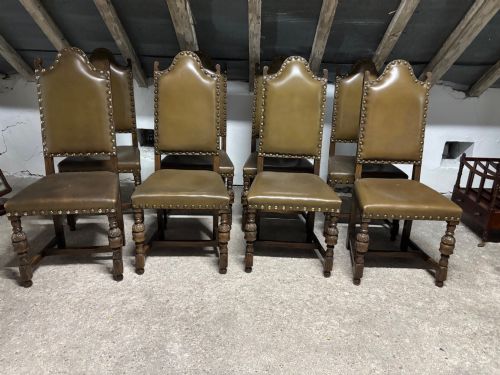
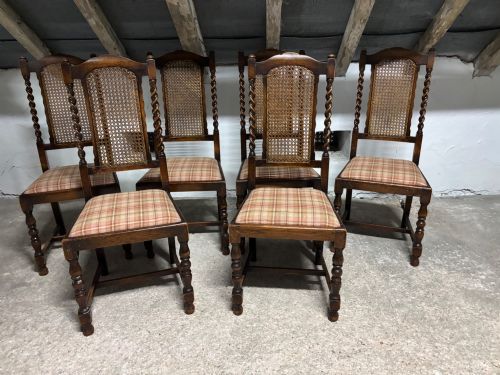
Turned wooden elements, notably barley twist legs and supports, appear frequently alongside hand-carved ornamentation on the crest rails. Upholstery, leather, cane, and textile panels are integrated into the backs and seats using brass tacks or cord.
Secondary materials include velvet and upholstery fabric applied during later restorations or period productions to soften the timber seats and tall backs.
The inventory bridges seventeenth-century origins with Victorian and twentieth-century revival movements including Tudor and Gothic styles.
Judging Quality
Quality rests upon the integrity of the original oak frame and the crispness of the hand-carved details on the crest rails and stiles. Period pieces display genuine timber shrinkage and pegged joinery that differs fundamentally from later mechanical assembly.
The survival of original elements, such as cane panels, leather upholstery, and brass fittings, elevates the integrity of a set. Matching consistency across larger sets of six or eight chairs distinguishes coherent dining suites from assembled groups.
The Jacobean Dining Chairs Glossary
- Backstool
- An early form of chair without arms, featuring a padded or solid wooden back above a seat. These pieces often date to the seventeenth century.
- Barley Twist
- A turned wooden furniture leg or stretcher carved in a helical screw shape. This decorative turning technique appears commonly on nineteenth- and twentieth-century revival chairs.
- Cane
- Plant material woven into open mesh patterns for chair backs and seats. Caned panels provide flexibility and texture within the wooden frame.
- Wainscot Chair
- A heavy wooden armchair constructed with panelled backs and solid seats. These early chairs derive their name from wainscot oak boards.
- Joined Chair
- Furniture constructed using tightly fitted mortise and tenon joints secured with wooden pegs. This method precedes the widespread use of metal screws and glue.
Jacobean Dining Chairs: Frequently Asked Questions
How do I clean oak chair frames?
Maintenance requires soft dusting and occasional application of appropriate beeswax to nourish the timber without building up heavy residues.
Harsh chemical cleaners and excessive moisture must be avoided to protect the historic grain and original surface patination.
Can these chairs handle daily use?
Solid oak frames and sturdy joined construction allow these chairs to function well for regular seating around a dining table.
Buyers should inspect the structural joints periodically to ensure the pegged connections remain tight under normal weight.
How do I identify seventeenth-century pieces?
Genuine seventeenth-century examples display hand-cut joinery, distinct timber patination from age, and construction methods characteristic of early English workshops.
Revival pieces from later centuries often utilise machine-turned elements and display less wear within the primary stress points.
What is a carver chair?
A carver refers to an armchair designed to match a set of smaller side chairs, traditionally placed at the head of the dining table.
These pieces feature wooden armrests integrated into the primary uprights while matching the carved crest rails of the surrounding set.