



Jacobean Cane Armchairs
These jacobean cane armchairs combine robust timber framing with woven seating panels to deliver enduring period character.
Jacobean Cane Armchairs
Jacobean cane armchairs encompass sturdy seating forms constructed primarily during revival periods spanning the late nineteenth century up through the nineteen-twenties. These substantial furnishings draw stylistic inspiration from seventeenth-century design traditions, incorporating heavy woodwork alongside woven seating surfaces.
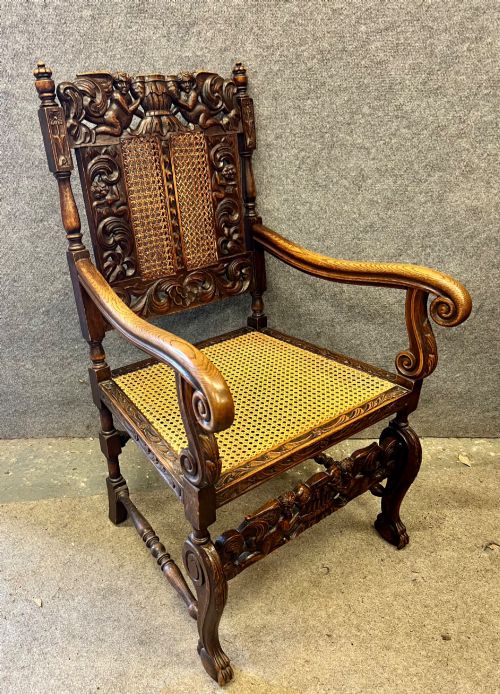
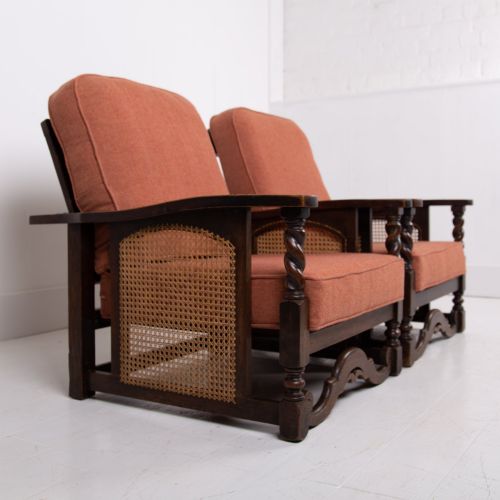
The versions most commonly encountered on this page date from the late nineteenth century and the early twentieth century. Examples range from simple nineteenth-century oak frames to larger throne chairs and pairs of library or fireside seating.
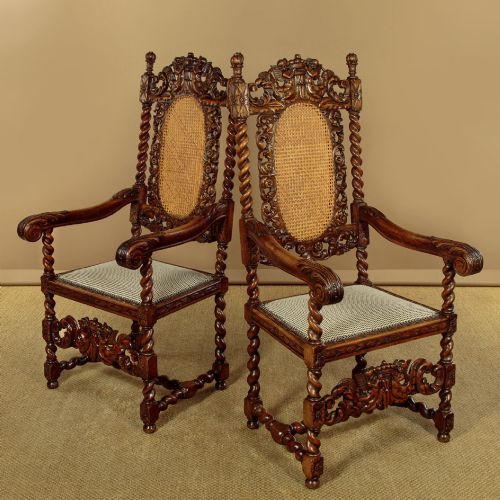
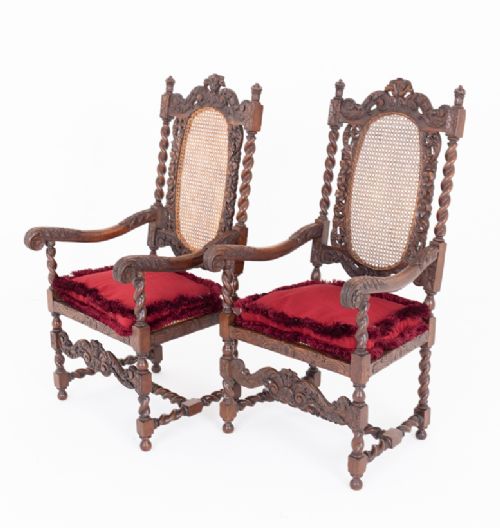
Makers working in the Jacobean Revival and Carolean Revival styles utilised traditional joinery methods to recreate historic seating arrangements. Buyers find both single armchairs and matching pairs designed for domestic interiors.
Construction and materials
These armchairs rely heavily on solid oak and walnut timber for their structural frames. Craftsmen shaped the wood using extensive carving techniques to produce decorative motifs along the arms, legs, and high backs.
Panels of cane, rattan cane, and fabric upholstery are integrated into the timber structures to provide seating support. Additional textiles such as velvet and leather appear on cushions and padded elements associated with later revival pieces.
Jacobean Cane Armchairs Retail Price Guide 2026
Typical asking prices for jacobean cane armchairs among the pieces listed under this phrase on Sellingantiques today, from the lower quarter to the upper quarter. They describe what is for sale here now, not the wider market.
Current listings exclusively feature oak and walnut frames combined with cane, rattan, fabric, velvet, and leather materials.
Assessing quality and craftsmanship
Quality in these revival pieces rests upon the depth and precision of the carved wooden details. Finer examples display crisp, intricate work across the frame rather than shallow or mechanical pressing.
The integrity of the woven cane panels and the selection of secondary materials like solid walnut versus standard oak distinguish higher-grade pieces. Substantial proportions, such as those found on throne chairs, also elevate the standing of an armchair.
The Jacobean Cane Armchairs Glossary
- Jacobean Revival
- A nineteenth and twentieth-century design movement that reinterpreted the heavy, ornate furniture styles of the early seventeenth century. This revival favoured dark woods and geometric carved ornamentation.
- Carolean
- Pertaining to the reign of King Charles the Second, characterised by lavish woodcarving, scrolling motifs, and the introduction of cane panels in seating. Later furniture makers frequently copied these elements.
- Bergere
- An enclosed upholstered armchair featuring a wooden frame and woven cane sides or back. These chairs often incorporate loose squab cushions for comfort.
- Cane
- Strips of material derived from the rattan palm, woven into open mesh patterns for chair seats and backs. It offers both flexibility and breathability.
Jacobean Cane Armchairs: Frequently Asked Questions
What periods do these armchairs date from?
The pieces listed on this page originate from revival periods spanning the late nineteenth century and the early twentieth century. They replicate older seventeenth-century aesthetic traditions.
Craftsmen during the Victorian and Edwardian eras produced these items to satisfy contemporary demand for historic domestic furnishings.
Are these chairs comfortable for daily use?
Many examples feature upholstered cushions or pads in fabric, velvet, or leather to improve seating comfort. The supportive wooden frames and angled backs suit placement in studies and fireside settings.
Some variations incorporate woven cane panels which provide a resilient surface for reading or relaxing.
How do I identify a revival style?
Revival pieces exhibit historic design vocabulary combined with nineteenth or twentieth-century manufacturing techniques. Look for characteristic turned legs, carved crest rails, and darker wood finishes.
Comparing the timber patination and construction joints helps determine the actual manufacturing era of the furniture.
Can I find matching pairs of chairs?
The inventory frequently includes pairs of armchairs, fireside chairs, and larger sets designed for communal spaces. These paired items share identical wood types, carving patterns, and upholstery materials.
Acquiring a matched pair provides a balanced appearance for arranging living areas or libraries.