



Italian Revival Chair
An italian revival chair brings the dramatic, carved presence of past centuries straight into a modern interior.
Italian Revival Chair
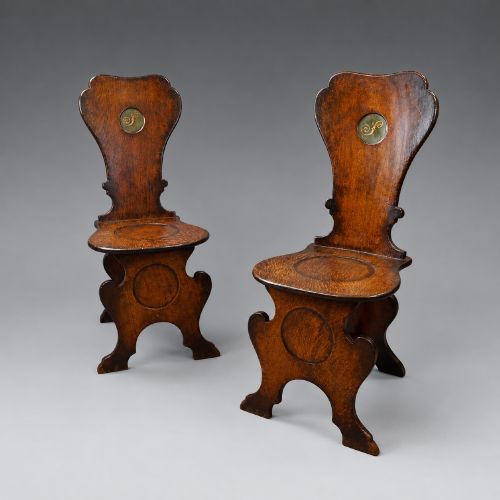
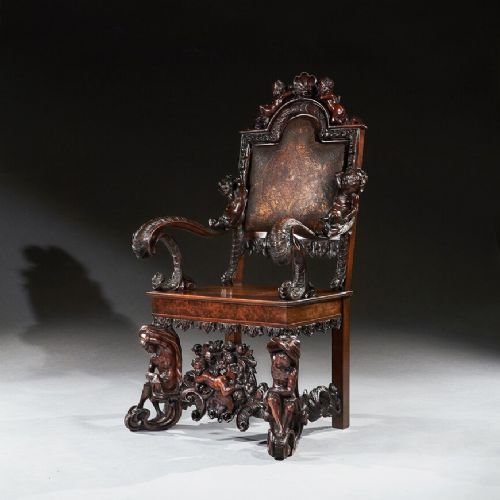
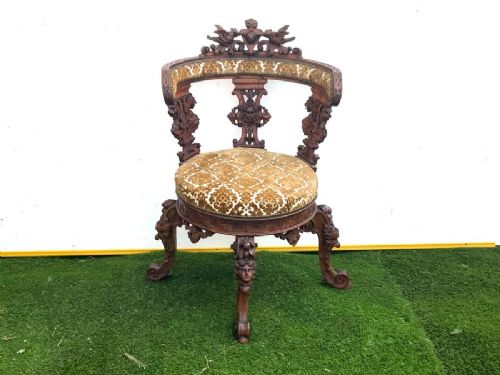
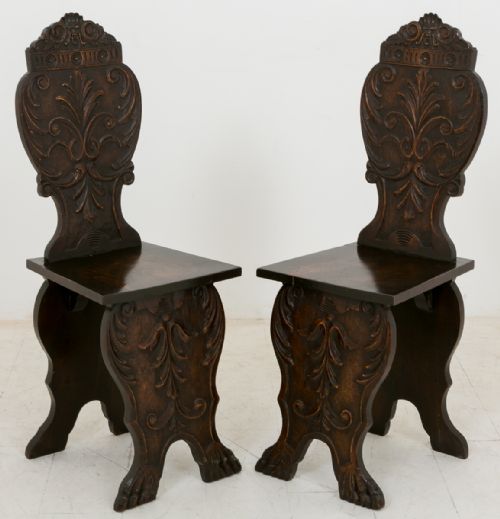
When you search for an italian revival chair, you encounter a distinct group of seating that draws directly on historical Renaissance, Baroque, and nineteenth-century design vocabulary. These pieces encompass armchairs, sgabello hall chairs, X-framed stools, corner chairs, and substantial hall benches.
The selections span various periods including the eighteenth and nineteenth centuries, alongside specific dates like 1700, 1850, 1860, and 1880. You are most likely to meet walnut armchairs and carved hall chairs representing Renaissance Revival and Italian Baroque Revival styles.
Makers such as White, Allom and Co. and Andrea Brustolon appear in the record, showing that these seats range from maker-attributed pieces to regional vernacular items like Lombardy hall benches. Forms vary from simple wooden sgabello seats to elaborate figural corner chairs and X-framed stools.
Materials and construction
Makers utilised solid hardwoods like walnut, oak, and lime wood to build the robust frames that define these seats. Deep relief carving transformed the timber surfaces into intricate figural and decorative panels.
Upholstery and decorative details introduced textures through leather, velvet, damask, and other textiles, sometimes paired with paint or bone inlay. The X-frame and folding stool constructions relied on precise carpentry to support heavy walnut members.
Italian Revival Chair Retail Price Guide 2026
Typical asking prices for italian revival chair among the pieces listed under this phrase on Sellingantiques today, from the lower quarter to the upper quarter. They describe what is for sale here now, not the wider market.
Even a folding X-framed stool could demand a carved walnut presence sturdy enough to outlast several dynasties of domestic argument.
Assessing quality
Quality rests upon the crispness of the wood carving and the selection of the primary timber, where dense walnut and figured oak hold sharper detail than softer lime wood. Exhibition pieces display confident figural sculpture and architectural joinery that mark them out from standard production.
The integrity of the original framing, the precision of bone inlay work, and the harmonious integration of textiles or leather elevate certain examples above simpler vernacular seating.
Andrea Brustolon·White, Allom and Co.
The Italian Revival Chair Glossary
- Sgabello
- A light wooden chair with a high back and a base formed of two carved boards rather than legs. This Renaissance form was traditionally used in hallways.
- Savonarola chair
- A folding armchair constructed from multiple curved wooden slats intersecting in an X-shape. It is named after the fifteenth-century Dominican friar.
- X-framed stool
- A seat supported by intersecting legs forming an X-shape beneath the platform. This ancient form reappeared with heavy carving during the revival periods.
- Renaissance Revival
- An architectural and decorative style that revives sixteenth-century Italian forms. It employs heavy mouldings, classical motifs, and robust walnut construction.
- Bone inlay
- The technique of embedding small pieces of carved bone into a wooden surface to create geometric or figural patterns. It contrasts brightly against dark walnut.
Italian Revival Chair: Frequently Asked Questions
What is an italian revival chair?
An italian revival chair is a piece of seating created in nineteenth-century Britain or Europe that mimics the historic styles of the Italian Renaissance and Baroque eras. These seats typically feature heavy walnut construction and deep hand-carved ornamentation.
They draw inspiration from antique models found in palaces and grand houses, translating centuries-old aesthetics into forms suitable for Victorian interiors.
Where were sgabello chairs placed?
Sgabello chairs were designed primarily as hall chairs rather than comfortable lounging seats. Their stiff wooden backs and narrow seats suited formal entryways where visitors waited.
Because they stood against hallway walls, makers concentrated their decorative carving on the backrest and the solid board legs.
How do I care for velvet upholstery?
Velvet and textile elements on historic chairs require gentle brushing and protection from direct sunlight to prevent fading. Avoid using harsh chemical cleaners on antique fabrics.
Professional textile conservation is recommended for delicate damask or period upholstery to maintain the integrity of the fibres.
How do I date these chairs?
Dating relies on examining the tool marks on the timber, the style of the carving, and the composition of the wood. Nineteenth-century revival pieces often utilise dense walnut and machine-assisted preparation combined with hand carving.
Comparing the specific turning and joinery against documented examples helps distinguish between eighteenth-century originals and later revival interpretations.