



Italian Glass Beads
These Italian glass beads catch the light with enduring brilliance, transforming chandeliers and wall-lights into remarkable statements of historic craftsmanship.
Italian Glass Beads
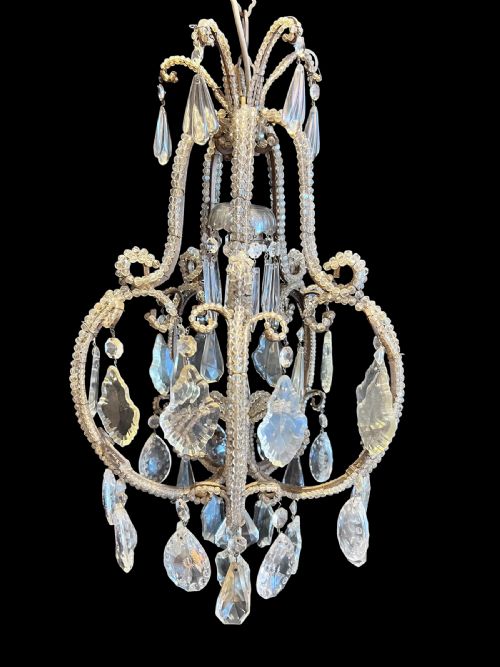
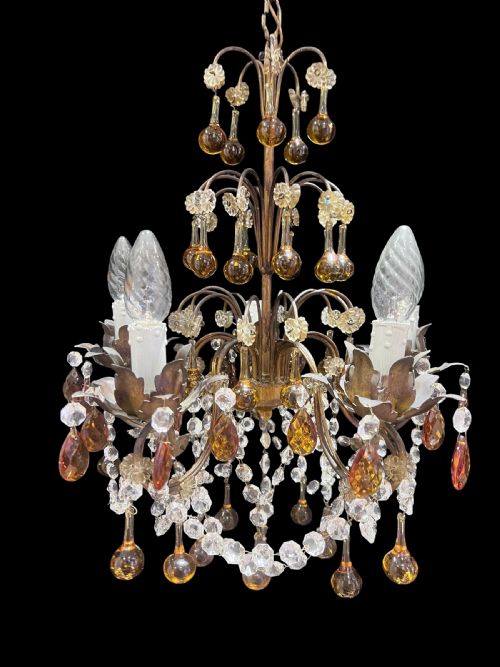
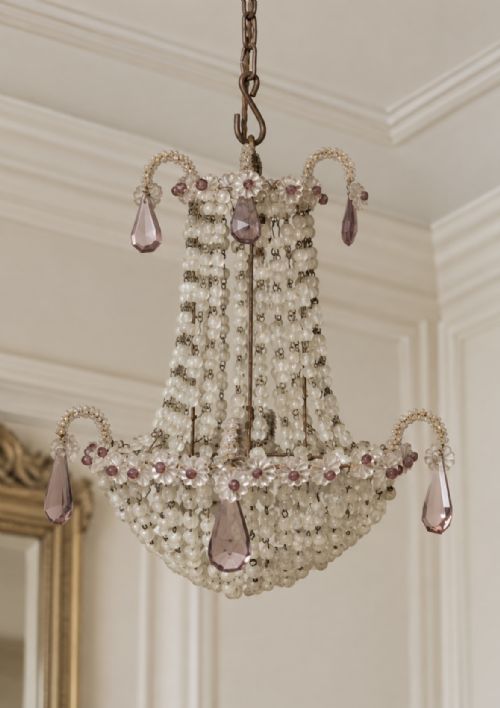
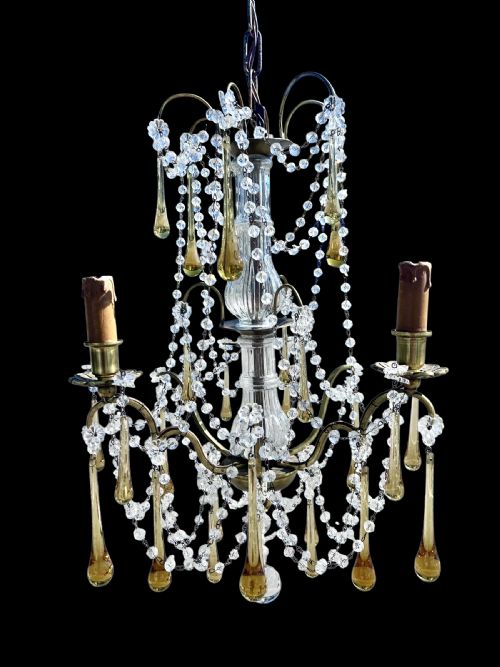
Italian glass beads form the sparkling drapery and intricate ornamentation of antique lighting fixtures found across this selection. Buyers exploring this phrase encounter chandeliers, wall-lights, and wall mirrors adorned with these luminous components, predominantly dating from the early twentieth century alongside nineteenth-century examples. The inventory showcases traditional Florentine and Venetian influences, bringing ornate decorative forms directly into domestic interiors.
The objects span from intimate single-light fixtures to monumental twenty-four-light chandeliers and matched pairs of wall-lights. Many pieces incorporate playful or elaborate elements, such as crystal fruits including grapes, apples, and pears, or specialised galleon chandelier designs. These diverse configurations reflect the rich heritage of Italian glasswork applied to functional and decorative household lighting.
How they were made
Artisans constructed these lighting fixtures using glass and crystal elements suspended upon wire, gilt metal, brass, and wrought iron frameworks. The individual beads and crystal drops were meticulously shaped and strung by hand to drape gracefully across the metallic armatures. Workshops utilised gilded surfaces to enhance the reflective quality of the glass and crystals, creating a harmonious interplay of metal and light.
The structural frames frequently employ Florentine gilt techniques, providing a lavish foundation for the dense cascades of beaded glass. Iron and brass offer sturdy support for larger multi-branch chandeliers, whilst delicate wire secures the myriad crystal fruits and pendants in place. This combination of robust metalwork and fragile glass required skilled assembly to ensure longevity and balance.
Italian Glass Beads Retail Price Guide 2026
Typical asking prices for italian glass beads among the pieces listed under this phrase on Sellingantiques today, from the lower quarter to the upper quarter. They describe what is for sale here now, not the wider market.
Some iron chandeliers are laden with crystal grapes, apples, and pears, bringing an unexpected orchard harvest indoors.
What varies in quality
The distinction between standard and superior pieces rests upon the density and complexity of the glass work and framing. Finer examples feature extensive hand-formed crystal fruits and elaborate multi-tiered bead strands that completely conceal the underlying metal armature. The depth of the gilding and the weight of the cast brass or iron components further distinguish the more ambitious commissions.
Scale and proportion dictate the presence of finer craftsmanship within this category, particularly evident in large multi-light chandeliers and matched pairs of wall-lights. Superior specimens maintain uniformity in their crystal components and demonstrate sophisticated composition, such as the intricate rigging of galleon forms or balanced arrangements of coloured crystals.
The Italian Glass Beads Glossary
- Gilt metal
- Metal treated with a gold-coloured finish or gold leaf application to provide a lustrous appearance. This technique enhances the decorative appeal of chandelier frames and wall-light backplates.
- Crystal
- High-clarity glass containing mineral additives that increase its refractive index and sparkle. It forms the faceted pendants and shaped fruits suspended from these historic lighting fixtures.
- Wrought iron
- Iron heated and hammered into shape by hand, providing strong structural support for heavy branch chandeliers. Its dark finish contrasts sharply with bright glass beads.
- Florentine style
- A decorative tradition originating from Florence characterised by ornate carved or gilded foliage and rich embellishment. It frequently defines the opulent frames of antique chandeliers and mirrors in this category.
- Wall-lights
- Decorative lighting fixtures designed to be mounted directly onto vertical wall surfaces. They often mirror the materials and beaded ornamentation of larger central chandeliers.
Italian Glass Beads: Frequently Asked Questions
What periods do these pieces date from?
The lighting fixtures and mirrors span from the nineteenth century through the early decades of the twentieth century. The majority of pieces originate from the 1900s to the 1930s.
This era encompasses traditional Florentine and Venetian aesthetic movements, showcasing enduring craftsmanship in glass and gilded metal.
How were these chandeliers and wall-lights used?
These decorative fixtures served to illuminate grand reception rooms, hallways, and parlours while displaying status through opulent materials. Their reflective glass components maximised the impact of candle or early electric light.
Today, they function as central decorative focal points in period properties and contemporary interiors alike.
How do I care for antique glass beads?
Gentle dusting with a soft cloth helps maintain the clarity and brilliance of the glass and crystal elements. Avoid harsh chemical cleaners that might damage the gilt metal or wire mountings.
Professional cleaning may be required for complex multi-light chandeliers to ensure the wiring and structural integrity remain secure.
How can I tell different styles apart?
Styles are distinguished primarily through frame ornamentation, such as the leafy gilt flourishes characteristic of Florentine pieces or the figurative nature of galleon designs. The presence of coloured crystal fruits points towards specific regional decorative traditions.
Examining the metalwork alongside the bead arrangement reveals the distinct regional character of each fixture.