
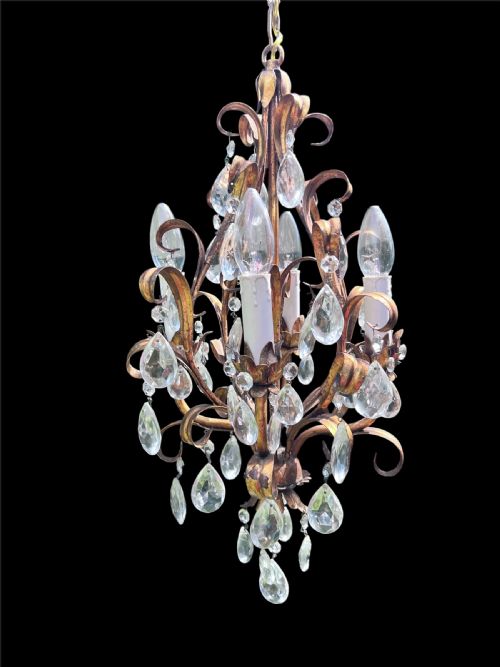


Italian Gilt Crystal Light
These italian gilt crystal light fixtures combine gilded metalwork with hanging glass drops to bring decorative warmth into a room.
Italian Gilt Crystal Light
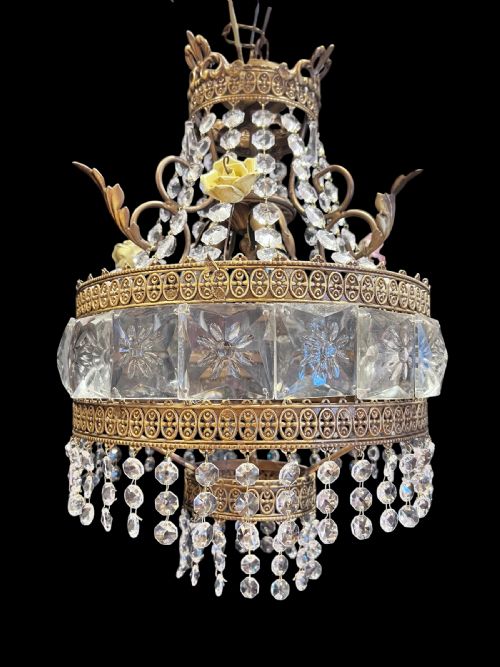
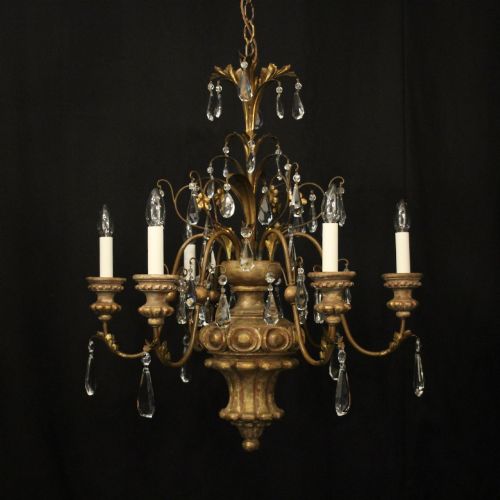
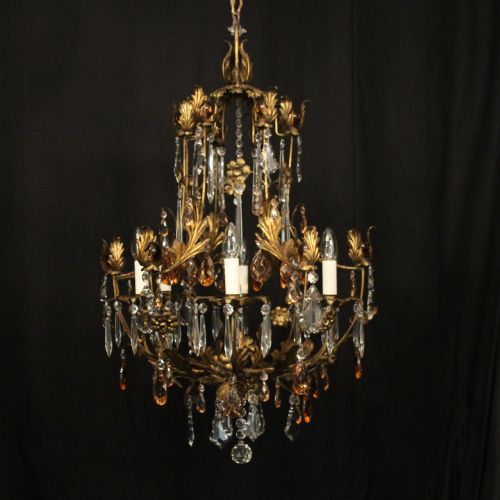
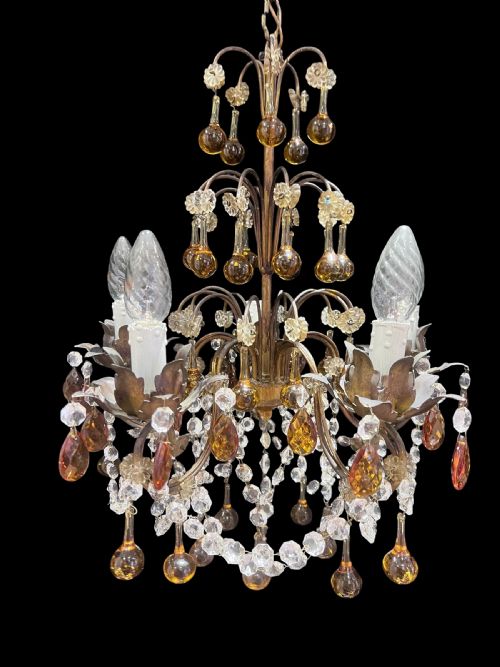
When searching for an italian gilt crystal light, a buyer encounters grand chandeliers, matching wall lights, and multi-armed candelabras originating mainly from the early twentieth century alongside nineteenth-century examples. The Florentine style dominates these fixtures, often incorporating leafy motifs, polychrome details, and floral elements alongside standard multi-tiered metal frames.
Lighting formats range from intimate single-bulb plafoniers and small wall sconces up to substantial twenty-four light double-tiered chandeliers designed for high ceilings. Gilt wood, gilded bronze, and brass provide the structural framework, which supports heavy clusters of clear or coloured glass crystals, beads, and fruit drops.
How they were made
Craftsmen built these lights using forged iron, brass, giltwood, and gilded bronze to form rigid armatures capable of supporting heavy glass components. Metal surfaces received thin layers of gold leaf or silver gilt, sometimes accented with polychrome paint to highlight carved floral details and leaves.
Pendants, beads, and drops were cast or cut from glass and crystal, then wired directly to the frame or suspended on metal pins. Coloured crystals and porcelain flowers were integrated into specific designs to add variety to standard clear glass drops.
Materials span gilt metal, brass, iron, and gilded bronze, complemented by glass crystal, porcelain flowers, and coloured fruit drops.
What varies in quality
Quality depends on the density of the crystal dressing and the complexity of the metal framework. Simple iron frames with basic glass drops sit at the functional end of the scale, whereas dense arrangements of beaded chains, coloured fruits, and double-tiered gilt bronze represent higher workmanship.
The finish of the metalwork also distinguishes pieces, with hand-carved giltwood and finely chased gilded bronze showing greater depth than standard painted or gilded iron. Complete, matching sets of wall lights and multi-tiered chandeliers indicate workshop production of higher standing.
The Italian Gilt Crystal Light Glossary
- Florentine
- A decorative style originating in Florence, characterised by carved leafy scrolls, floral motifs, and ornate gilt frames. This style appears frequently on early twentieth-century Italian chandeliers.
- Giltwood
- Timber treated with a thin layer of gold leaf applied over a prepared gesso base. It provides a lightweight yet opulent structure for wall lights and chandeliers.
- Plafonier
- A ceiling-mounted light fixture positioned flat or close against the ceiling surface. These single-light fittings use glass bowls or crystal drops held within a gilt frame.
- Candelabra
- A branched candleholder or wired light fitting designed to hold multiple light sources. Genoa examples in the records demonstrate this traditional branched format.
- Polychrome
- The practice of decorating architectural elements or metal frames with multiple colours. This technique highlights carved porcelain flowers and leaves on specific Florentine fittings.
Italian Gilt Crystal Light: Frequently Asked Questions
How do I clean an antique gilt crystal light?
Dust the frame gently with a soft brush and clean individual glass drops using a mild solution applied with a cloth. Avoid harsh chemical cleaners that might damage the fragile gold leaf or silver gilt surfaces.
Take care around wired sections and porcelain flowers to prevent moisture entering old lamp holders. Many owners remove crystals individually for thorough washing before reattaching them to the metal frame.
Are these lights suitable for modern electrical systems?
Most antique fittings require professional rewiring to meet contemporary safety standards before installation in a home. Electricians can usually adapt internal wiring channels without altering the visible exterior structure.
Edison screw or small bayonet lamp holders are typically fitted to match the scale of the original candle tubes and arms. Low-wattage LED bulbs help protect antique glass and painted surfaces from excessive heat exposure.
How do I tell a Florentine chandelier from other styles?
Florentine chandeliers are defined by leafy gilt metalwork, carved wooden leaves, and applied floral elements. They often feature abundant crystal bead strands draped across the arms rather than simple central stems.
Other Italian styles might lean towards cleaner Baroque or Rococo Revival lines with cast bronze scrollwork. Look closely at the presence of carved wooden components and botanical motifs to confirm the Florentine designation.
Can I find matching pairs of wall lights?
Matching pairs of wall lights appear frequently alongside larger chandeliers from the early twentieth century. These smaller sconces share the same gilt finish, crystal drops, and leafy Florentine framing as the central room lights.
Securing a matched set helps create a balanced lighting scheme across adjacent walls in a principal room. Pay attention to the number of light arms and bead configurations when matching wall sconces with an existing chandelier.