




Italian Cast Bronze
These italian cast bronze pieces range from Grand Tour souvenirs to Renaissance revival figures, bringing centuries of classical foundry work into the home.
Italian Cast Bronze
When you examine italian cast bronze, you encounter objects originating from 18th century, 19th century, and 20th century workshops. The selection here spans sculptural reductions of classical antiquities, decorative urns, and functional hearth furniture.
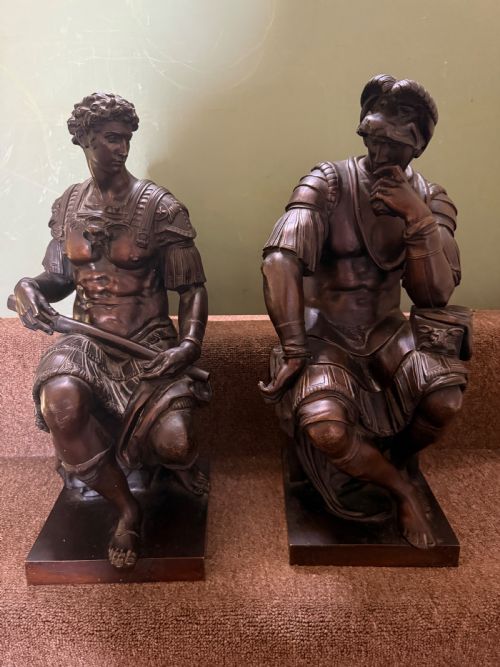
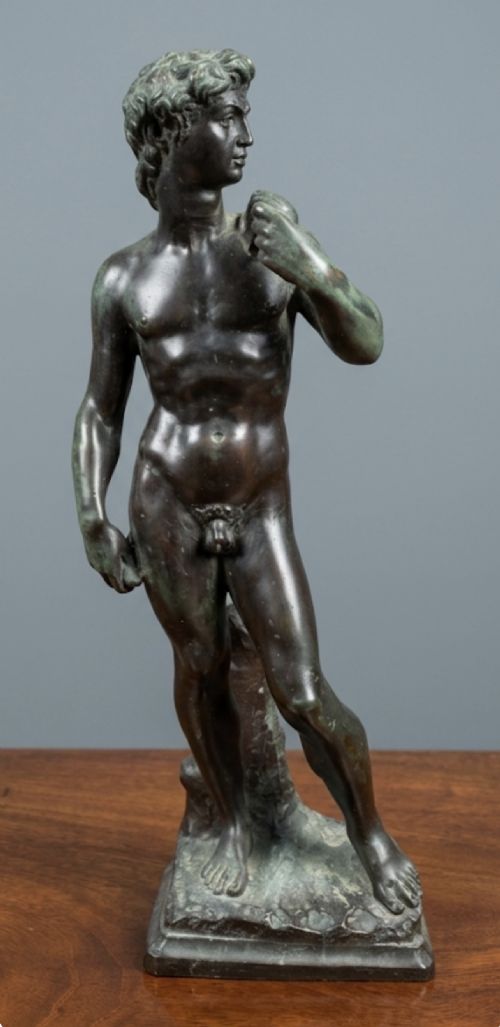
Grand Tour souvenirs dominate the offerings, translating monumental sculpture and Roman architecture into cabinet-sized bronzes. Figures after Michelangelo, Giambologna, and Cellini appear alongside depictions of historical personages and mythological subjects.
Domestic and decorative items also feature prominently, including cast brass and bronze lucerna oil lamps, andirons, and planters. These pieces utilise traditional foundry techniques to merge utility with classical ornamentation.
Materials and Casting Methods
Foundries utilised bronze alloys and cast brass, often mounting the finished metal figures onto marble bases. Patination treatments created surface coloration ranging from dark brown to green, accentuating the contours of the metal.
Casting methods relied on traditional techniques to capture intricate details in human figures, animals, and decorative urns. Artisans chased and finished the metal surfaces by hand after removal from the mould.
Italian Cast Bronze Retail Price Guide 2026
Typical asking prices for italian cast bronze among the pieces listed under this phrase on Sellingantiques today, from the lower quarter to the upper quarter. They describe what is for sale here now, not the wider market.
Among the classical deities and historical statesmen, a child's hand frozen in bronze reminds us that even Victorian tourists needed a papier-mâché break.
Evaluating Cast Quality
The sophistication of the patination and the weight of the bronze contribute to the overall presence of the piece. Base materials, such as the quality of the marble support, also distinguish finer workshop production.
Luigi Secchi and Munoz·Antonio Merente·Giambologna·Zoffoli·Giuseppe Renda·A Vannetti·Renzo Colombo
The Italian Cast Bronze Glossary
- Grand Tour
- A traditional trip through Europe undertaken by upper-class Europeans to view classical antiquities. Souvenirs purchased on these journeys formed the basis for many domestic collections of small bronzes.
- Patina
- A thin layer that naturally or artificially forms on the surface of bronze through oxidation. Artisans applied chemical treatments to control this coloration.
- Lucerna
- An oil lamp design with multiple spouts, rooted in Roman antiquity. Italian workshops produced these in cast brass and bronze during the 18th and 19th centuries.
- Andiron
- A horizontal metal support used in pairs inside an open fireplace to hold logs. Elaborate cast bronze versions featured figural or architectural ornamentation.
- Chasing
- The manual process of refining a metal casting using hammers and punches. This step cleared away casting flaws and sharpened surface details.
Italian Cast Bronze: Frequently Asked Questions
What is a Grand Tour bronze?
Grand Tour bronzes are miniature replicas of famous classical sculptures, architectural ruins, and Renaissance masterpieces collected by travellers during the 18th and 19th centuries.
Italian foundries produced these portable souvenirs in large numbers to satisfy the demand from foreign visitors touring Rome, Florence, and Venice.
How do I identify the period of a bronze?
Dating relies on examining the casting technique, the depth and tone of the patina, and the style of any mounting base. Nineteenth-century examples often emulate Renaissance or classical antiquity with distinct foundry marks or signatures.
Archival subjects and stylistic traits consistent with 18th-century or Victorian manufacturing provide further chronological indicators.
How were lucerna oil lamps used?
Lucerna oil lamps functioned as interior lighting devices featuring hanging tools and multiple wick channels. They were suspended or placed on tables to illuminate rooms using olive oil or similar fuels.
Later Victorian interpretations served primarily as decorative objects recalling ancient Roman lighting forms.
Where should I display heavy bronze sculptures?
Heavy sculptures require sturdy furniture capable of supporting dense metal weights, particularly when mounted on solid marble bases. Positioning them away from high-traffic areas prevents accidental knocks.
Stable surfaces ensure that tall figures or sculptural groups remain secure during everyday domestic life.