



Isle of Man Art
Isle of man art brings together oil paintings, watercolours, and clocks that capture the landscapes and harbours of the island.
Isle of Man Art
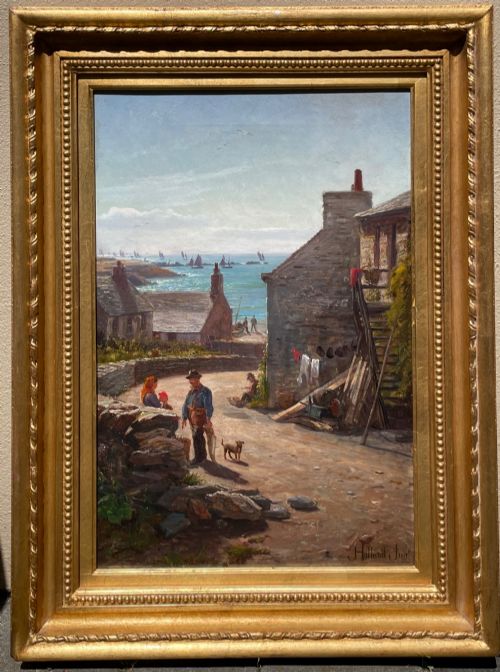
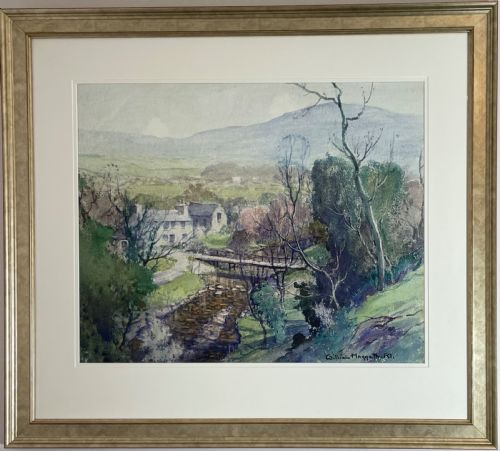
Isle of man art encompasses framed watercolours and oil paintings depicting Manx landscapes, coastal views, and harbours, alongside occasional decorative items like clocks. You are most likely to encounter Victorian and early twentieth-century paintings recording locations such as Peel Harbour, Port Erin, and Douglas.
The works span from the nineteenth century through the Edwardian period and into the mid-twentieth century, featuring artists who painted local topography and rural scenes. Coastal seascapes and river landscapes predominate, capturing the specific light and terrain of the island.
Materials and construction
Paintings in this category utilise oil on canvas or watercolour on paper, framed in materials such as giltwood or wood. Artists applied oil paint and watercolour to record atmospheric coastal weather and detailed topography.
Decorative pieces like automata clocks combine wood, glass, and electrical mechanisms to create moving ship displays. Paper is also present in maps and pastel drawings.
Isle of Man Art Retail Price Guide 2026
Typical asking prices for isle of man art among the pieces listed under this phrase on Sellingantiques today, from the lower quarter to the upper quarter. They describe what is for sale here now, not the wider market.
An electric moving ship clock proves that artists and makers on the island found ways to make seascapes actually sail indoors.
Quality variations
The distinction between standard works and superior examples rests upon the handling of light, atmosphere, and topographical detail by the artist. Skilled brushwork in oil or watercolour brings depth to coastal scenes and harbour views.
The quality of framing, such as period giltwood surrounds, complements the visual impact of the artwork. Documentation of the specific location and the reputation of the artist further define the standing of each piece.
John Holland·William Edward Webb·William Hoggatt·John Hobson Nicholson·Thomas Rose Miles·John McDougal·Owen Bowen·Arthur H Enock·Eliza Maddock
The Isle of Man Art Glossary
- Oil painting
- A work created using pigments bound in a drying oil medium, typically applied to canvas. This technique allows for rich colour depth and textured brushwork.
- Watercolour
- A painting method where fine pigment is suspended in a water-based solution, usually applied to paper. It produces translucent washes of colour.
- Giltwood
- Wood that has been treated and coated with a thin layer of gold leaf or gilt. It is commonly found on traditional picture frames.
- Automaton
- A mechanical device designed to mimic human or animal actions or to create moving displays. In this context, it powers a moving ship within a clock.
- Pastel
- A dry art medium in the form of a stick, consisting of powdered pigment and a binder. It produces velvety colours with a soft texture.
Isle of Man Art: Frequently Asked Questions
What subjects appear in isle of man art?
The works primarily depict Manx landscapes, coastal seascapes, harbours, and rivers. Locations such as Peel, Douglas, and Port Erin frequently recur in the paintings.
Artists focused on recording the distinctive topography and coastal atmosphere of the island during the nineteenth and twentieth centuries.
How do I date a painted landscape?
Dating relies upon the style of the brushwork, the period framing, and the artist's active years. Victorian and Edwardian works often bear specific signatures or stylistic markers of their decade.
Costume, shipping types, and architecture depicted in the scene can also help narrow down the period of creation.
Where should I hang these watercolours?
Watercolours and works on paper require placement away from direct sunlight to prevent fading of the pigments. A stable indoor environment protects both the paper and the framing.
Displaying them at eye level in dry rooms ensures the artwork remains in good condition over time.
What is an automaton clock?
An automaton clock integrates a mechanical display into its housing, such as an electrically moving ship. These pieces combine timekeeping with kinetic visual elements.
They reflect mid-century ingenuity while retaining a connection to maritime themes.