


Islamic Box
These islamic antique box examples span brass, wood and silver across multiple regional traditions.
Islamic Box
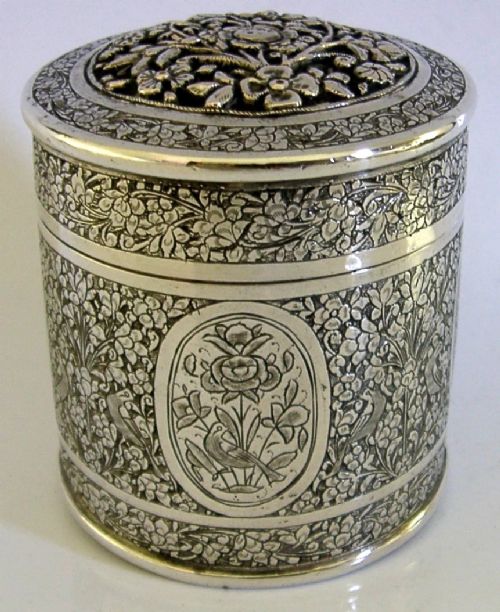
You are most likely to meet 19th century brass, silver, wood and lacquer boxes, ranging from heavy solid silver tea caddies to hand-painted papier-mâché and carved wooden caskets.
How they were made
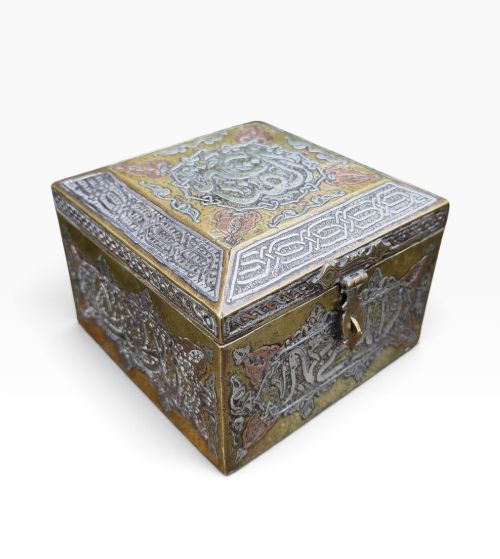
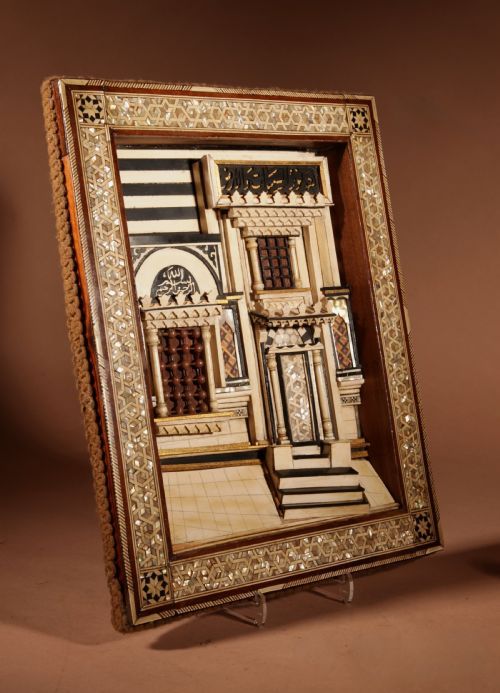
Metalsmiths utilised solid silver, brass and copper through casting, hammering and intricate silver inlay upon bronze surfaces, as seen in pieces like Mindanao betal boxes and Damascus Quran caskets. Artisans also worked with wood and bone to construct carved caskets and architectural dioramas.
Lacquer and paint transform papier-mâché and wood into vibrant surfaces, particularly evident in Qajar pen cases and cashier boxes from the nineteenth century.
Among the elegant lacquer boxes and silver tea caddies rests a piece of WW1 trench art fashioned from a decorated artillery shell.
What varies in quality
Quality rests upon the depth of hand-carved detail, the integrity of metal inlay work and the preservation of hand-painted lacquer surfaces. Superior examples demonstrate rigorous precision in ornamental motifs and robust structural execution.
Material weight and material purity separate heavier solid silver vessels from lighter brass or trench art iterations.
The Islamic Box Glossary
- Divit Qalamdan
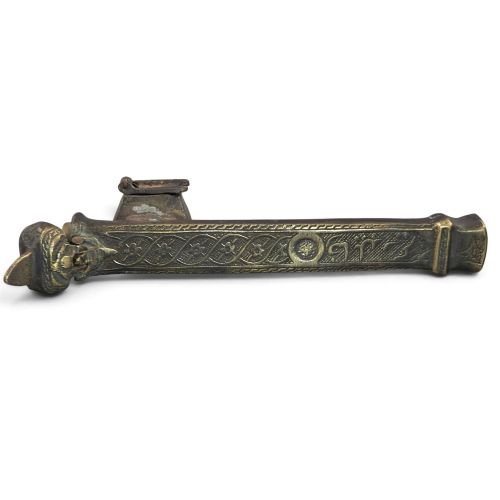
- A traditional travelling ink and pen case combination utilised in Ottoman and Armenian contexts. These fitted metal containers held both the inkwell and the reed pens.
- Qajar
- Relating to the Iranian dynasty ruling from the late eighteenth to the early twentieth century. This period produced distinctive lacquered papier-mâché and finely carved wooden boxes.
- Mamluk Revival
- A nineteenth-century artistic movement imitating the medieval metalwork style of the Mamluk Sultanate. Artisans applied heavy brass and inlay techniques to emulate medieval caskets.
- Tea Caddy
- A lidded container designed specifically for storing dry tea leaves. These boxes often featured secure internal compartments or solid silver construction.
- Betal Box
- A partitioned vessel utilised for holding betal nut preparations across Southeast Asian cultures. They frequently feature bronze bases with intricate silver wire inlay.
Islamic Box: Frequently Asked Questions
What are islamic antique boxes made from?
These pieces incorporate a range of materials including brass, silver, copper, wood, bone, mother-of-pearl and lacquered papier-mâché. Each material reflects the specific regional workshop traditions and functional purposes of the container.
Metals often feature surface ornamentation such as hammering, casting and silver inlay, whilst organic materials like wood and papier-mâché showcase hand-painted scenes.
How were pen cases used?
Divit Qalamdan pen cases served as portable writing kits for scribes, merchants and officials on the move. The design incorporated a secure inkwell attached to a long tubular compartment for holding reed pens.
Carried tucked into a sash or belt, these metal containers provided immediate access to writing implements during travel.
What is a Quran casket?
A Quran casket is a specialised container built to house small devotional copies of the holy text. These boxes often feature hinged lids and detailed metalwork associated with Mamluk revival styles.
Their domestic or mosque placement prioritized the respectful preservation of sacred volumes.
How do I care for lacquer boxes?
Lacquered papier-mâché and painted wooden boxes require stable environmental conditions away from direct sunlight and excessive humidity. Gentle dusting with a dry, soft cloth preserves the fragile painted surfaces.
Avoid moisture and chemical cleaners entirely to protect the historical finish.