
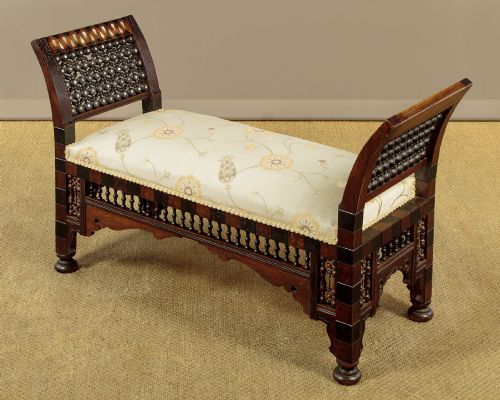


Inlaid Wooden Window Seat
These inlaid wooden window seat examples combine practical seating with detailed craftsmanship, offering a functional piece of history for any home.
Inlaid Wooden Window Seat
An inlaid wooden window seat provides a low, narrow bench designed to fit beneath a bay or tall casement. The forms here span late Victorian, Edwardian, and nineteen-twenties periods, taking shape as compact window seats, benches, stools, and small salon settees.
Edwardian mahogany pieces dominate the selection, often featuring dual-seating capacities intended for bedrooms or drawing rooms. Syrian and Moorish revival works introduce alternative regional styles, alongside singular Arts and Crafts oak apprentice pieces.
Makers constructed these variants for placement where light falls directly through glass. They bridge the gap between traditional chairs and larger sofas without blocking architectural views.
How they were made
Cabinetmakers utilised solid mahogany, walnut, and oak as the foundational timbers for these frames. Artisans then applied contrasting satinwood and boxwood inlay to create geometric, floral, or classical ribbon motifs across the show wood.
Marquetry techniques allowed craftsmen to piece together intricate pictorial veneers, while certain Eastern-influenced examples incorporated detailed mother of pearl sections. Many listings note original or later fabric upholstery covering the padded seat platforms.
Mahogany and satinwood dominate these listings, appearing alongside specific examples utilising mother of pearl and fabric upholstery.
What varies in quality
The precision and depth of the wood inlay separate standard production from superior examples. Sharper contrast between the dark mahogany base and the lighter satinwood or boxwood elements indicates finer workshop output.
Structural integrity within the open frames and twin-seater joinery dictates long-term durability. Pieces retaining crisp carved details and intact mother of pearl elements stand higher in the range than simpler variants.
The Inlaid Wooden Window Seat Glossary
- Marquetry
- Decorative veneer work forming pictures or patterns by arranging pieces of wood, shell, or other materials on a structural ground. This technique often appears on tabletops and backrests.
- Satinwood
- A durable tropical hardwood known for its golden-yellow sheen and smooth grain. Cabinetmakers chose this timber specifically for contrasting stringing and detailed inlays.
- Apprentice piece
- A small-scale item created by a trainee artisan to demonstrate mastery of a craft before admission to a guild. These objects reveal exceptional miniature detailing.
- Salon settee
- A small, decorative sofa designed for reception rooms rather than heavy daily lounging. They prioritise light frames and ornamental woodwork over deep cushioning.
- Stringing
- A thin, narrow line of contrasting wood inlaid into a channel on the furniture surface. It outlines panels and structural borders with neat geometric precision.
Inlaid Wooden Window Seat: Frequently Asked Questions
Where should I place a window seat?
These pieces suit positions beneath low windows, in hallways, or at the foot of a bedroom bed. Their compact depths prevent them from dominating smaller rooms.
Ensure the clearance matches the length of the settee or bench before positioning it against natural light.
How do I identify an Edwardian window seat?
Edwardian examples typically feature lighter mahogany timbers combined with delicate boxwood or satinwood stringing. The forms lean towards slender legs and neoclassical or Sheraton-revival motifs.
They often appear as two-seater salon settees rather than heavy Victorian seating.
What is an apprentice piece?
An apprentice piece is a smaller scale demonstration item made by a craftsman proving skill to peers. They mirror full-sized furniture in construction quality and detail.
The Arts and Crafts oak entry in this selection demonstrates this careful miniaturised technique.
Can these seats be re-upholstered?
Many salon settees and benches accommodate new fabric easily to match contemporary interiors. Listings sometimes specify whether a frame requires this work.
Traditional webbing and padding methods help preserve the historical integrity of the wooden frame during updates.
How do I care for inlaid wood?
Keep inlaid wooden furniture away from direct sunlight and sudden radiator heat to prevent veneer lifting. Regular dusting with a dry cloth maintains the polished timber surface.
Avoid excessive moisture on marquetry and mother of pearl sections.