

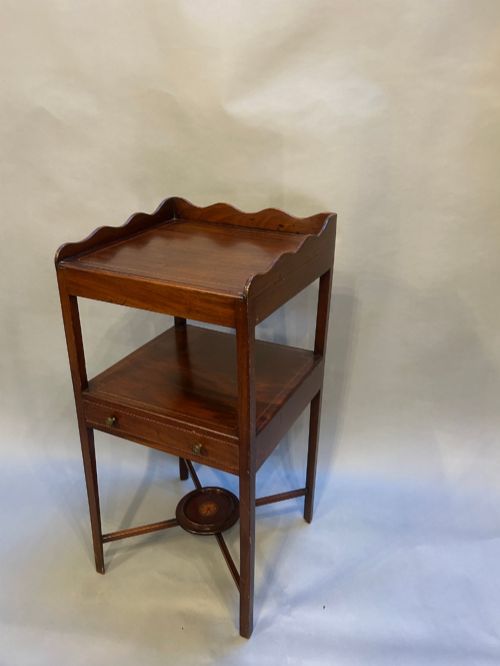
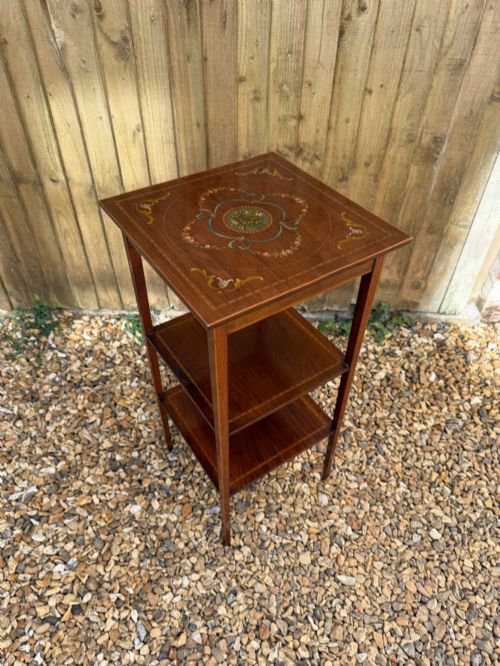


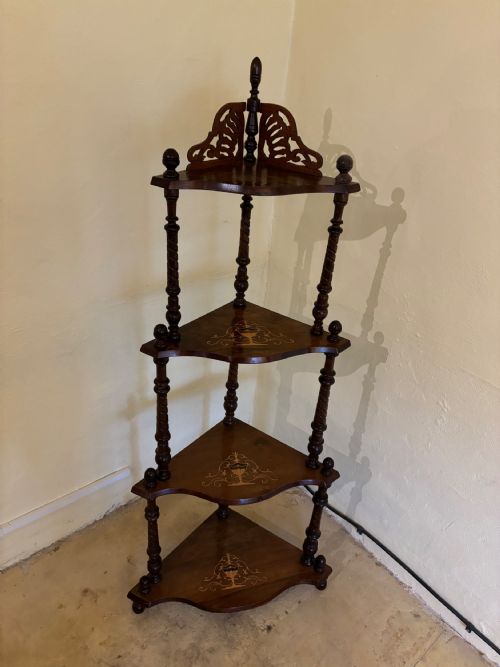


Inlaid Wood Whatnot
These inlaid wood whatnot pieces are multi-tiered display stands designed for parlours, offering both practical surface area and intricate decorative detail.
Inlaid Wood Whatnot
An inlaid wood whatnot is a multi-tiered display stand or etagere created to hold ornaments, books, and small decorative objects in the home. Most pieces seen on this page date from the Victorian period, spanning decades from eighteen-sixty to nineteen-hundred.
The forms range from traditional rectangular three-tier and four-tier designs to specialised corner stands and occasional tables with display shelves. Walnut, burr walnut, and mahogany form the primary wooden structures of these items.
Makers utilised contrasting woods and detailed marquetry or boxwood inlay to ornament the surfaces. Corner shelves and tiered stands provide compact solutions for displaying collections without dominating the floor space of a room.
Materials and construction
Cabinet makers constructed these etageres using solid and veneered timbers such as walnut, burr walnut, and mahogany, often pairing them with brass accents and glass elements. The rich grain of burr walnut provides a striking background for delicate floral or geometric ornamentation.
Marquetry and boxwood inlay techniques create intricate patterns across the tiers and panels of the stands. Painted mahogany variants also appear, showing how makers adapted surface decoration to suit changing tastes near the turn of the century.
Inlaid Wood Whatnot Retail Price Guide 2026
Typical asking prices for inlaid wood whatnot among the pieces listed under this phrase on Sellingantiques today, from the lower quarter to the upper quarter. They describe what is for sale here now, not the wider market.
Assessing quality and craftsmanship
Quality in these multitiered stands rests on the precision of the marquetry and the choice of timber figure. Finer examples feature rich burr walnut veneers and crisp boxwood inlay that retain sharp definition across every shelf.
The complexity of the tier configuration also marks the distinction between standard items and superior pieces. Four-tier corner stands and tables with integrated display cabinets demonstrate greater ambition in design and carpentry.
The Inlaid Wood Whatnot Glossary
- Whatnot
- A multi-tiered piece of furniture designed for displaying ornaments and books. It became immensely popular during the nineteenth century for parlour use.
- Etagere
- A piece of furniture consisting of a series of open shelves for displaying small objects. The term is frequently used interchangeably with whatnot.
- Marquetry
- The art and craft of applying pieces of veneer to a structure to form decorative patterns. Craftsmen use various coloured woods to create pictorial or geometric designs.
- Burr walnut
- A walnut wood taken from a tree growth where the grain has grown in a deformed manner, producing intricate patterns. It is prized for high-end Victorian cabinet making.
- Boxwood
- A dense, pale yellow wood frequently used for contrasting stringing and inlay work. Its fine grain allows for sharp, precise lines in marquetry.
Inlaid Wood Whatnot: Frequently Asked Questions
What is an inlaid wood whatnot?
An inlaid wood whatnot is a tiered open shelving unit designed during the nineteenth century to display decorative objects, porcelain, and books in a reception room.
These pieces combine functional vertical storage with ornamental woodwork, featuring multiple platforms supported by slender uprights or corner brackets.
Where were these pieces placed?
Victorian households positioned these stands in parlours, drawing rooms, and hallways where guests would see the displayed collections. Corner stands fit neatly into unused angles of a room, while oval and rectangular etageres stood against walls or beside seating.
The open design allowed light to pass through while keeping small ornaments elevated and visible from various angles across the room.
How do I identify a Victorian piece?
Victorian pieces typically feature characteristic timbers like walnut and mahogany combined with marquetry or boxwood inlay. The construction methods, such as hand-cut dovetails and traditional joinery, reflect nineteenth-century cabinet making practices.
Stylistic cues on this page point toward Victorian and Sheraton Revival designs dating from eighteen-sixty to nineteen-hundred.
How do I care for inlaid wood?
Keep inlaid wood furniture out of direct sunlight and away from sudden temperature fluctuations to prevent the veneer from drying out or cracking. Dust the tiers regularly with a soft, dry cloth and avoid using harsh chemical polishes that can damage the antique finish.
Waxing the surfaces occasionally helps maintain the lustre of the walnut or mahogany grain without building up a heavy residue.