




Inlaid Wood Cellarette
An inlaid wood cellarette holds bottles and decanters with architectural dignity, bringing tactile warmth and period joinery to a dining room.
Inlaid Wood Cellarette
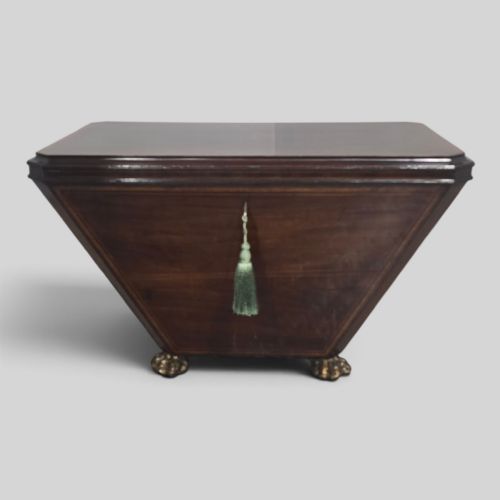
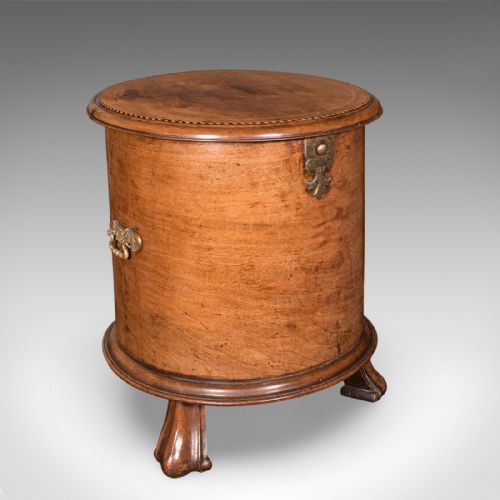
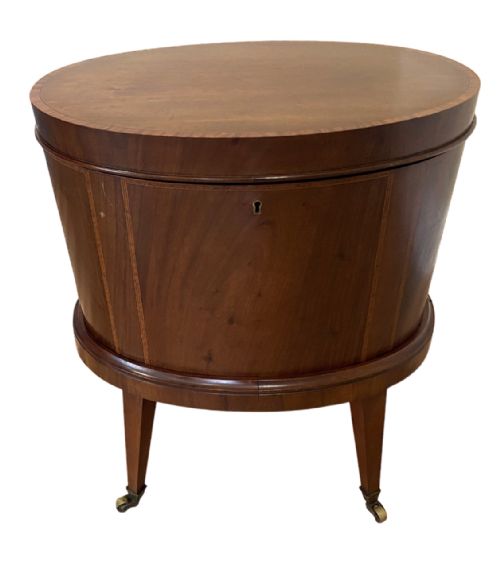
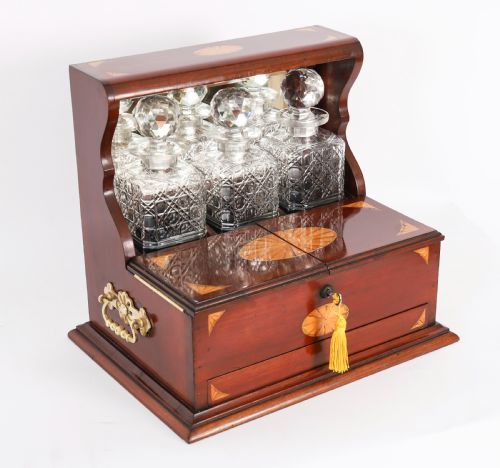
An inlaid wood cellarette is a specialist container designed to hold bottles and decanters near the dining table, often taking the form of a wine cooler or drinks table. The examples met on this page span the Regency, Victorian, and Edwardian periods, demonstrating how the form evolved from formal Georgian cellarettes into varied nineteenth-century drinks cabinets and tantaluses.
Makers shaped these pieces from timbers such as mahogany, walnut, and satinwood, frequently augmenting the primary wood with contrasting boxwood or satinwood inlay. While traditional cellarettes sat low on stands or feet to hold wine bottles, later iterations encompassed sideboards, jardiniere stands, and crystal cabinets.
The decorative vocabulary draws heavily on Sheraton and Georgian Revival principles, alongside Louis XVI Revival influences that introduced lighter proportions and refined floral or geometric banding. Buyers searching for an inlaid wood cellarette encounter both deep, richly patinated Regency coolers and crisper Edwardian drinks tables.
How they were made
Cabinetmakers constructed the carcase of an inlaid wood cellarette using dense primary timbers such as mahogany or walnut, chosen for structural stability and depth of grain. Surfaces received precise veneers and contrasting stringing or marquetry in satinwood and boxwood, creating sharp geometric borders and decorative motifs.
Fittings within the pieces incorporated brass handles, lead crystal decanters, and glass inserts, reflecting the functional demand for secure bottle storage and liner protection. Joinery relied on traditional hand-cut joints, ensuring the heavy weights of bottled wine and water could be supported over centuries.
Inlaid Wood Cellarette Retail Price Guide 2026
Typical asking prices for inlaid wood cellarette among the pieces listed under this phrase on Sellingantiques today, from the lower quarter to the upper quarter. They describe what is for sale here now, not the wider market.
Some nineteenth-century makers concealed liquor behind locked wood bars, trusting that guests would admire the satinwood rather than test the lock.
What varies in quality
The distinction between standard and superior pieces rests on the crispness of the inlay work and the choice of timber figurations, where finely figured mahogany or richly contrasted satinwood demonstrates greater atelier skill. Cabinetmakers who invested time in hand-cut stringing and precise mitring produced cleaner sight lines.
Interior architecture also separates the levels of production, distinguishing simple box compartments from fully fitted lead crystal decanter sets and robust brass carrying handles. The integrity of the original stand or base, whether low Regency legs or a raised sideboard frame, governs the visual balance of the whole.
Edwards and Roberts·Gillows·Freemans of Norwich
The Inlaid Wood Cellarette Glossary
- Cellarette
- A lockable container or cabinet designed for storing wine and spirits near the dining table. They frequently incorporate lead-lined interiors or fitted compartments for individual bottles.
- Tantalus
- A locking drinks stand that secures decanters within a wooden frame while keeping the contents visible. The mechanism prevents unauthorised pouring without a key.
- Satinwood
- A durable, highly lustrous timber with a golden sheen, extensively used for veneers and inlay work on fine furniture. It provides strong visual contrast against darker woods like mahogany.
- Stringing
- Thin strips of contrasting wood inlaid into grooves on the surface of furniture to form linear borders. This technique defined many Sheraton and Regency designs.
- Jardiniere
- An ornamental stand or receptacle designed to hold plants and flowers. Some examples share the form and decorative inlay of contemporaneous wine coolers.
Inlaid Wood Cellarette: Frequently Asked Questions
What is an inlaid wood cellarette used for?
An inlaid wood cellarette was originally designed to hold wine bottles and decanters close to the dining table during formal meals. The heavy wooden carcase and internal compartments kept bottles cool and secure.
Today, these pieces function as drinks cabinets, side tables, or decorative focal points in reception rooms. Their fitted interiors accommodate modern bottles and glassware with equal ease.
How do I tell a Regency cellarette from a Victorian one?
Regency pieces often feature robust architectural proportions, deep mahogany grains, and restrained brass mounts inspired by classical antiquity. The joinery is heavy and intended for floor-standing wine storage.
Victorian and later variations introduce lighter satinwood inlay, Louis XVI Revival motifs, and alternative forms such as tantaluses or drinks tables. The aesthetic shifts toward display and entertaining rather than purely utilitarian cellaring.
Did all cellarettes have lead linings?
Many early wine coolers and cellarettes incorporated metal or lead linings to hold ice and water for chilling bottles. These liners protected the surrounding wood from moisture and spills.
Not every piece on this page retains its original lining, as later adaptations converted them into general storage cabinets or games tables. The presence of fitted interiors or glass decanters varies by object type.
Where should I place a cellarette in a modern room?
A cellarette suits a dining room, study, or living space where it can serve as a natural companion to seating areas or sideboards. Its inlaid top provides a useful surface for serving drinks or displaying objects.
Because wood responds to environmental changes, place the piece away from direct heat sources and strong sunlight to protect the polish and satinwood inlay.