


Inlaid Wood Bed
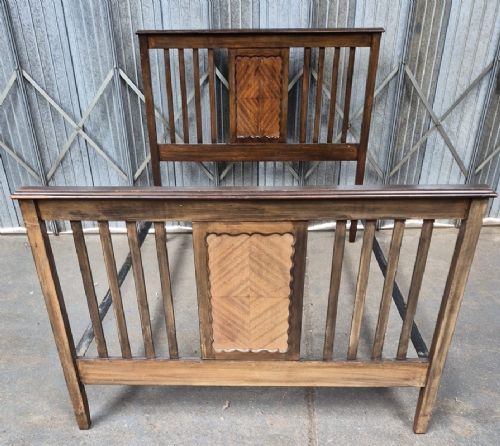
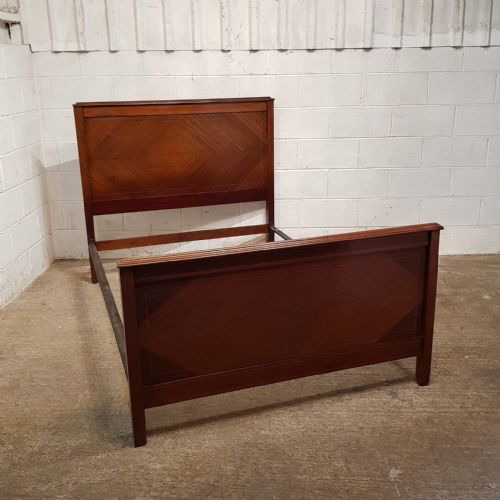
These inlaid wood bed pieces combine period craftsmanship and striking timbers, offering a classic focal point for a traditional bedroom.
Inlaid Wood Bed
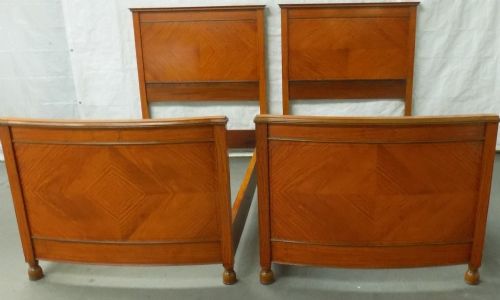
The Edwardian period dominates the pieces seen here, alongside Georgian and French revival styles that utilise bow-ended shapes and decorative veneers. Alongside full bedsteads, related forms such as end-of-bed sofas and lamp tables appear within the selections.
Most examples date around 1900 to 1910, reflecting the cabinet-making standards of the early twentieth century. These structures often feature slatted bases and detailed timber work designed for domestic settings.
How they were made
Makers constructed these frames using solid timber foundations of mahogany, fruitwood, and timber, overlaid with fine veneers and satinwood. Cabinet-makers incorporated decorative bone inlay alongside wood veneer to create contrasting geometric and floral patterns across the headboards and footboards.
Metal components such as iron and ormolu hardware occasionally reinforced the structural joints and decorated the French style frames. Joinery methods of the period ensured stability in large pieces like double and king-size bedsteads.
Listings feature Edwardian pieces predominantly from 1900 and 1910, constructed using mahogany, satinwood, fruitwood, and bone.
What varies in quality
The refinement of the timber selection dictates the visual success of the piece, particularly where burr mahogany and satinwood meet. Finer examples display meticulous attention in the alignment of the veneer and the crispness of the inlaid bone details.
Proportion and style adherence separate standard production from superior workshops, as seen in the balance of bow-ended bedsteads and revival forms. The integrity of the underlying timber framework ensures durability across single and kingsize dimensions.
Heal's
The Inlaid Wood Bed Glossary
- Inlay
- A technique where pieces of contrasting material are fitted into a recess flush with the wood surface. This method creates decorative patterns on headboards and bed frames.
- Satinwood
- A durable timber known for its yellowish-gold colour and lustrous finish. Cabinet-makers used it extensively for banding and inlay work.
- Mahogany
- A heavy, reddish-brown hardwood prized for its stability and grain. It forms the primary structural material for many Edwardian bedsteads.
- Ormolu
- Gilded bronze or brass applied as decorative mounts. It appears on French revival furniture pieces.
Inlaid Wood Bed: Frequently Asked Questions
What periods do these beds date from?
The pieces seen here primarily date from the Edwardian era, spanning the years around 1900 and 1910.
Revival styles from this period also draw upon earlier Georgian and French aesthetic traditions.
What woods were used in these frames?
Makers relied heavily on mahogany as a primary structural timber, often enhanced by satinwood, burr, and fruitwood.
Bone inlay and wood veneers provided contrasting decorative details across the surfaces.
Are different sizes available?
The selection includes single beds, double bedsteads, and larger kingsize options.
Matching pairs of single beds also appear alongside individual headboards and related bedroom furniture.
How do French styles differ here?
French revival pieces incorporate stylistic influences such as Louis XV and Louis XVI designs.
These examples often feature ormolu mounts and distinctive shaping compared to standard Edwardian forms.