



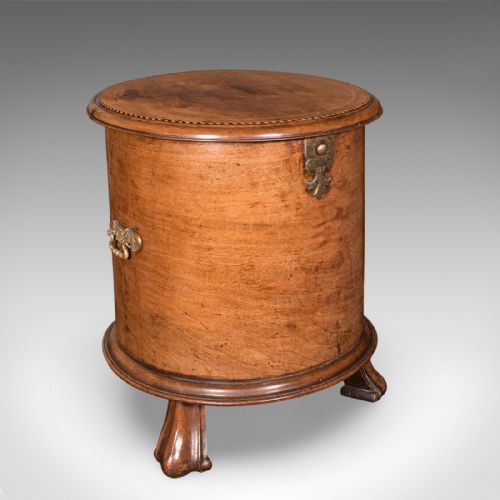

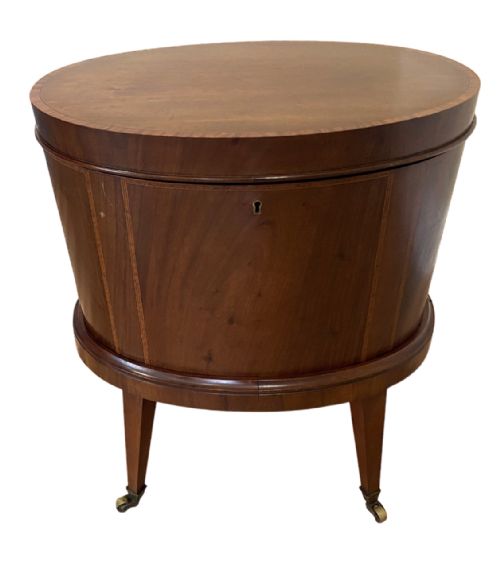


Inlaid Wine Cooler
An inlaid wine cooler brings timber and brass together with sharp geometric lines, offering a practical vessel for bottles that doubles as a striking floor-standing centrepiece.
Inlaid Wine Cooler
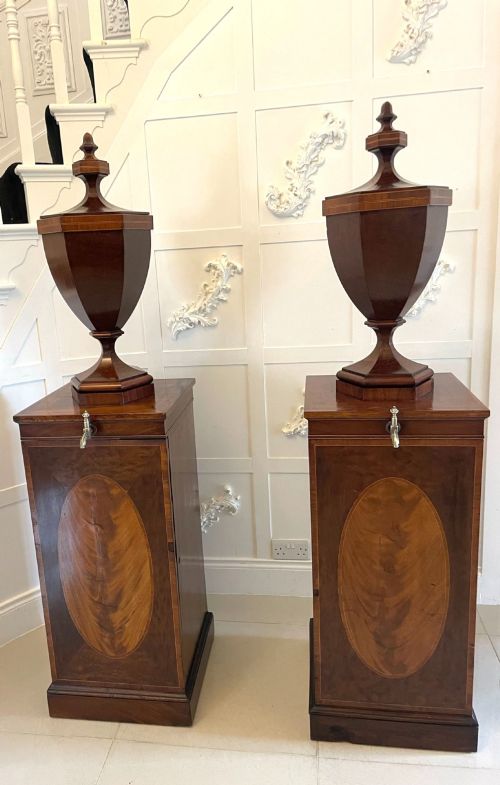
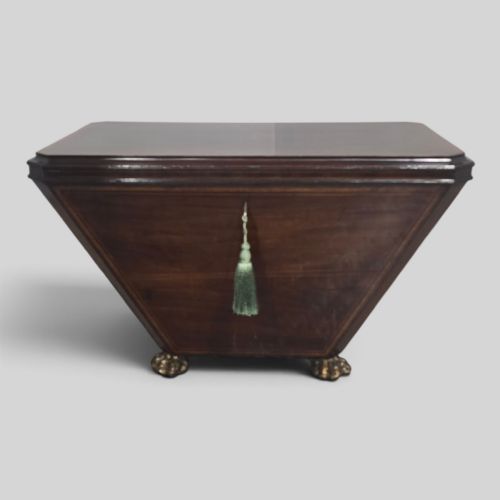
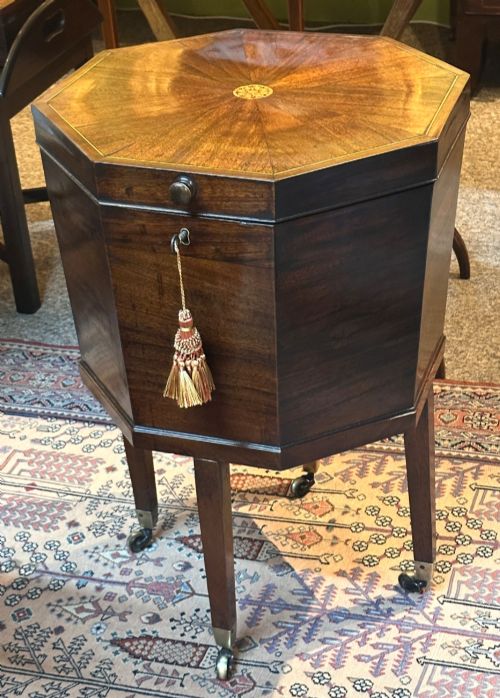
An inlaid wine cooler takes the form of a cellarette, an oval or octagonal container, or a pedestal-mounted urn designed to hold bottles and ice in formal dining rooms. These pieces emerge across the Georgian, Regency, Victorian and Edwardian eras, spanning the eighteenth, nineteenth and early twentieth centuries.
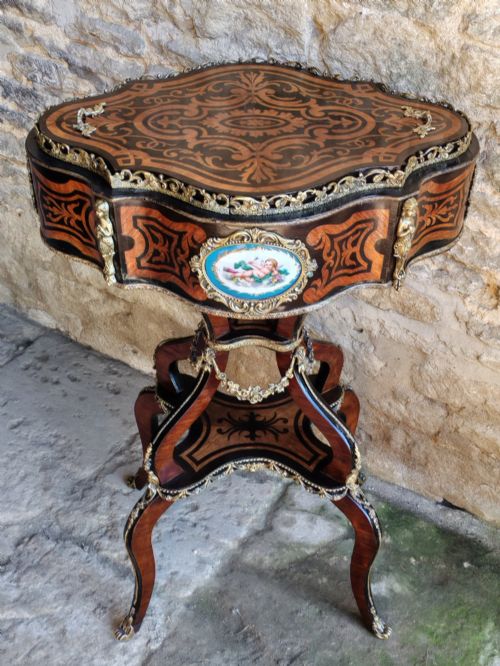
The versions most commonly met on this page are mahogany cellarettes and oval wine coolers featuring contrasting satinwood, boxwood or rosewood inlay, alongside occasional walnut and marquetry planter hybrids.
Materials and construction
Cabinetmakers constructed these vessels from dense hardwoods such as mahogany and walnut, applying delicate veneers and contrasting bandings in satinwood and boxwood to form intricate geometric or neoclassical motifs.
Metal accents including brass fittings, liners, handles and castormounts provided functional support and visual contrast to the polished timber surfaces.
Inlaid Wine Cooler Retail Price Guide 2026
Typical asking prices for inlaid wine cooler among the pieces listed under this phrase on Sellingantiques today, from the lower quarter to the upper quarter. They describe what is for sale here now, not the wider market.
Listings span the Georgian, Regency, Victorian and Edwardian periods, utilising mahogany, walnut, satinwood and rosewood.
Assessing quality and execution
Quality rests in the crispness of the boxwood and satinwood inlay and the selection of figured mahogany or burr walnut veneers, where tight grain patterns show careful timber selection by the cabinetmaker.
The presence of original brass work, fitted interior compartments and substantial pedestals or stands elevates an example above simpler vernacular iterations.
Edwards and Roberts·Gillows·Freemans of Norwich·Whytock and Reid
The Inlaid Wine Cooler Glossary
- Cellarette
- A lockable container used for storing wine bottles in the dining room before serving. These pieces often feature lead linings to hold ice and water.
- Marquetry
- The art of applying pieces of veneer to a structure to form decorative patterns and pictures. Craftsmen utilise diverse timbers to achieve contrasting natural colours.
- Jardiniere
- An ornamental pot or stand designed to hold plants or flowers. In nineteenth-century examples, these vessels often double in function as wine coolers.
- Satinwood
- A durable, yellowish timber prized for its lustrous sheen and smooth texture. Makers employed it extensively for banding and inlay details.
- Serpentine
- A curved line or front featuring a convex centre flanked by concave sides. This undulating shape demands high skill in woodworking.
Inlaid Wine Cooler: Frequently Asked Questions
What is a cellarette?
A cellarette is a dedicated storage chest designed to hold wine bottles safely near the dining table. They often feature internal divisions to keep bottles separated.
Historically, they sat on the floor beneath a sideboard or stood on dedicated legs and pedestals for easy access during meals.
How do I use one today?
These pieces function well as standalone decorative items in a dining room or living space. Many owners repurpose them as planters or magazine holders.
They also serve their original purpose as bottle holders during dinner parties when lined with a waterproof insert.
How do I date an inlaid piece?
Dating relies on observing the timber choice, hardware style and inlay motifs. Georgian examples often show restrained neoclassical lines, while Victorian and Edwardian pieces lean into denser marquetry and varied forms.
Examining the construction methods inside the compartment reveals the era of manufacture.
What woods were used?
Mahogany remains the primary timber found across these pieces, complemented by walnut in later nineteenth-century examples. Inlay work typically incorporates lighter woods such as satinwood and boxwood to create stark visual contrast.
Rosewood and specialised marquetry appear on continental and late-period variations.