

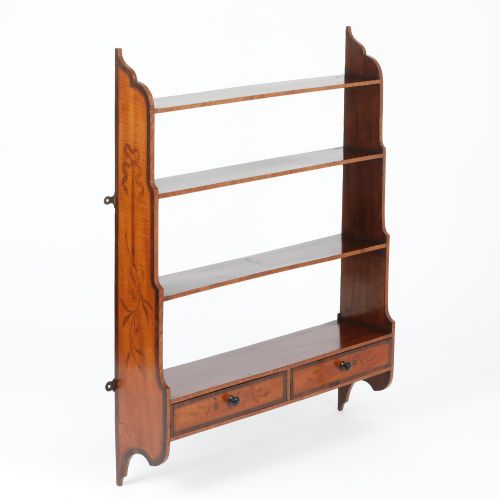


Inlaid Wall Shelf
An inlaid wall shelf brings polished timber and precise decorative banding right to the vertical surface.
Inlaid Wall Shelf
An inlaid wall shelf serves as a hanging display piece or practical ledge for domestic spaces, combining timber construction with contrasting decorative motifs. These pieces range from compact corner units and multi-tiered hanging bookshelves to mirrors fitted with integrated ledges.
The versions met most frequently on this page span the Victorian and Edwardian eras, alongside pieces executed in Georgian Revival and Empire styles. Alongside straightforward shelf units, related hanging furniture includes delft racks, wall cabinets, and mirrors featuring display ledges.
Materials vary across walnut, mahogany, satinwood, and rosewood, frequently enriched with marquetry or mother of pearl detail. Origins stretch from British workshops to continental European centres and Syria, producing forms from corner brackets to tall waterfall bookshelves.
How they were made
Cabinetmakers utilised hardwoods such as mahogany, walnut, and rosewood as the primary structural body for these hanging pieces. Contrasting timbers like satinwood and exotic woods provided the material for detailed inlay and marquetry decoration.
Techniques relied on precise joinery to ensure hanging furniture could safely support weight while mounted on vertical surfaces. Decorative enrichment incorporated meticulous hand-cut inlay work and occasional additions of mother of pearl or brass elements.
Inlaid Wall Shelf Retail Price Guide 2026
Typical asking prices for inlaid wall shelf among the pieces listed under this phrase on Sellingantiques today, from the lower quarter to the upper quarter. They describe what is for sale here now, not the wider market.
What varies in quality
The refinement of the timber and the crispness of the inlay separate standard examples from finer works. Superior pieces demonstrate tight botanical or geometric marquetry integration where contrasting woods sit flush within the primary surface.
Construction depth also dictates standing, with simpler single-board brackets contrasting against multi-tiered waterfall bookshelves or structural cabinets with integrated mirrors. The complexity of the silhouette, whether a curved Syrian bracket or a tiered Edwardian ledge, influences the overall architectural presence.
The Inlaid Wall Shelf Glossary
- Inlay
- A technique where pieces of contrasting timber, shell, or metal are inserted into a recessed surface to form a decorative pattern. This method creates a flat, smooth finish across the wood.
- Marquetry
- Elaborate decorative veneer assembled into pictorial or geometric patterns before being glued to the carcase. It differs from simple inlay by covering larger expanses of the surface.
- Waterfal bookshelves
- A set of open hanging shelves where each tier steps back progressively from the one below. This tiered arrangement allows for the display of books or small objects at varying heights.
- Wall bracket
- A small architectural support projecting from a vertical surface to hold an ornament or clock. These pieces often feature carved or inlaid decorative flourishes.
Inlaid Wall Shelf: Frequently Asked Questions
How do I hang a wall shelf securely?
These pieces require appropriate fixings screwed directly into wall studs or masonry using suitable wall plugs. The weight of the timber and any displayed items must be distributed evenly across the hanging brackets.
Checking the structural integrity of the backboards and hanging loops before mounting ensures the piece remains stable over time.
What rooms suit an antique wall shelf?
Compact corner brackets and mirror ledges function well in hallways or bedrooms where floor space is restricted. Larger multi-tiered bookshelves and cabinets suit living rooms or studies for displaying small collections.
Matching the timber tone, such as mahogany or walnut, to existing furniture helps the hanging piece integrate naturally into the room.
How do I clean inlaid wooden surfaces?
Dust the timber gently with a dry, soft cloth to prevent abrasive particles from scratching the polished finish. Avoid using heavy liquid cleaners or silicon-based polishes that can seep into the inlay joints.
Occasional application of a mild beeswax feeds the timber and maintains the natural lustre of the contrasting woods.
How can I tell Edwardian pieces apart from Victorian ones?
Edwardian examples often display lighter satinwood influences and airier proportions compared to heavier Victorian counterparts. Victorian pieces frequently utilise darker mahogany or walnut with more robust carving and denser marquetry.
Examining the construction methods and backing timbers helps clarify the period of manufacture.