

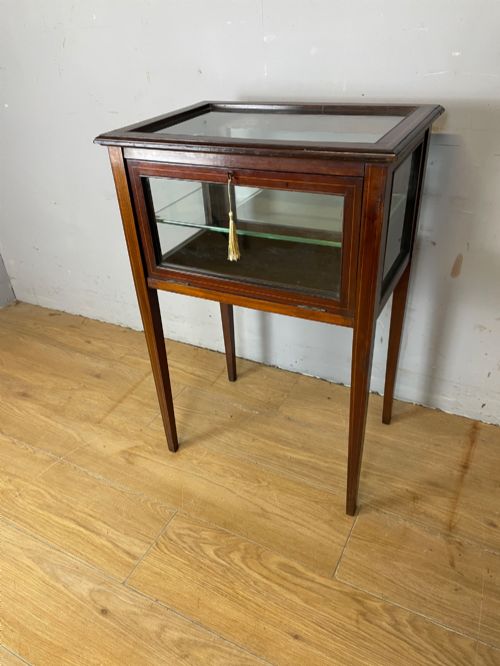
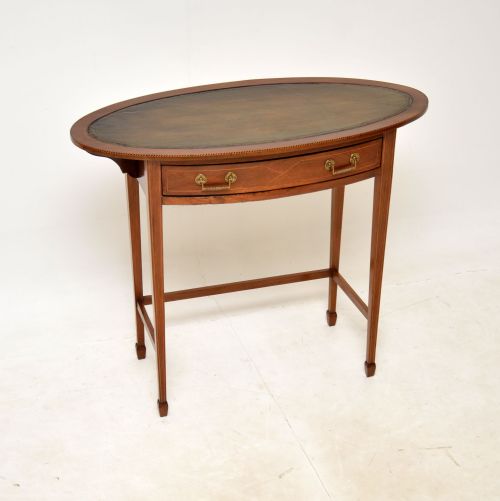
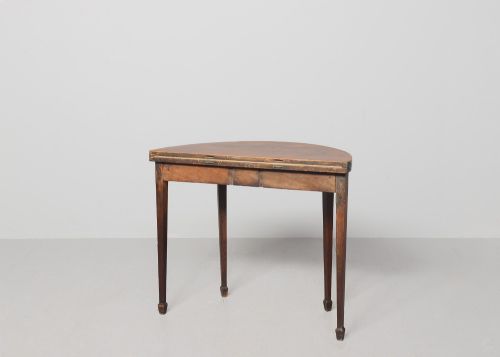
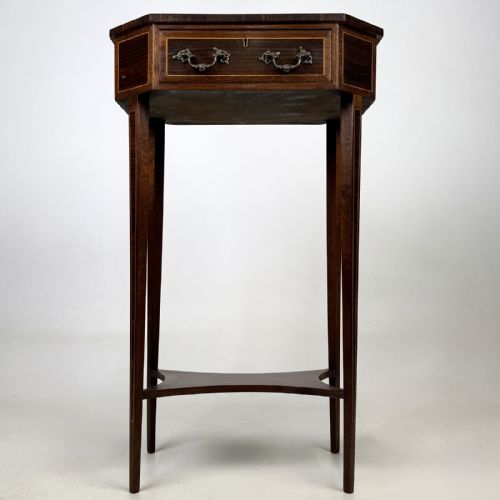
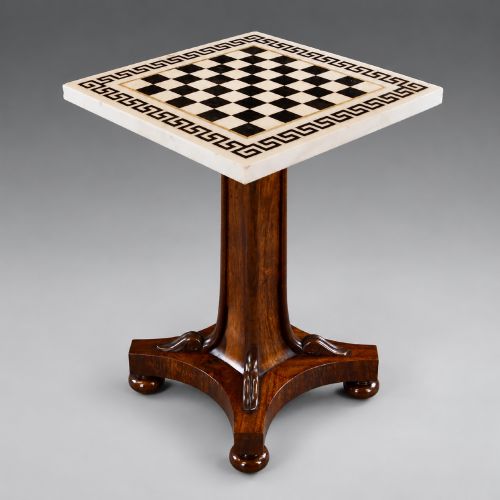
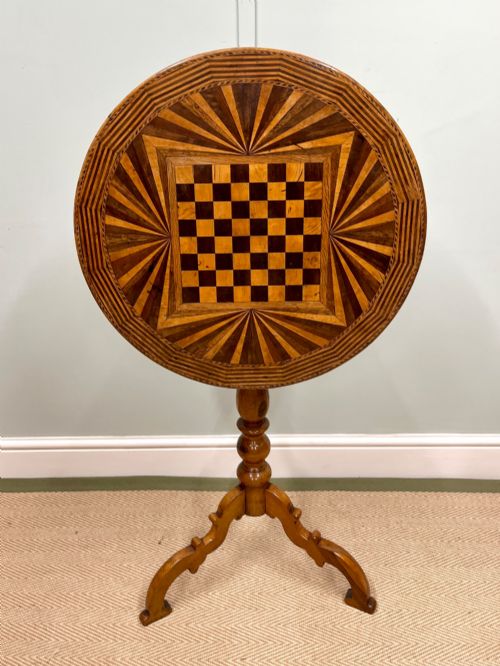
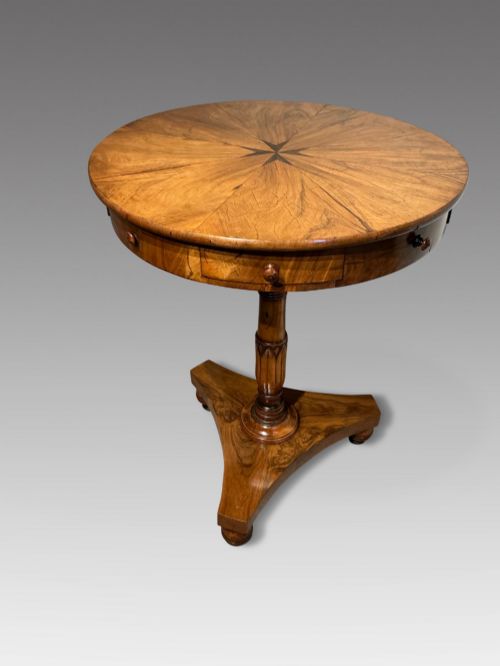
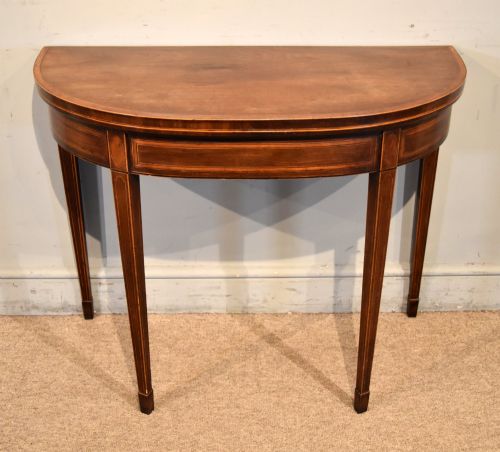
Inlaid Top Side Table
An inlaid top side table brings decorative surface work and compact utility to a room, drawing the eye with contrasting timber or shell.
Inlaid Top Side Table
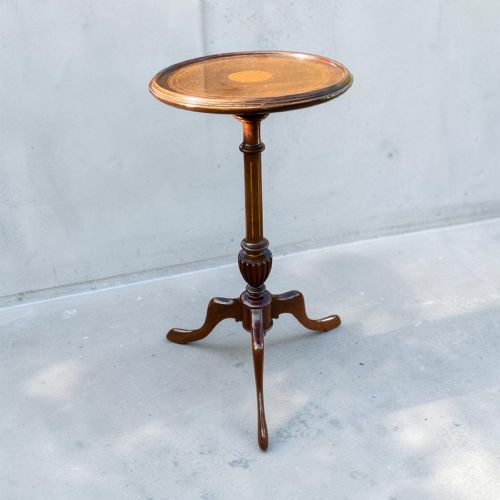
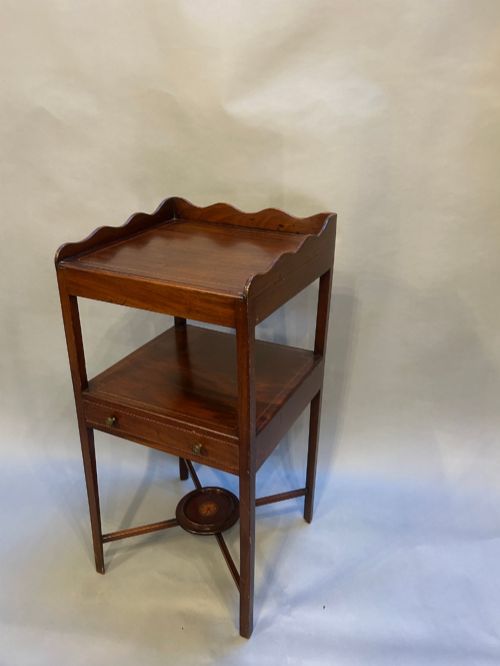
An inlaid top side table combines useful surface area with decorative ornamentation on the upper board. Buyers searching for an inlaid top side table encounter diverse forms ranging from occasional lamp tables and card tables to bedside cabinets and work tables.
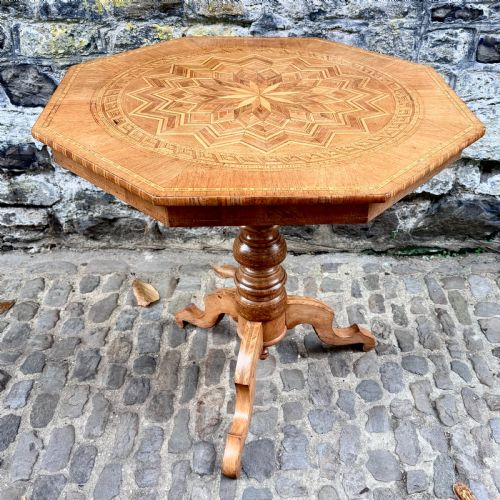
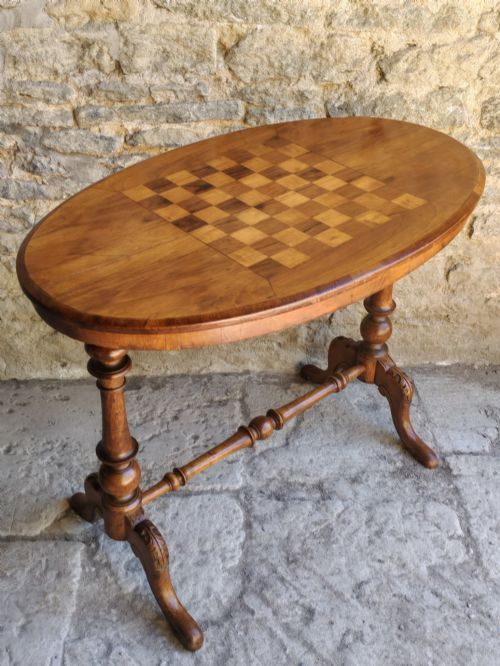
The pieces appearing on this page span several periods, with Victorian and Edwardian examples particularly common alongside Georgian, Regency, and early twentieth century French or Italian pieces. Forms include circular, oval, octagonal, and rectangular tops supported by pedestals or legs.
Origin points vary widely, covering English workshops, French cabinetry, Italian Sorrento production, Anglo-Indian items, and Swiss manufacture. Materials dictate much of the character, uniting hardwoods with contrasting botanical or mineral insertions.
How they were made
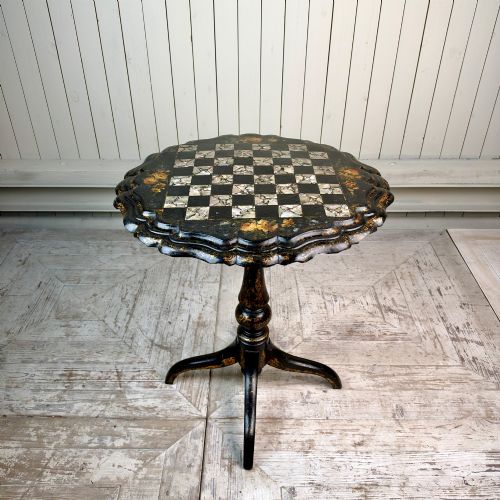
Cabinet makers utilised dense timber foundations such as mahogany, walnut, rosewood, satinwood, and kingwood, often applied as finely sliced veneers over secondary woods. Surfaces received elaborate ornamentation through marquetry picture work, geometric parquetry, or individual insertions of brass, mother-of-pearl, ebony, and lighter fruitwoods.
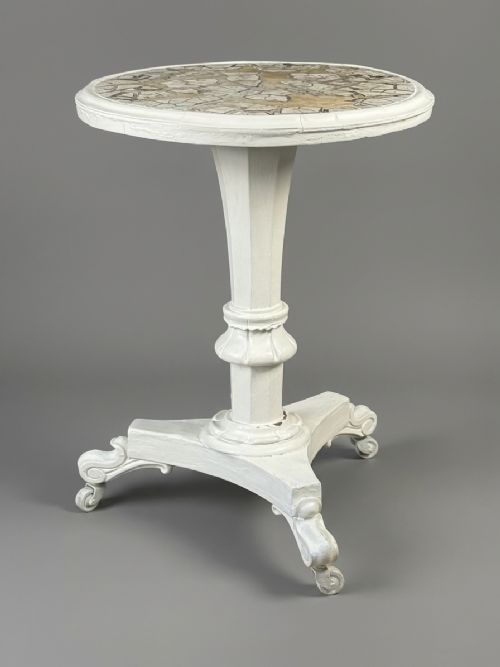
Structural elements frequently incorporated turned pedestals, folding mechanisms for card tables, or tailored galleries and tray edges. Many Continental and domestic pieces incorporated inset slabs of white or specimen marble into the wooden framework, secured with mouldings or brass mounts.
Inlaid Top Side Table Retail Price Guide 2026
Typical asking prices for inlaid top side table among the pieces listed under this phrase on Sellingantiques today, from the lower quarter to the upper quarter. They describe what is for sale here now, not the wider market.
Listings feature woods including mahogany, walnut, rosewood, satinwood, kingwood, burr birch, and oak alongside brass, marble, and mother-of-pearl.
What varies in quality
Quality rests upon the precision of the surface decoration and the selection of the timber veneers. Burr walnuts, figured satinwoods, and finely cut brass or mother-of-pearl demand high skill to fit tightly into the primary ground without gaps or excessive filler.
Construction methods also separate standard production from superior workshop output, evident in the weight of the timber, the fluidity of folding table hinges, and the integration of ormolu mounts or carved details. Finer tables maintain flat, stable tops where timber movement has not disrupted the integrity of the inlay.
Gillows
The Inlaid Top Side Table Glossary
- Marquetry
- A decorative technique where small pieces of veneer are arranged to form pictorial or floral designs on a wooden ground. It differs from parquetry through its pictorial rather than geometric focus.
- Parquetry
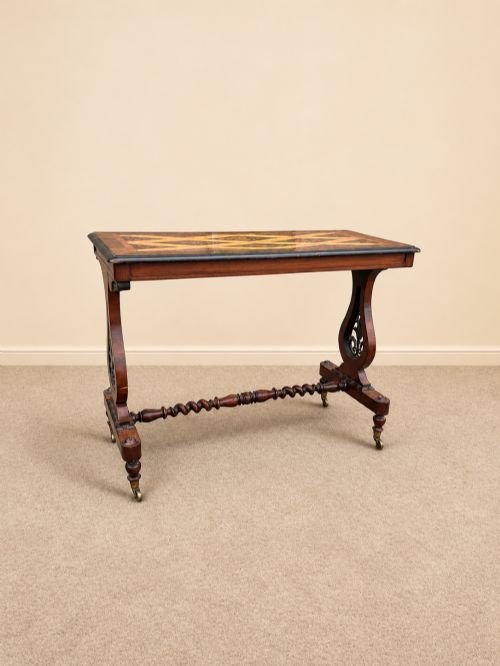
- A geometric mosaic of wood veneers laid down in repeating patterns such as cubes or chequers. This technique frequently appears on table tops and gaming surfaces.
- Ormolu
- Gilded bronze mounts applied to furniture edges, feet, and corners for decorative enrichment. The technique was particularly favoured on French tables.
- Bijouterie cabinet
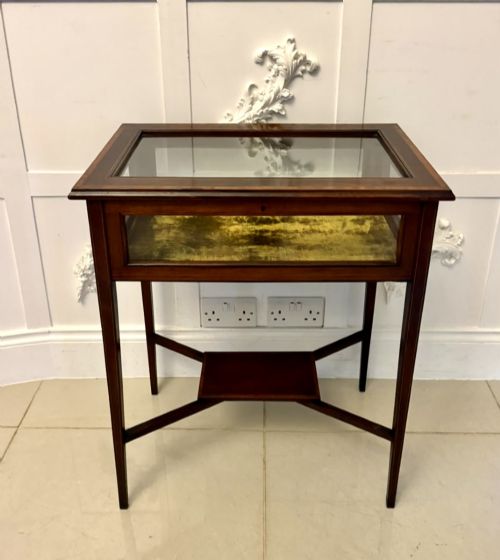
- A display table with a glazed top designed to showcase small valuable items or collections. These pieces often feature satinwood or mahogany frames with interior lining.
- Burr walnut
- Timber taken from a growth on a walnut tree, yielding swirling, highly figured grain patterns. Makers prized this material for prominent table tops.
Inlaid Top Side Table: Frequently Asked Questions
What is an inlaid top side table used for?
These tables provide a compact surface for lamps, books, or decorative objects while serving as a visual focal point in a room. Many historical variations also functioned as specialised card tables, work tables, or bedside cabinets.
Their varied sizes allow them to sit beside seating or against walls where larger furniture would overwhelm the space. The decorative upper surface ensures they remain attractive even when left clear.
How do I identify the period of a table?
Dating relies on combining the overarching style, such as Regency or Edwardian, with the timber choices and construction techniques visible in the frame. Georgian and Regency pieces often showcase mahogany and rosewood with restrained brass inlay.
Victorian and Edwardian examples frequently utilise burr walnut or satinwood with dense floral marquetry or mother-of-pearl. Examining secondary woods and joinery helps confirm the era of manufacture.
Where were these tables made?
Production spans domestic English workshops alongside significant Continental centres such as France and Italy. French pieces often feature kingwood, marble inserts, and ormolu mounts characteristic of Louis XV revival styles.
Italian makers, particularly around Sorrento, specialised in distinctive pictorial wood marquetry. Other pieces reflect Anglo-Indian or Chinese craftsmanship through the use of native timbers and mother-of-pearl inlay.
How do I care for an inlaid surface?
Maintenance requires keeping timber and inlay away from direct sunlight and dramatic humidity changes to prevent veneer lifting or wood splitting. Regular dusting with a soft, dry cloth preserves the polished finish.
Applying appropriate wax sparingly helps nourish the timber without harming delicate veneer joints or inlaid shell and metal. Avoid placing damp items directly onto the antique surface.