


Inlaid Tiered Stand
An inlaid tiered stand brings multi-level display space into a room, combining decorative woodwork with practical surfaces for lamps, books, and objects.
Inlaid Tiered Stand
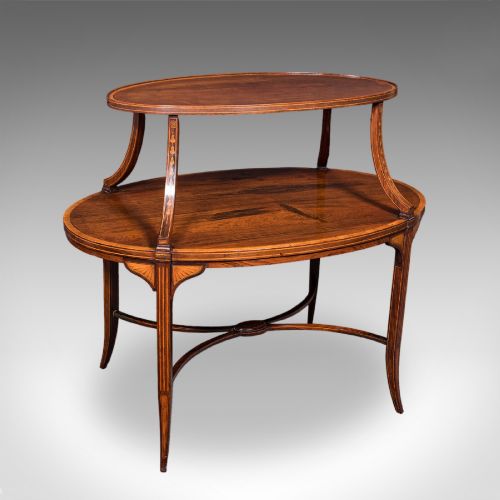
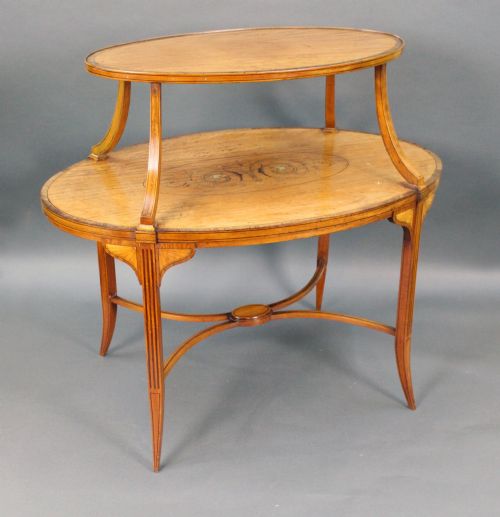
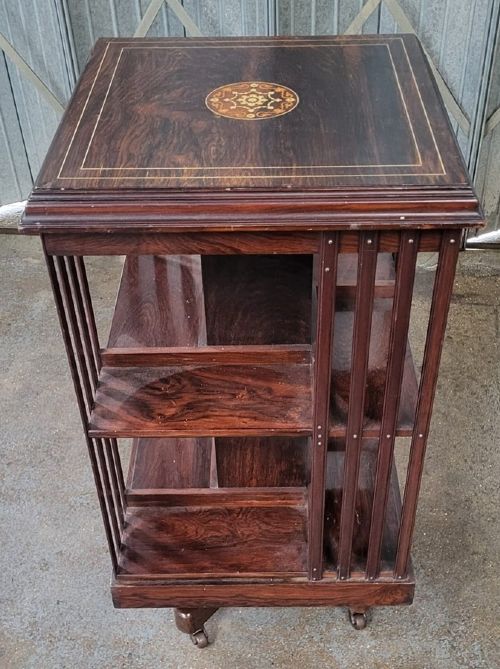
When you search for an inlaid tiered stand, you encounter pieces designed to hold objects across multiple levels, ranging from two-tier occasional tables to tall étagères, plant stands, and revolving bookcases. These multi-shelf forms emerge frequently in Edwardian and Victorian inventories, alongside nineteenth-century examples.
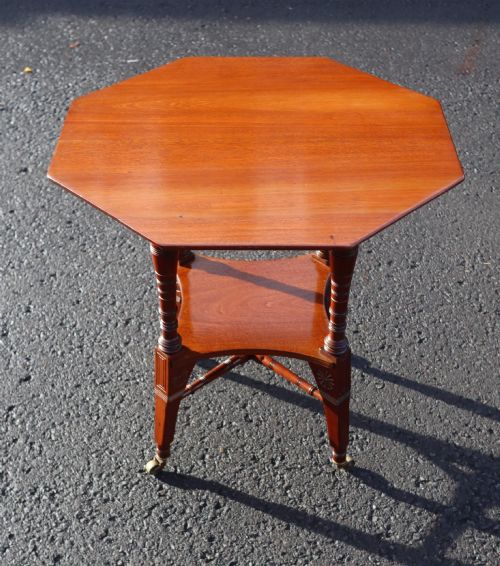
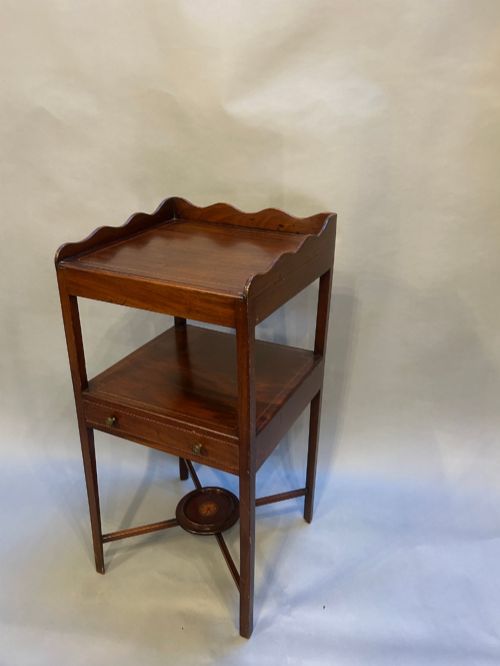
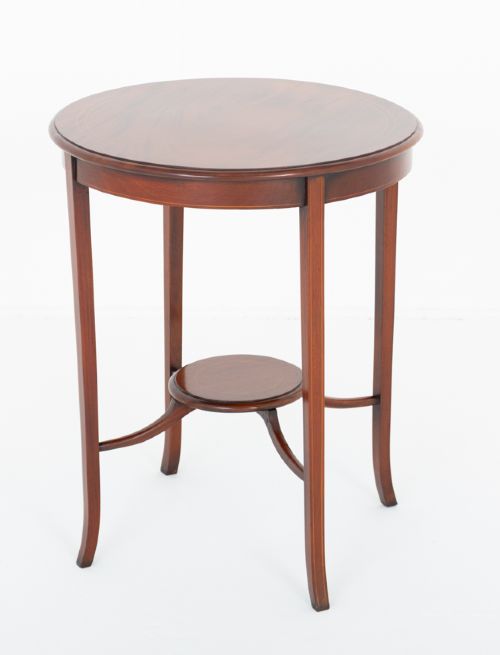
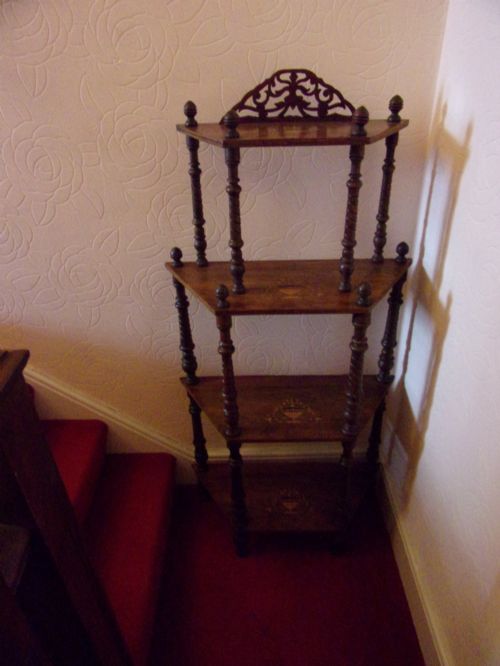
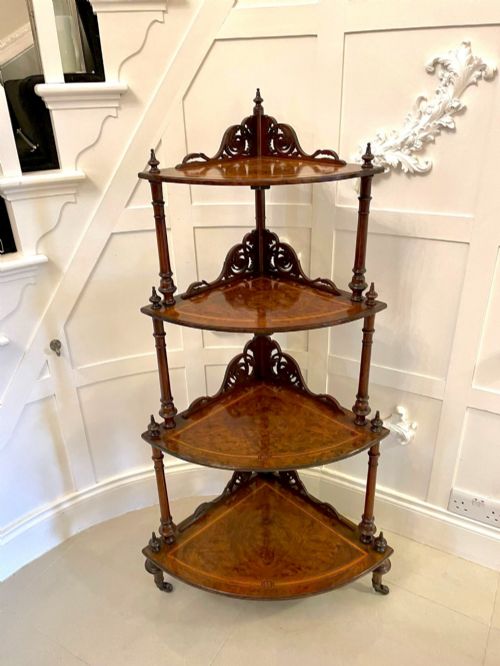
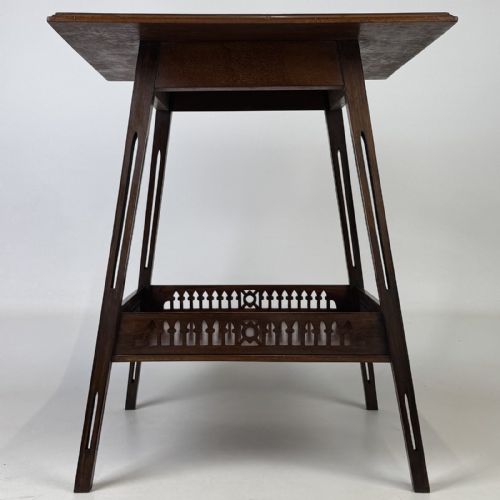
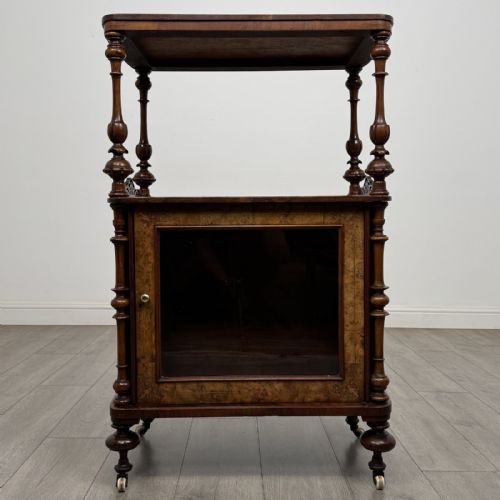
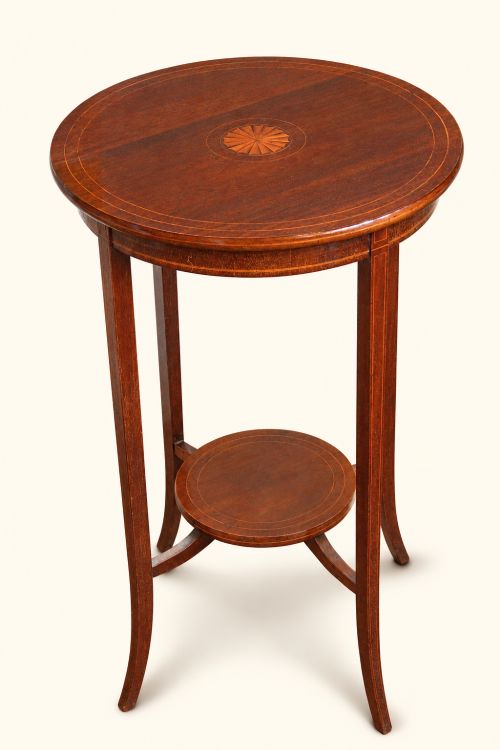
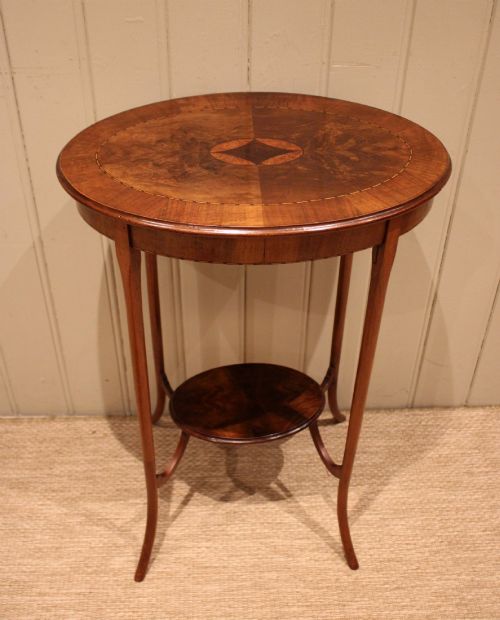
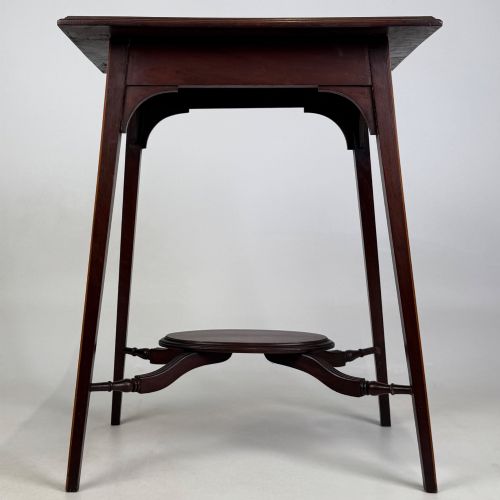
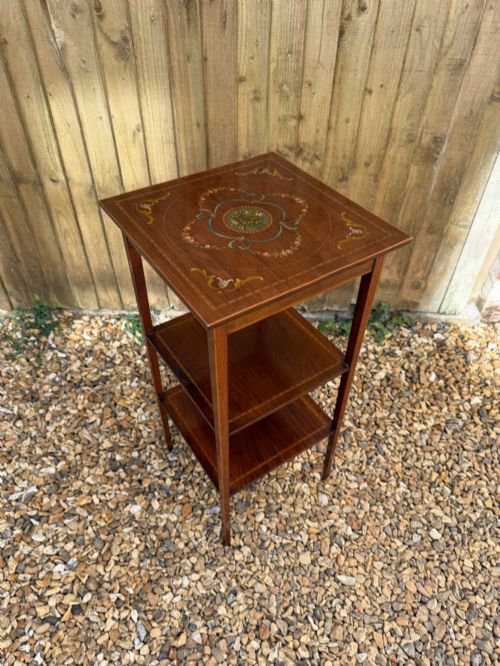
The version you meet most often on this page is the Edwardian or late Victorian mahogany table, frequently enriched with satinwood or boxwood inlay and fitted with an additional lower shelf. Alongside these tables appear occasional pieces, corner whatnots, and French-influenced display stands.
Makers and designers drew upon Sheraton Revival, Regency, and French Rococo styles to shape these tiers, utilising contrasting timbers to define borders and panels. The resulting furniture balances vertical height with a compact footprint suited to corners and bedside spaces.
Materials and construction
Cabinetmakers built these tiered stands primarily using solid and veneered timbers such as mahogany, walnut, and rosewood, often pairing them with lighter woods for contrast. Satinwood and boxwood inlay formed delicate stringing, fans, and classical motifs across tabletops and shelf surfaces.
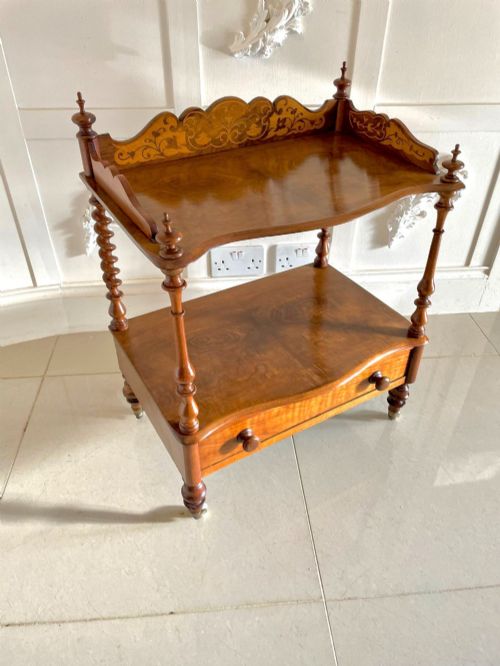
Decorative elements frequently included brass castors on table legs, ormolu mounts on French-inspired étagères, and intricate fretwork galleries. Parquetry and marquetry techniques added geometric patterns and floral designs directly into the timber surfaces of the tiers.
Inlaid Tiered Stand Retail Price Guide 2026
Typical asking prices for inlaid tiered stand among the pieces listed under this phrase on Sellingantiques today, from the lower quarter to the upper quarter. They describe what is for sale here now, not the wider market.
Some revolving bookcases spin smoothly on Edwardian mechanisms, inviting restless readers to test the shelf rotation.
Factors that separate tiers of quality
The distinction between standard and superior pieces rests on the precision of the timber matching and the crispness of the inlay work. Sharp contrast between the dark body wood and the lighter inlay lines indicates careful hand-cutting rather than mass-produced stamping.
Structural stability across multiple tiers marks the finer examples, where upright supports remain rigid and shelves join cleanly without looseness. Secondary details such as chased brass mounts, finely turned spindles, and well-fitted book-matched veneers separate workshop-produced furniture from basic output.
George Bullock·Edwards & Roberts
The Inlaid Tiered Stand Glossary
- Étagère
- A piece of furniture consisting of several open shelves for displaying small objects or ornaments. It typically stands on slender legs and appeared in various French and English revival styles.
- Inlay
- A technique where contrasting pieces of wood, brass, or shell are set into recesses flush with the surface to create decorative patterns. Boxwood and satinwood served as common contrasting elements.
- Marquetry
- The art of applying pieces of veneer to a structure to form decorative pictures or designs. It differs from simple inlay by covering the entire surface with assembled veneer segments.
- Whatnot
- A piece of furniture with multiple shelves standing one above the other, used for holding books, ornaments, or collections. Victorian examples often featured shaped corners and walnut timbers.
- Ormolu
- Gilded bronze used for decorative mounts, feet, and galleries on nineteenth-century French furniture. It added metallic contrast to rosewood and walnut surfaces.
Inlaid Tiered Stand: Frequently Asked Questions
What is an inlaid tiered stand used for?
These pieces provide elevated display and storage space across multiple levels without occupying a large floor area. They serve as lamp tables, bookholders, or surfaces for decorative ornaments.
In period rooms, they functioned as occasional tables for holding tea items, small books, or decorative porcelain collections.
How do I identify an Edwardian tiered stand?
Edwardian examples often feature lighter mahogany frames, delicate satinwood or boxwood inlay stringing, and tapered legs. They frequently take the form of two-tier lamp tables or revolving bookcases.
Makers working in this period drew heavily on Sheraton Revival designs, producing balanced proportions and restrained decorative motifs.
What is the difference between an étagère and a whatnot?
An étagère generally refers to a multi-shelved display piece with French stylistic influences, often incorporating marquetry and ormolu mounts. A whatnot is typically a British multi-tiered stand designed for general storage and display.
Both forms utilise vertical space, but étagères lean towards decorative display whilst whatnots often served practical utility in parlours.
How do I care for inlaid wood furniture?
Keep tiered stands away from direct sunlight and heat sources to prevent the veneers and delicate inlay from drying out and lifting. Dust regularly with a soft, dry cloth.
Apply a microcrystalline wax periodically to nourish the timber finish and protect the surface without building up heavy residues.