





Inlaid Music Rack
An inlaid music rack brings domestic British music-making into the room, offering carved timbers and fine marquetry to hold folios and scores.
Inlaid Music Rack
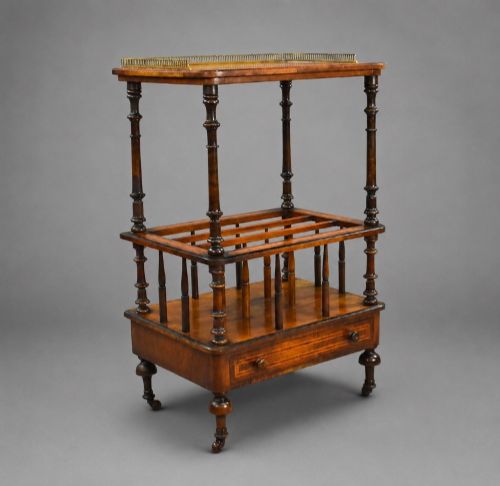
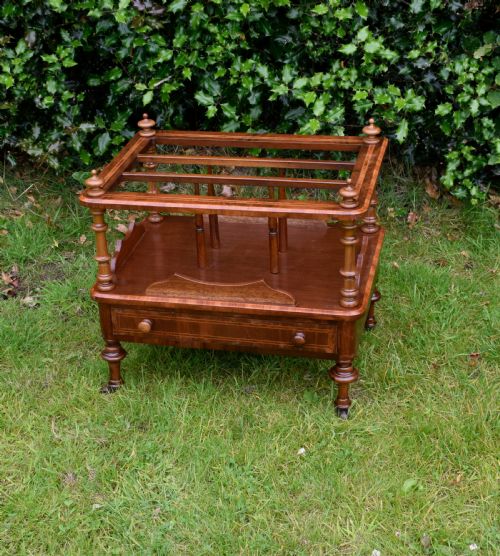
An inlaid music rack sits within domestic interiors as a specialised piece of furniture designed for organising sheet music, folios, and periodicals. Buyers searching for an inlaid music rack commonly encounter pieces configured as canterburys, music stands, and combined whatnots featuring partitioned lower sections for upright storage.
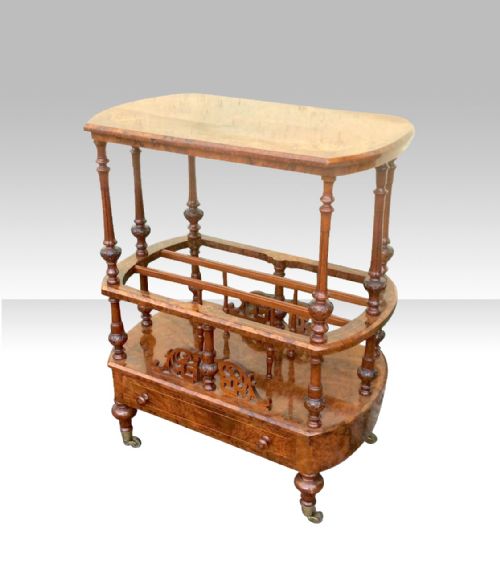
The dominant forms on this page date from the nineteenth century, spanning the Victorian and Edwardian eras, alongside earlier Regency and William IV examples. These pieces typically take the form of burr walnut or mahogany canterburys, occasionally incorporating drawers, castors, and turned supports for mobility and display.
How they were made
Cabinet makers constructed these pieces primarily from dense hardwoods like walnut, burr walnut, and mahogany, chosen for their rich grain patterns and durability. Surfaces were frequently elevated through the application of contrasting wood inlay, boxwood lines, and marquetry details.
Structural complexity varied by form, incorporating turned wooden columns, fretwork panels, and brass hardware such as castors to support partitioned compartments. Joinery techniques relied on traditional framing to stabilise the vertical dividers used to keep upright scores in place.
Inlaid Music Rack Retail Price Guide 2026
Typical asking prices for inlaid music rack among the pieces listed under this phrase on Sellingantiques today, from the lower quarter to the upper quarter. They describe what is for sale here now, not the wider market.
Named after an Archbishop who supposedly ordered the first stand, canterburys quickly moved from dining rooms to music parlours.
What varies in quality
The degree of refinement in the timber selection and marquetry work defines the upper tiers of these pieces. Burr walnut veneers with lively, matched figuring and crisp boxwood inlay distinguish finer examples from plain mahogany or standard walnut alternatives.
Structural ambition also separates standard items from exceptional ones, particularly where pieces combine multiple functions such as a Canterbury base with a whatnot superstructure or an integrated drawer. The precision of the fretwork and the integration of turned supports indicate the level of craftsmanship invested by the maker.
The Inlaid Music Rack Glossary
- Burr walnut
- A highly figured timber veneer taken from the excrescences or burls of walnut trees. It displays swirling grain patterns prized in Victorian cabinet work.
- Marquetry
- The art of applying decorative veneer pieces to a structure to form intricate pictorial designs or geometric patterns. It differs from inlay by assembling the pattern on a backing before application.
- Whatnot
- A piece of open shelving with multiple tiers supported by slender uprights, used for displaying ornaments. When combined with a music rack, it forms a multifunctional piece of furniture.
- Fretwork
- Ornamental perforated woodwork created by cutting patterns through thin boards. It appears on the partitions and side panels of various nineteenth-century music stands.
Inlaid Music Rack: Frequently Asked Questions
What is a music canterbury?
A music canterbury is a low, compartmentalised piece of furniture designed to hold folios, scores, and periodicals upright. The form typically includes vertical dividers and often sits on castors for ease of movement.
Originating in the late eighteenth century, the design evolved through the Regency and Victorian periods to incorporate drawers, shelves, and decorative inlay.
How do I date an inlaid music rack?
Dating relies on identifying timber choices, decorative styles, and construction methods characteristic of specific periods. Victorian pieces frequently feature burr walnut and elaborate marquetry, whereas Edwardian examples often employ inlaid mahogany.
Secondary indicators include the presence of specific hardware, such as brass castors, and structural formats like the combination whatnot.
Where were these pieces used?
These pieces belonged in the nineteenth-century parlour, drawing room, or music room where domestic entertainment centred on the piano. They kept sheet music organised and close at hand.
Today, they function similarly in modern homes, serving to hold magazines, books, and vinyl records while retaining their decorative presence.
What is the difference between a music stand and a canterbury?
A music stand typically supports an open score at a readable height for a musician playing an instrument. A canterbury is primarily a storage unit with vertical compartments designed to house a collection of folios.
Some hybrid pieces combine both functions, offering an upright reading surface alongside partitioned storage spaces below.