



Inlaid Mahogany Sheet Music Cabinet
An inlaid mahogany sheet music cabinet brings compact, tiered order to a room, offering slender drawers designed to hold paper scores.

Inlaid Mahogany Sheet Music Cabinet
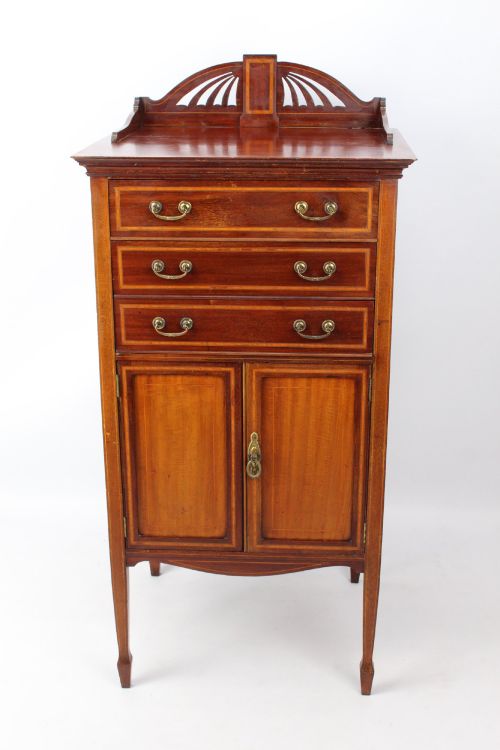
An inlaid mahogany sheet music cabinet is a specialised piece of furniture designed to store and organise paper scores beside a piano or in a sitting room. These cabinets appear most frequently from the Edwardian period and the late nineteenth century, built with a upright rectangular carcass that maximises vertical storage while occupying a minimal floor footprint.
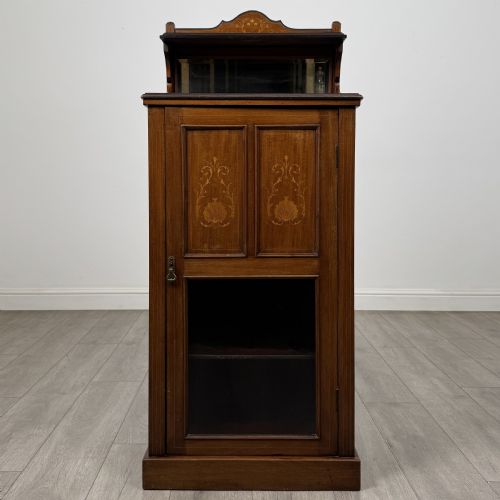
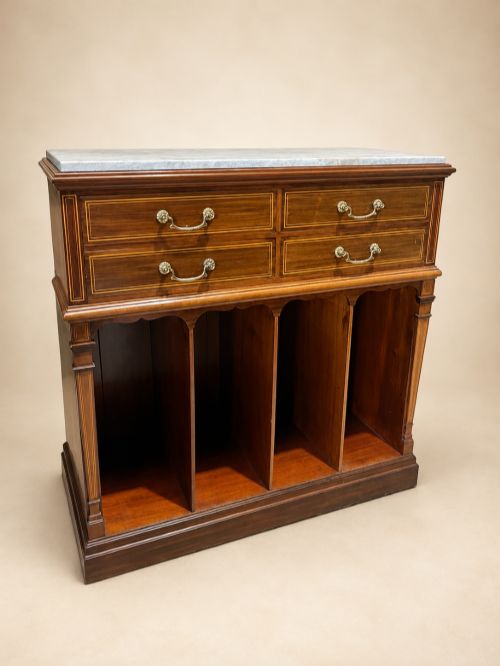
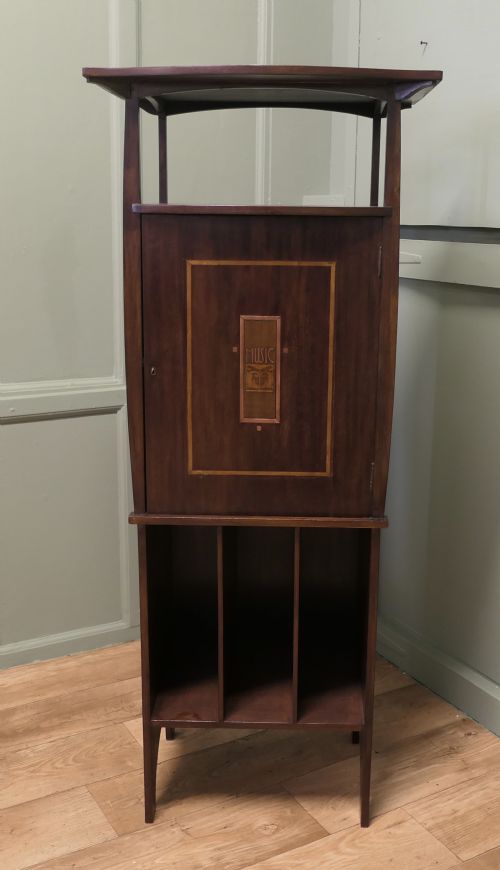
The pieces on this page display various forms, ranging from multi-drawer dropdown fronts to narrow cupboards and piano stools with internal shelving. Styles lean toward Sheraton Revival and Arts and Crafts interpretations, reflecting the domestic musical tastes of their original eras.
Makers and designers working in London and Scotland produced these items in mahogany, often accented with contrasting woods, brass hardware, and glass elements. Collectors encounter both utilitarian sheet music storage units and more decorative display cabinets adapted for domestic use.
Materials and construction methods
Makers built the primary structure using mahogany, selecting solid timber for frames and figured veneers for panels to create a warm, polished surface. Artisans then applied satinwood and boxwood inlays, often forming delicate stringing or classical motifs across the drawer fronts and doors.
Drawers and internal compartments utilised traditional joinery to withstand the weight of heavy paper scores, while brass handles and hinges provided durable operating mechanisms. Secondary woods formed the hidden interiors of the drawers, ensuring structural stability across decades of daily use.
Inlaid Mahogany Sheet Music Cabinet Retail Price Guide 2026
Typical asking prices for inlaid mahogany sheet music cabinet among the pieces listed under this phrase on Sellingantiques today, from the lower quarter to the upper quarter. They describe what is for sale here now, not the wider market.
Arts and Crafts and Sheraton Revival styles appear frequently among the cabinet forms.
Distinguishing quality in construction and detail
The standard of a piece depends heavily on the precision of the wood inlay and the selection of the mahogany veneer. Finer examples display crisp, hand-cut botanical or geometric stringing that integrates seamlessly into the surrounding timber rather than relying on printed or stamped ornamentation.
Internal engineering also separates standard production items from superior workshop output, particularly in the smooth action of the drop-front drawers or specialised music compartments. Cabinetwork attributed to known makers demonstrates rigorous attention to internal joinery and secondary wood selection.
GM Elwood for JS Henry·Keeble London
The Inlaid Mahogany Sheet Music Cabinet Glossary
- Inlay
- A decorative technique where pieces of contrasting wood, such as satinwood or boxwood, are inserted into recessed portions of a mahogany base.
- Marquetry
- An elaborate form of inlay that forms pictorial or patterned designs across the entire surface of a cabinet door or top.
- Stringing
- Very thin, linear strips of light wood inlaid into darker timber to outline panels, drawers, or table edges.
- Sheraton Revival
- A late nineteenth and early twentieth century design movement that reinterpreted the lighter, neoclassical furniture forms of the eighteenth century.
- Drop-front
- A hinged drawer or panel that tilts forward to grant easy access to sheet music stored flat inside.
Inlaid Mahogany Sheet Music Cabinet: Frequently Asked Questions
What were music cabinets originally used for?
These cabinets were designed to hold sheet music flat and orderly next to a piano or in a Victorian parlour. The shallow drawers prevented large folios and paper scores from rolling or bending.
Over time, many of these pieces transitioned into general storage units for documents, specimens, or letters as domestic musical habits changed.
How do I date an Edwardian music cabinet?
Edwardian pieces typically date between nineteen hundred and nineteen ten, featuring lighter mahogany timbers and refined satinwood stringing. Stylistic cues often point back to Sheraton Revival designs popular during this reign.
Earlier nineteenth-century versions tend to be heavier in build, utilising denser hardwoods and darker finishes without the lighter Edwardian border inlays.
Where should I place a music cabinet today?
Their slender proportions make these cabinets ideal for narrow hallways, alcoves, or beside a modern desk as compact drawer units. The shallow drawers function well for storing stationery, photographs, or small collections.
Keeping the wood away from direct heat sources ensures the mahogany finish and delicate inlays remain stable in a contemporary home.
What is the difference between a music cabinet and a piano stool?
A music cabinet stands upright with multiple horizontal drawers or a cupboard door, holding large quantities of sheet music vertically or flat in stacks. A piano stool is a lower seat, often with internal compartment space beneath the cushion.
Both items served the same musical purpose in the nineteenth and early twentieth centuries but occupy very different visual footprints in a room.