


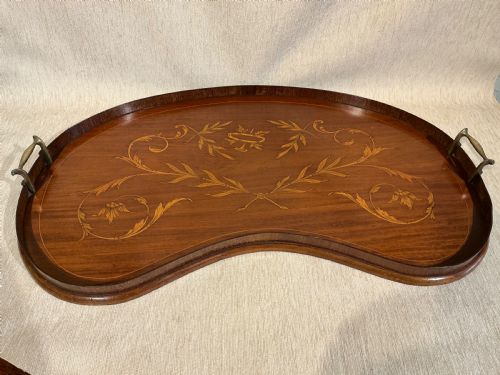


Inlaid Mahogany Platter
These inlaid mahogany platter pieces offer practical service and refined woodwork, bringing traditional craftsmanship directly to your table.
Inlaid Mahogany Platter
An inlaid mahogany platter provides a sturdy wooden surface for serving tea, drinks, or food while displaying decorative woodwork. When searching for an inlaid mahogany platter, buyers typically encounter pieces fashioned as serving trays, butler's trays, and wine trays.
The selections span multiple eras including the Georgian, Victorian, and Edwardian periods, alongside Georgian Revival and Sheraton Revival interpretations. Most items on this page lean towards Edwardian examples and serving trays adapted for afternoon tea and entertaining.
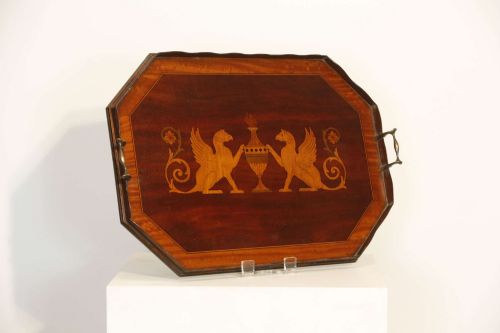
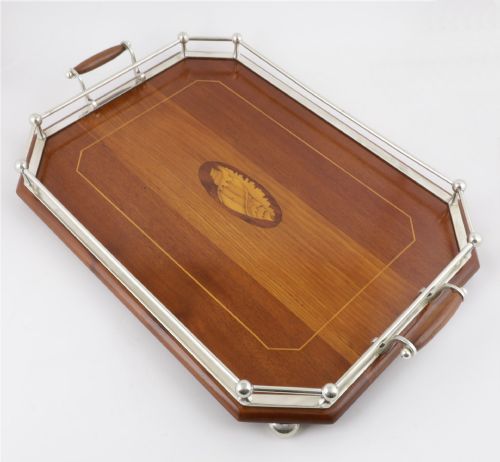
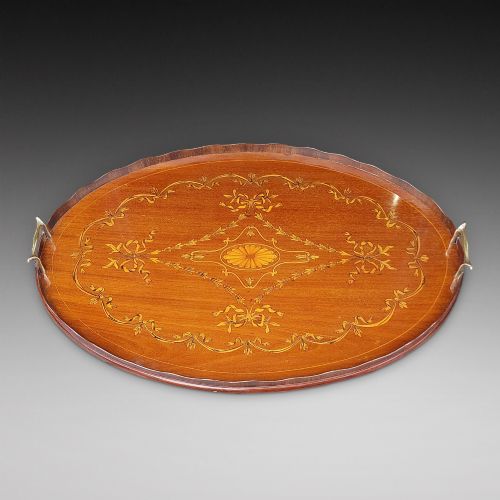
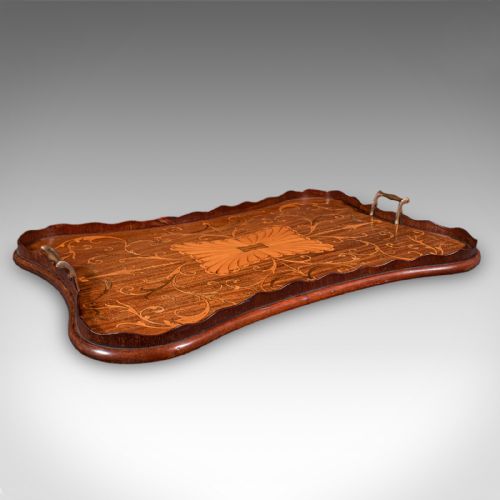
Forms vary from classic circular shapes and large octagonal formats to kidney-shaped and rectangular serving trays. These objects combine utilitarian wooden bases with contrasting decorative inlays made from lighter woods.
Materials and construction methods
Makers utilised solid mahogany and mahogany veneers as the primary timber, providing a rich, dark background for lighter decorative elements. Satinwood, boxwood, and shell motifs were inlaid into the wood to create contrasting geometric borders and central patterns.
Many items incorporate brass handles, gallery rails, or silver-plated mounts to assist with carrying and to edge the wooden platform. Joinery methods varied by period, from the fine craftsmanship of the Georgian era to the revival styles of the early twentieth century.
Inlaid Mahogany Platter Retail Price Guide 2026
Typical asking prices for inlaid mahogany platter among the pieces listed under this phrase on Sellingantiques today, from the lower quarter to the upper quarter. They describe what is for sale here now, not the wider market.
Listings span the Georgian, Victorian, and Edwardian periods, featuring mahogany combined with satinwood, boxwood, brass, and silver plate.
Assessing quality and craftsmanship
Superior examples demonstrate meticulous precision in the marquetry and shell inlay, where individual pieces of satinwood and boxwood fit seamlessly into the mahogany ground. The crispness of carved details, the weight of the silver-plated or brass mounts, and the stability of the timber distinguish finer items from simpler production.
The balance between decorative inlay and structural integrity dictates the standing of a piece. Earlier Georgian work often shows restrained decorative elements executed by hand, whereas Edwardian and revival pieces might employ more elaborate marquetry across diverse tray shapes.
The Inlaid Mahogany Platter Glossary
- Mahogany
- A durable tropical hardwood prized for its deep reddish-brown tone and smooth grain. It forms the structural and visual foundation for these serving trays.
- Inlay
- A technique where pieces of contrasting material are inserted into a recessed wooden surface to form a decorative pattern. Satinwood and boxwood are frequently used for this purpose.
- Marquetry
- Elaborate veneer patterns applied to a wooden base to create pictorial or decorative designs. It differs from simple inlay by covering the entire surface with fitted veneers.
- Gallery tray
- A serving tray featuring a raised pierced metal or wooden railing around its perimeter. This gallery prevents items from sliding off during transport.
Inlaid Mahogany Platter: Frequently Asked Questions
What were these trays used for?
These trays served primarily for carrying drinks, afternoon tea, and food items across rooms or presenting them to guests. They functioned both as practical dining accessories and as decorative display pieces on tables.
In domestic settings, they helped organise tableware while adding a touch of elegance to hospitality rituals.
How do I care for an inlaid wooden tray?
Keep the wood conditioned with appropriate furniture wax and avoid exposing the piece to excessive moisture or direct heat. Clean the surface gently with a dry or barely damp cloth.
Protecting the antique finish prevents the delicate satinwood or boxwood inlay from lifting over time.
How can I tell a Georgian tray from an Edwardian one?
Georgian pieces generally exhibit simpler, more restrained lines with subtle inlay work reflective of eighteenth-century design principles. Edwardian and revival pieces often feature more exuberant marquetry and may incorporate silver-plated galleries or handles.
Examining the construction methods and the specific style of the inlay helps determine the likely period of manufacture.
Are these platters suitable for daily use?
While structurally sound, antique trays benefit from careful handling rather than heavy everyday service. Using liners or treating them with gentle care preserves the delicate wood inlay and silver-plated mounts.
They function well for light entertaining or as static decorative accents in a traditional interior.