

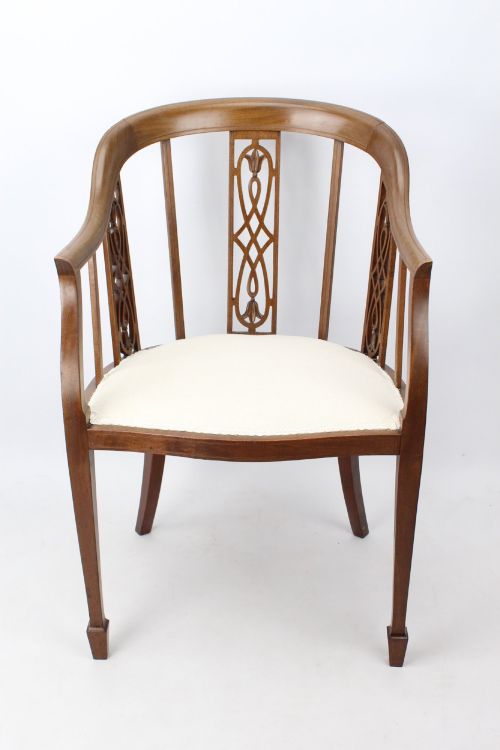
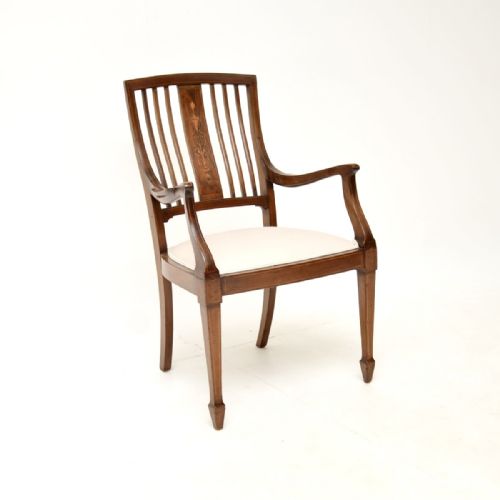
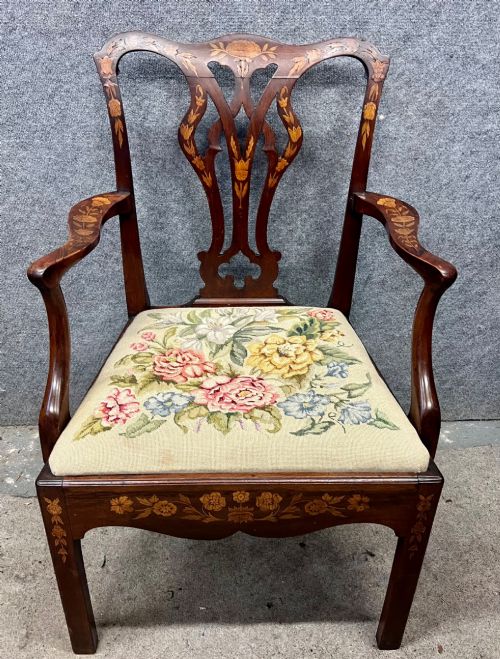
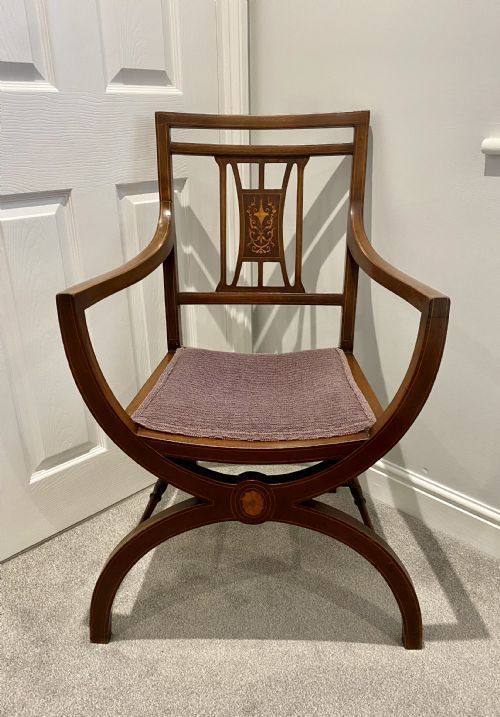
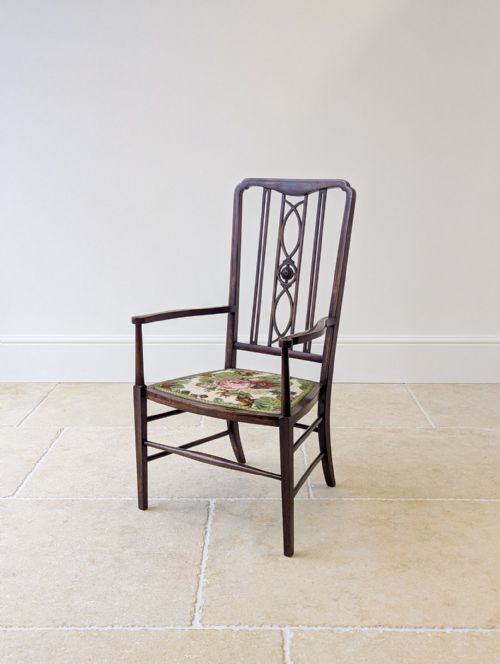


Inlaid Mahogany Open Armchair
These inlaid mahogany open armchair examples combine timber and detail, offering functional seating with classic lines for a traditional interior.
Inlaid Mahogany Open Armchair
When you search for an inlaid mahogany open armchair, you encounter seating designed for the salon, library, desk or bedroom from periods spanning the nineteenth and early twentieth centuries. The selection includes Victorian, Edwardian, and Regency pieces, with Edwardian examples appearing most frequently.
The forms encompass elbow chairs, desk chairs, and salon armchairs with open arms. Makers shaped these pieces for occasional use, study, or formal reception spaces.
Stylistic influences range from Neoclassical Revival and Sheraton Revival to Art Nouveau. These designs reflect the changing tastes of nineteenth and twentieth century workshops.
How they were made
Craftsmen built these frames using mahogany as the primary timber, complemented by contrasting woods such as satinwood and boxwood for decorative surface patterns. Wood inlay work defines the visual character of the woodwork.
Upholstery and fabric appear across many pieces, sometimes combined with brass elements. Makers integrated these materials into the seat and arm structures for functional comfort.
Inlaid Mahogany Open Armchair Retail Price Guide 2026
Typical asking prices for inlaid mahogany open armchair among the pieces listed under this phrase on Sellingantiques today, from the lower quarter to the upper quarter. They describe what is for sale here now, not the wider market.
Some Edwardian salon chairs served multiple duties, doubling as desk seats and dressing table furniture.
What varies in quality
The precision and complexity of the wood inlay separate standard production from finer examples. Crisp execution in satinwood and boxwood indicates skilled workshop practice.
The structural integrity of the open arms and the selection of mahogany timber determine the overall caliber of the chair. Heavier carving and refined proportions distinguish superior pieces.
The Inlaid Mahogany Open Armchair Glossary
- Inlay
- A technique where pieces of contrasting timber are fitted into the primary wood to create decorative patterns. This method enhances the visual depth of the surface.
- Mahogany
- A durable, reddish-brown timber utilised extensively for quality furniture construction throughout the nineteenth century. Its stability suited detailed cabinet work.
- Satinwood
- A pale, lustrous timber employed for contrasting inlay work and decorative banding. It provides a bright accent against darker woods.
- Open armchair
- A seat featuring un-upholstered wooden arm supports rather than padded sides. This form allows freedom of movement for the sitter.
- Edwardian
- A stylistic period dating from the early twentieth century known for lighter proportions and revivals of earlier eighteenth-century designs.
Inlaid Mahogany Open Armchair: Frequently Asked Questions
What is an inlaid mahogany open armchair?
An inlaid mahogany open armchair is a timber seat featuring decorative wood contrasting details and unpadded arm supports. These chairs served various functions in Victorian and Edwardian rooms.
They appear in forms suitable for desks, salons, or libraries. The construction relies on mahogany combined with lighter woods for ornamentation.
How do I date these armchairs?
Dating relies on observing stylistic markers such as Edwardian lightness, Victorian robustness, or Regency proportions. Details in the inlay work often reflect the period aesthetic.
Comparing the chair's structural form to documented examples from the nineteenth and early twentieth centuries helps confirm its era of manufacture.
Where were these chairs used?
These armchairs functioned primarily in reception rooms, libraries, and bedrooms. Desk chairs served study spaces while salon chairs furnished formal sitting areas.
Their open arm design made them suitable for spaces where mobility and comfortable seating were required.
How do I care for mahogany furniture?
Maintaining mahogany involves keeping the timber away from direct sunlight and steady temperature fluctuations. Gentle dusting preserves the polished finish.
Applying occasional appropriate wax maintains the lustre of the wood and protects the inlaid decorative elements.