

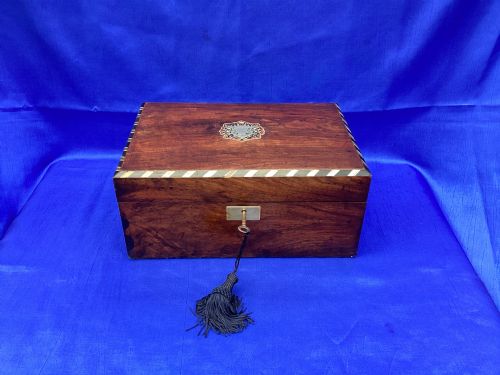
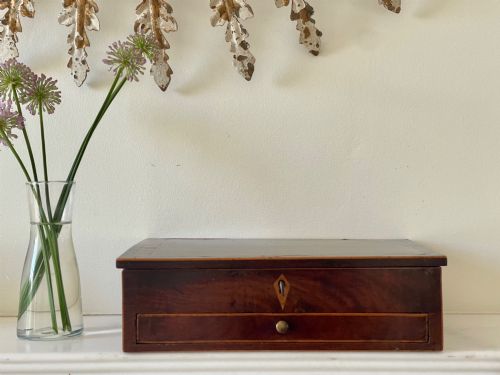


Inlaid Mahogany Jewellery Box
An inlaid mahogany jewellery box brings timeless timber and delicate stringing together to keep your most treasured possessions secure.
Inlaid Mahogany Jewellery Box
An inlaid mahogany jewellery box spans several distinctive periods, notably Georgian, Victorian, and Edwardian eras. These objects range from compact personal caskets and fitted dressing boxes to miniature chests of drawers and freestanding bijouterie display tables.
The pieces on this page showcase varied forms designed for safe storage and tabletop presentation. You will encounter small decorative boxes alongside larger glazed display tables that incorporate satinwood and boxwood details.
How they were made
Cabinet makers utilised dense mahogany timbers as the primary structural body, often selecting flame mahogany for striking grain patterns. Artisans then recessed contrasting light wood stringing and marquetry into the surfaces.
Craftsmen incorporated secondary materials such as mother-of-pearl, brass hardware, and glass panels into the construction of dressing boxes and display tables. Interiors frequently featured fitted compartments lined for delicate items.
Inlaid Mahogany Jewellery Box Retail Price Guide 2026
Typical asking prices for inlaid mahogany jewellery box among the pieces listed under this phrase on Sellingantiques today, from the lower quarter to the upper quarter. They describe what is for sale here now, not the wider market.
What varies in quality
The distinction between standard examples and superior pieces rests on the precision of the timber selection and the intricacy of the inlay work. Flame mahogany veneers matched with delicate boxwood and satinwood banding require advanced carpentry skill.
Internal complexity also dictates distinction, particularly in fitted dressing boxes that contain numerous compartments and original glass or brass elements. Superior pieces maintain crisp lines in their marquetry and retain secure structural joinery.
The Inlaid Mahogany Jewellery Box Glossary
- Flame mahogany
- A prized cut of mahogany timber exhibiting a fiery, undulating grain pattern. This figure appears frequently on polished Georgian and Victorian surfaces.
- Marquetry
- The art of applying decorative pieces of veneer to a structure to form intricate patterns. Makers utilise contrasting woods like satinwood and boxwood for this detail.
- Bijouterie table
- A glass-topped display table designed to showcase small valuable items and trinkets. These pieces became particularly popular during the Edwardian period.
- Stringing
- Thin inlay lines of contrasting wood used to edge panels and lids. This technique defines the geometric borders seen on Edwardian boxes.
Inlaid Mahogany Jewellery Box: Frequently Asked Questions
What is an inlaid mahogany jewellery box?
These items are small wooden caskets or larger display tables built from mahogany and decorated with contrasting wood veneers. They were originally used by past owners to store personal ornaments and valuables safely.
Today, they serve both a practical storage function and as decorative furnishings for dressing tables or living spaces.
How do I date a mahogany jewellery box?
Dating relies on observing the overall style, construction methods, and specific inlay materials present on the piece. Georgian and Victorian examples typically display heavier timber construction, while Edwardian pieces often lean towards lighter satinwood accents and display glass.
Examining internal fittings and hardware also helps place the object within the nineteenth or early twentieth centuries.
How were dressing boxes used historically?
Past owners utilised fitted dressing boxes to house cosmetics, grooming tools, and jewellery during travel or at home. The internal compartments kept delicate glass bottles and personal items organised securely.
Over time, many of these boxes transitioned into static display pieces kept permanently on tabletops.
How do I care for antique mahogany wood?
Maintenance involves keeping the timber away from direct sunlight and sudden temperature shifts to protect the polish and veneer. Regular dusting with a soft, dry cloth preserves the natural sheen of the mahogany.
Avoid using harsh modern chemical polishes that can degrade historical finishes over time.