


Inlaid Mahogany Coffee Table
An inlaid mahogany coffee table brings rich timber tones and crisp decorative banding into a sitting room.
Inlaid Mahogany Coffee Table
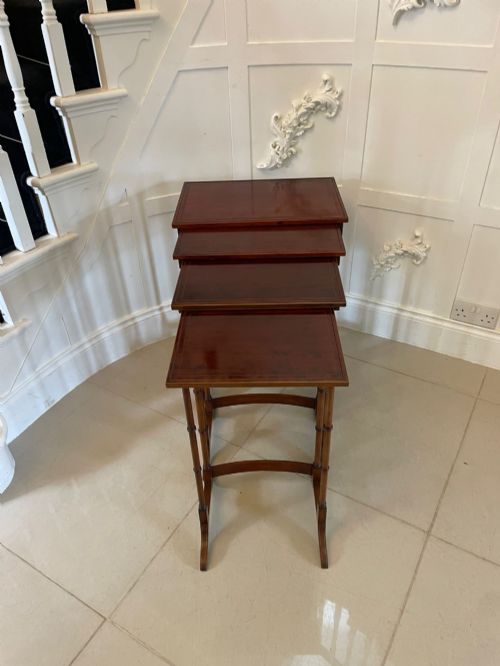
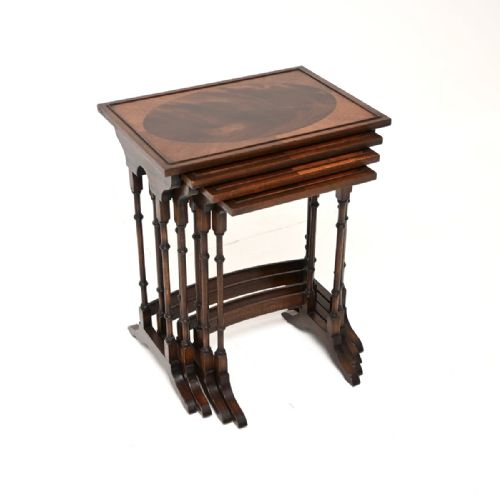
When searching for an inlaid mahogany coffee table, buyers encounter a diverse selection spanning the Georgian period through to the Edwardian era and the early twentieth century. These pieces encompass traditional low tables alongside versatile nests of quartetto tables, occasional tables, and occasional trays adapted for modern living.
The Edwardian period and the Sheraton Revival style dominate the selections available, bringing lighter proportions and refined classical motifs to the dark timber ground. Alongside these, buyers find occasional tables from the nineteenth century and revival pieces that echo earlier Georgian and Regency designs.
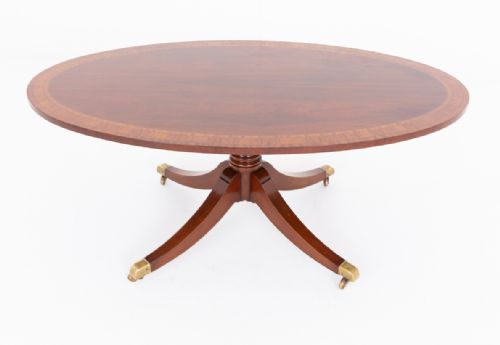
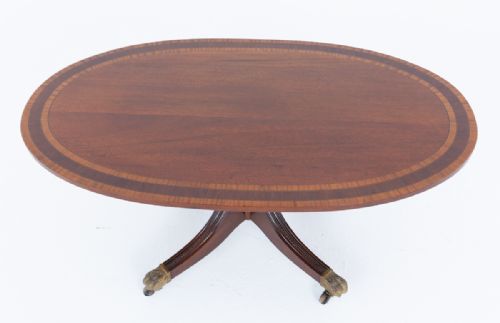
Forms vary considerably, moving from standard oval and rectangular coffee tables to nesting sets of three or four, dropleaf designs, and kidney-shaped serving pieces. Each variation offers a practical surface combined with the decorative appeal of contrasting wood veneers.
How They Were Made
Cabinet makers utilised solid mahogany and rich mahogany veneers as the primary ground timber, selected for its deep grain and stability. This warm reddish-brown surface provided an ideal canvas for intricate contrasting ornamentation.
Decoration relied heavily on precise inlay work, incorporating pale satinwood and boxwood banding to create geometric borders, shell motifs, and classical swags. Selected pieces also integrated brass details and specialised woods such as amboyna or birds-eye mahogany to accentuate panels and tabletops.
The inventory encompasses freestanding centre tables, dropleaf occasional designs, and graduating sets of nesting tables.
What Varies in Quality
The standard of an inlaid mahogany coffee table rests on the crispness of the joinery and the precision of the contrasting inlay work. Superior examples display tightly fitted mitres, smooth operating dropleaf actions, and balanced proportions across all tiers of a nesting set.
Material selection further divides the range, with finer pieces featuring highly figured mahogany grain and carefully shaded satinwood or boxwood elements rather than simplified painted lines. The retention of a rich, mellow polish enhances the depth of the timber and marks out superior workshops.
The Inlaid Mahogany Coffee Table Glossary
- Quartetto
- A set of four graduating tables designed to stack neatly inside one another when not in use. These sets are frequently encountered in Edwardian nests.
- Satinwood
- A durable, lustrous yellow timber utilised for contrasting inlay work and banding against darker mahogany backgrounds. It creates a striking visual border on tabletop edges.
- Boxwood
- A pale, dense hardwood employed for fine stringing lines and delicate inlay motifs. Cabinet makers favoured it for its ability to hold a sharp, clean edge in geometric patterns.
- Dropleaf
- A table design featuring hinged flaps on either side that can be lowered or raised to alter the surface area. This mechanism offered versatility in nineteenth-century domestic spaces.
- Sheraton Revival
- A late nineteenth and early twentieth-century design movement inspired by the neoclassical furniture of George Sheraton. It is characterised by slender legs, delicate satinwood inlay, and refined proportions.
Inlaid Mahogany Coffee Table: Frequently Asked Questions
Are these original coffee tables?
Many low tables found today originated as taller occasional, centre, or Pembroke tables that were thoughtfully reduced in height to serve modern seating arrangements. Quartetto nests and specific low tea tables, however, were constructed with low profiles from their inception.
Buyers should examine the leg proportions and lower stretchers to understand how a piece achieved its current height. Both converted forms and purpose-built low tables offer durable daily surfaces with genuine period character.
How do I distinguish Edwardian from Georgian pieces?
Edwardian and Sheraton Revival pieces, typically dating around 1900, often feature lighter wood frames, delicate satinwood stringing, and machine-cut veneers. Georgian pieces from the eighteenth or early nineteenth century display heavier, denser mahogany construction with hand-cut joinery and simpler, bolder proportions.
Examining the underside, drawer linings, and secondary timbers helps clarify the manufacturing period. Revival pieces embrace the neoclassical elegance of earlier eras while retaining the lighter structural hallmarks of the 1900s.
How do nesting tables work?
Nesting tables, or quartetto sets, consist of four graduating tables designed to slide sequentially beneath the largest top surface. They provide multiple independent surfaces for drinks or books while occupying the floor space of a single table when stored.
When living with a nest, ensure the sliding channels and undertops are free from obstruction to prevent scratching the inner surfaces. They offer exceptional versatility for entertaining in compact sitting rooms.
How should I care for polished mahogany?
Maintenance requires simple dusting with a soft, dry cloth and occasional treatment with a quality beeswax to nourish the timber. Avoid placing polished mahogany surfaces in direct sunlight or near heat sources to prevent the wood from drying out and the veneer from lifting.
Using coasters and placemats protects the shellac or wax finish from moisture and heat rings. Regular, gentle upkeep preserves the rich red patina developed over decades of use.