

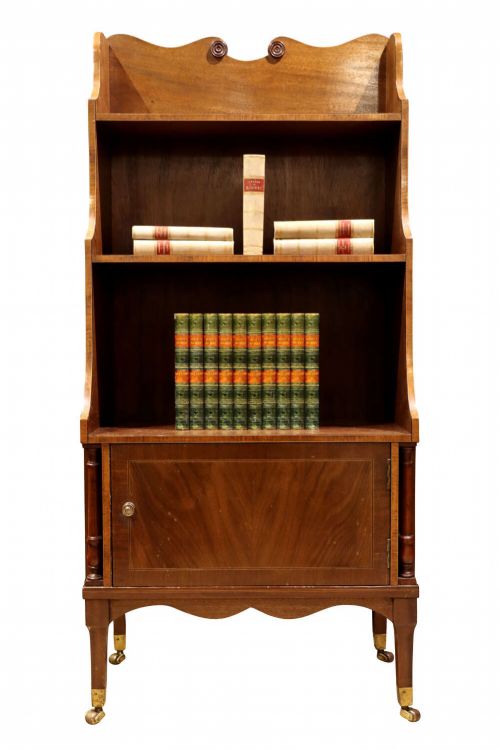
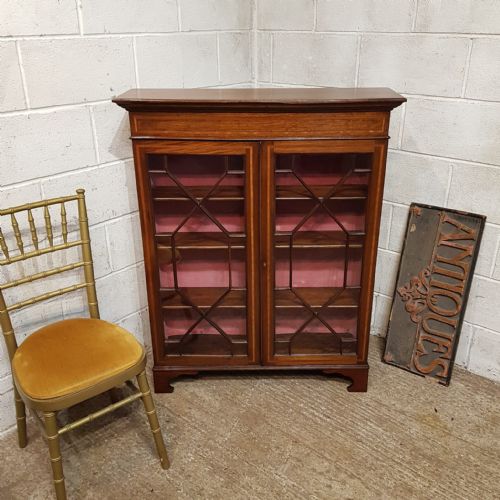

Inlaid Mahogany Book Stand
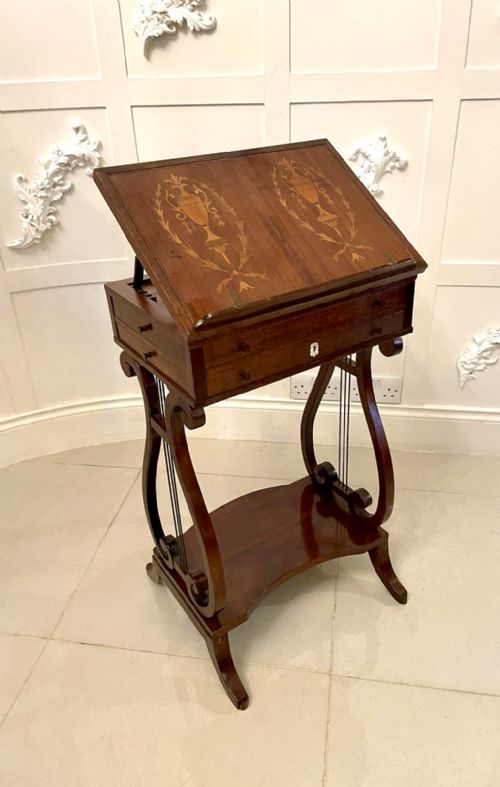
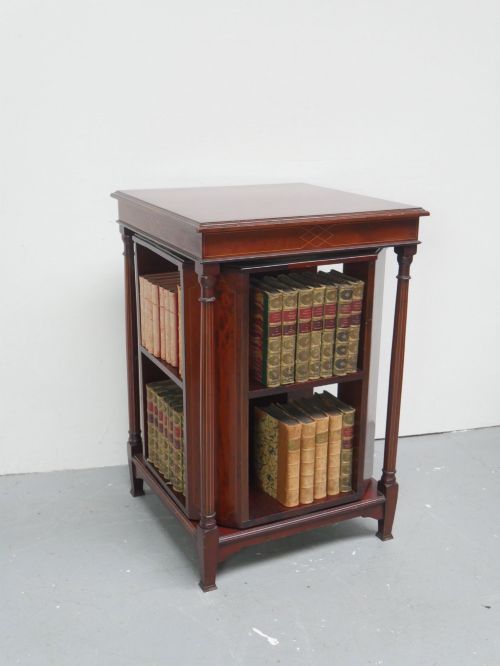
An inlaid mahogany book stand brings period warmth to a room, offering a revolving or freestanding place to keep volumes close at hand.
Inlaid Mahogany Book Stand
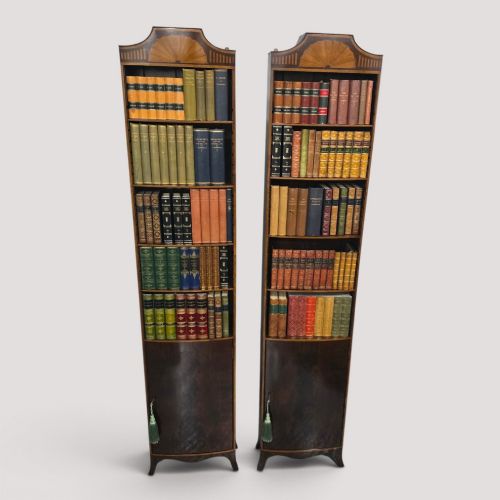
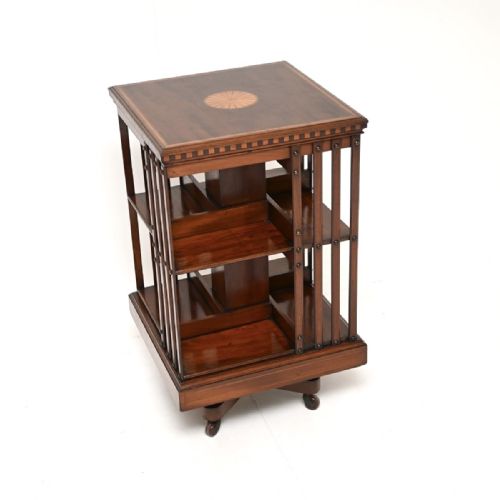
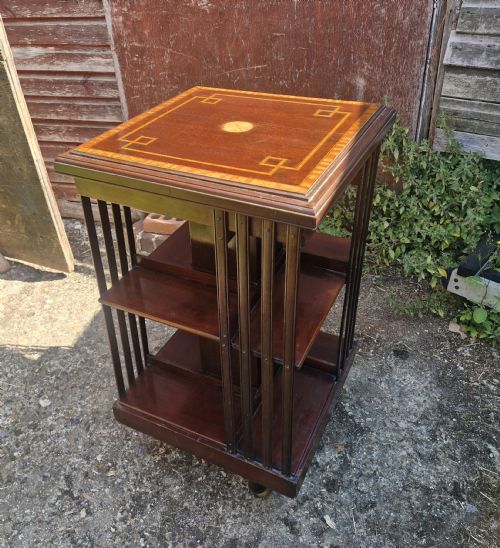
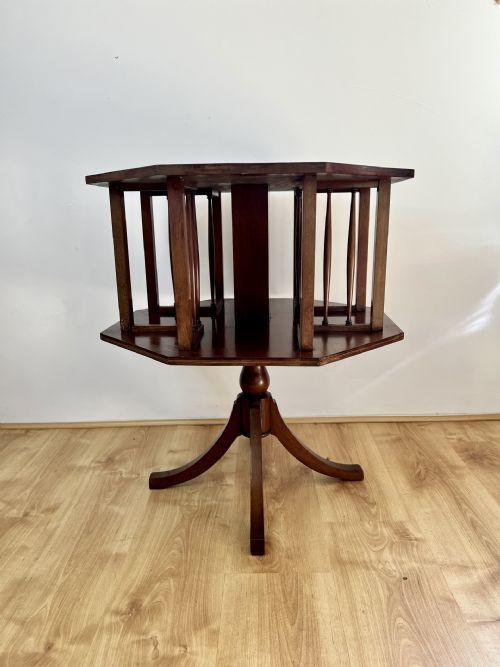
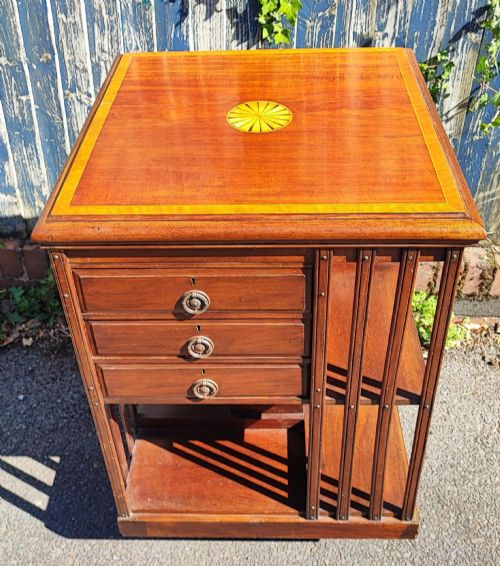
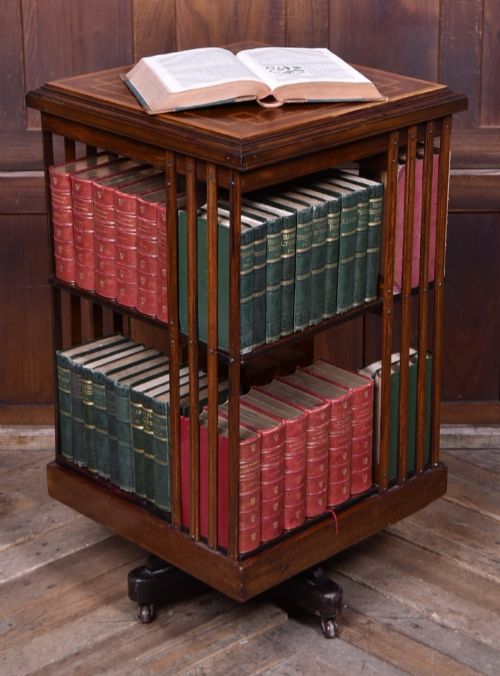
When searching for an inlaid mahogany book stand, collectors encounter pieces primarily originating from the Edwardian period and the nineteenth century. These forms range from rotating table models and freestanding revolving designs to compact book troughs and reading tables.
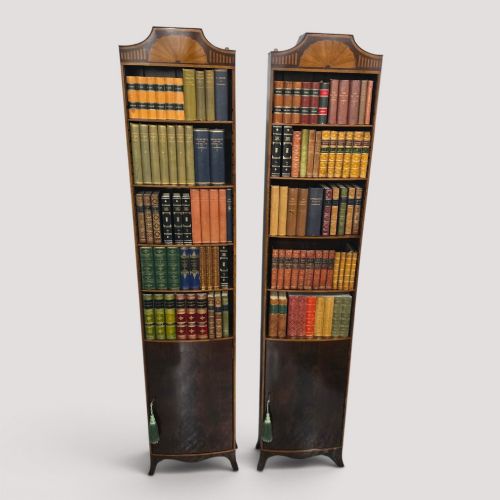
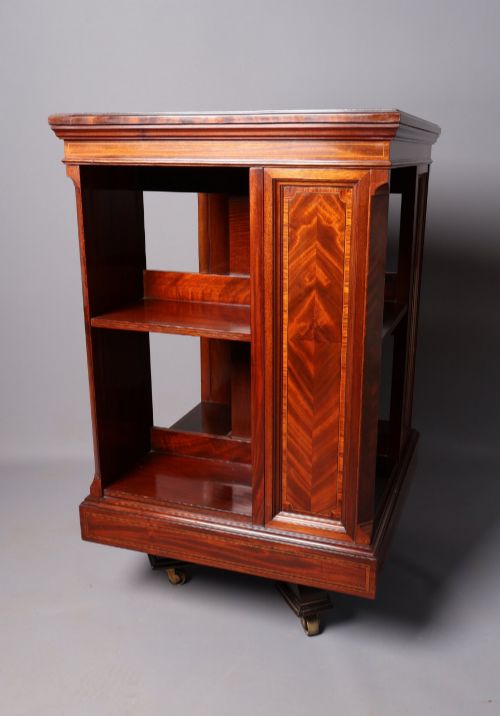
The Edwardian examples frequently show Sheraton Revival influences, deploying satinwood inlay against a rich mahogany background. Standing open bookcases and revolving stands dominate the available selections, serving both decorative and practical library functions.
Materials and Construction
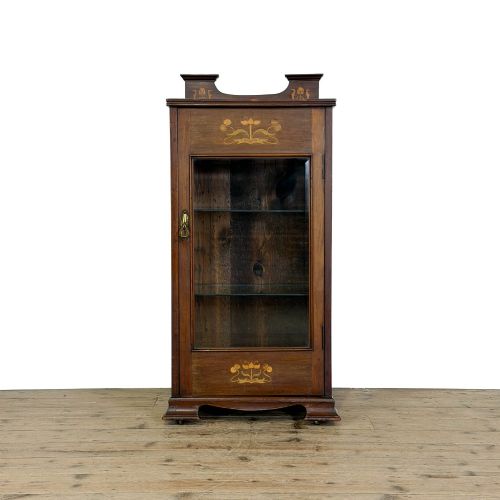
Cabinet makers built these pieces using solid and veneered mahogany, often incorporating contrasting satinwood inlay to create delicate borders and classical motifs. Brass hardware, including castors and hinges, frequently supports the mobility of revolving stands and reading tables.
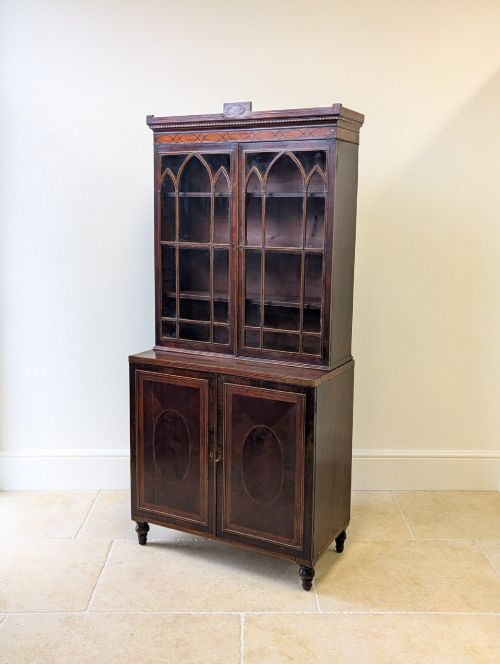
Selected pieces integrate secondary woods alongside glass panels for glazed cabinet doors and occasional marble tops. Joinery traditions of the Georgian, Victorian, and Edwardian eras ensure structural longevity alongside refined decorative surface work.
The selection includes revolving bookcases, book troughs, reading tables, and standing open bookshelves.
Distinctions in Quality
The standard of a piece rests heavily on the precision of its wood inlay and the selection of the mahogany timber, with flame grain variations commanding particular attention. Crispness in the turning of the spindle galleries and the smooth operation of the revolving mechanism separate superior examples from standard workshop production.
Original details, such as matching brass castors and intact glass, elevate a stand's integrity. Maker attributions and balanced proportions further define the upper tier of surviving items.
Shapland & Petter·Asprey
The Inlaid Mahogany Book Stand Glossary
- Revolving bookcase
- A low or table-top stand fitted with a internal cruciform pivot allowing it to spin for easy volume selection.
- Satinwood inlay
- A contrasting light-coloured wood inserted into the darker mahogany surface to form geometric or floral patterns.
- Astral glazed
- A glass door divided into panes by slender wooden framework bars, typical of refined cabinet work.
- Book trough
- An open tabletop or floor-standing trough designed to hold books at an angle for quick access.
Inlaid Mahogany Book Stand: Frequently Asked Questions
How do I date an inlaid mahogany book stand?
Dating relies on observing stylistic markers such as Edwardian Sheraton Revival motifs or Victorian proportions. Construction methods and secondary woods also provide clear chronological indicators.
Examining the type of inlay and wear on the base helps confirm whether a piece belongs to the nineteenth century or the early twentieth century.
Were revolving book stands meant for desks or floors?
Makers produced both large floor-standing revolving bookcases and compact table-top versions. Floor models sat beside armchairs or library desks for easy access.
Table-top variants offered the same rotational convenience for smaller spaces or surface placement.
What is the difference between a book stand and a bookcase?
Book stands generally refer to compact, accessible items like revolving units, troughs, or reading tables designed for active daily use. Bookcases typically provide larger, fixed vertical shelving for permanent libraries.
Many stands incorporate open slats or revolving tiers rather than enclosed cabinet doors.
How should I care for antique mahogany furniture?
Maintain stable room humidity to prevent the mahogany timber and delicate satinwood inlay from splitting. Avoid placing the stand in direct sunlight to preserve the rich wood colour.
Apply a traditional wax polish occasionally to nourish the grain and protect the surface finish.