



Industrial Table Base
An industrial table base provides the structural spine for heavy work surfaces, offering robust utility and character through exposed metalwork.
Industrial Table Base
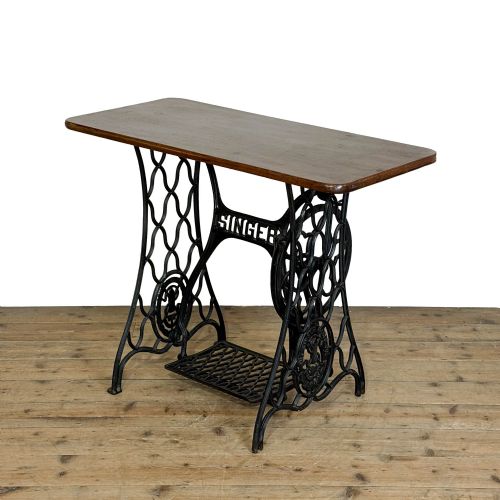
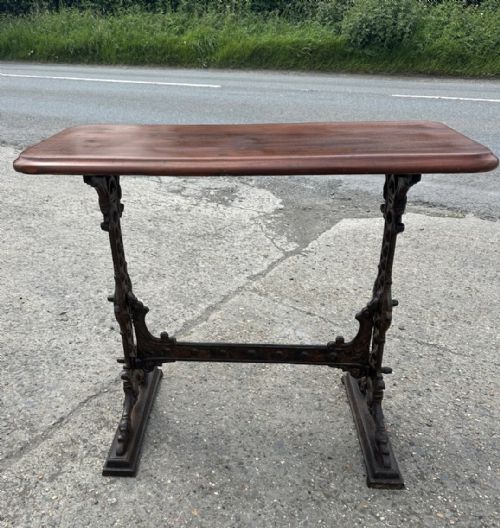
An industrial table base anchors heavy timber or stone tops, utilising cast iron, iron, and brass to achieve maximum stability. These components originate from workshops, factories, and commercial spaces of the Victorian and Edwardian eras, spanning the nineteenth and early twentieth centuries.
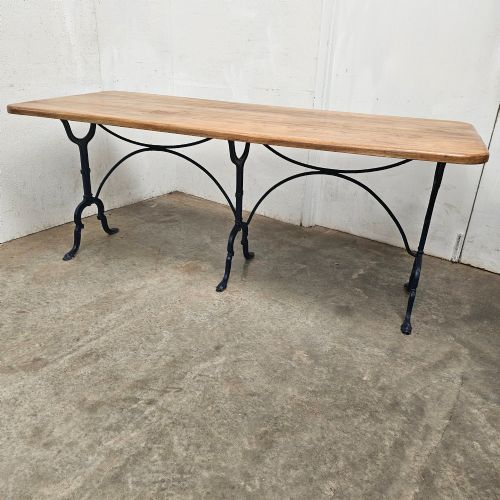
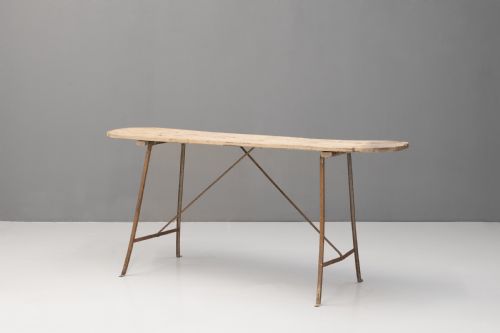
Buyers encounter various configurations here, ranging from pub and bistro formats to pub tables, console tables, and heavy work tables. Many pieces pair original cast iron frames with reclaimed pine, oak, or mahogany tops.
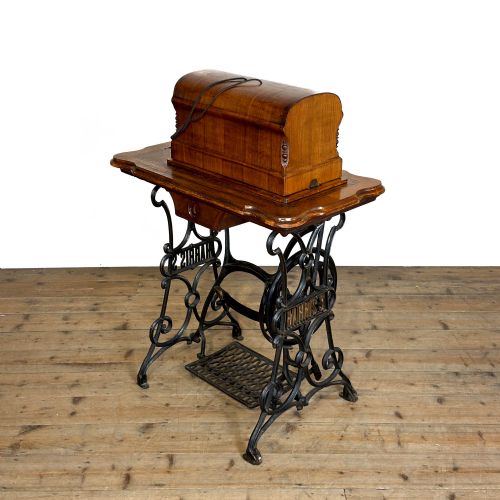
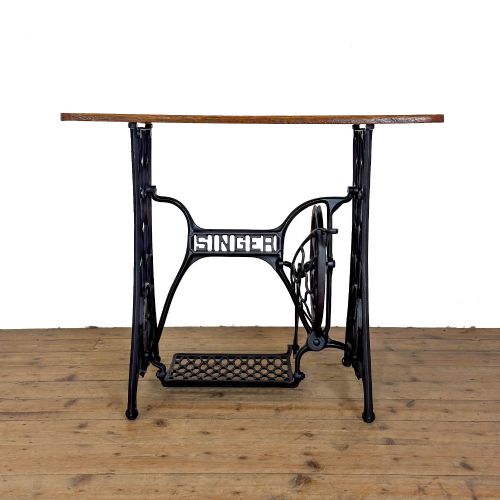
The aesthetic bridges functional engineering and domestic utility, incorporating styles such as Victorian Industrial, French Industrial, and Art Deco. Pieces frequently adapt sewing machine mechanisms, pub fittings, and heavy machinery supports for modern interiors.
Materials and construction methods
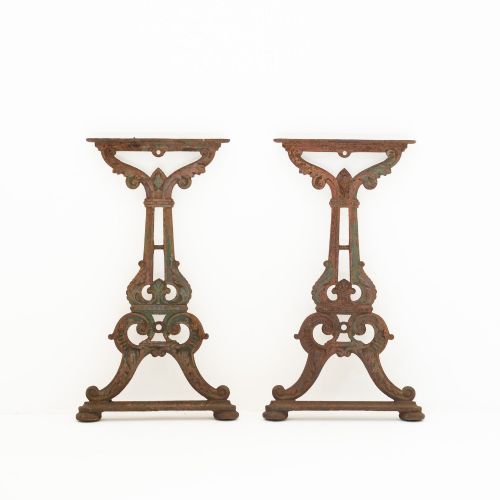
Foundry casting forms the backbone of these pieces, utilising durable cast iron and iron to create intricate structural legs, pedestals, and tripod bases. Brass components and enamel finishes appear alongside these heavier metals, adding mechanical contrast and weather resistance.
Wood elements like oak, pine, elm, and mahogany complement the metal frames, serving as heavy table tops or supplementary structural supports. Traditional joinery and mechanical fasteners secure the timber tops directly to the metal bases.
Patination develops naturally through decades of workshop or commercial use, leaving surfaces with painted finishes, exposed grain, and utilitarian wear. Construction prioritises sheer weight and rigidity to withstand heavy daily labour.
Industrial Table Base Retail Price Guide 2026
Typical asking prices for industrial table base among the pieces listed under this phrase on Sellingantiques today, from the lower quarter to the upper quarter. They describe what is for sale here now, not the wider market.
Many of these sturdy iron workhorses started life as sewing machine stands before finding a second career holding dinner plates.
Factors of quality and origin
The integrity of the metal casting dictates the structural standard, with crisp relief work and heavy-gauge iron outperforming lighter, less detailed iterations. Original manufacturer markings or established maker attributions elevate the historical standing of a piece.
The relationship between the base and the top determines overall harmony, particularly when original cast iron supports are paired with period timber tops rather than mismatched replacements. Complete mechanisms, such as adjustable height screws or original sewing assemblies, retain greater mechanical authenticity.
Surface preservation separates utilitarian survivors from finer examples, noting whether painted finishes remain original or if the patination shows honest, unforced ageing from its working life.
Singer·Carters of London·Hawkins
The Industrial Table Base Glossary
- Cast iron
- A hard, brittle alloy of iron and carbon poured into moulds to create rigid structural shapes. It forms the primary load-bearing foundation for heavy tables and machinery bases.
- Trestle
- A structural support consisting of a horizontal beam supported by pairs of sloping legs. This form distributes weight evenly across long dining and work tables.
- Patina
- The surface sheen and coloration developed through age, oxidation, and regular handling. It serves as a visual indicator of a piece's authenticity and history.
- Up-cycled
- The practice of adapting discarded industrial or mechanical components for domestic furniture use. This often involves combining an antique metal base with a newly fitted timber top.
- Tripod base
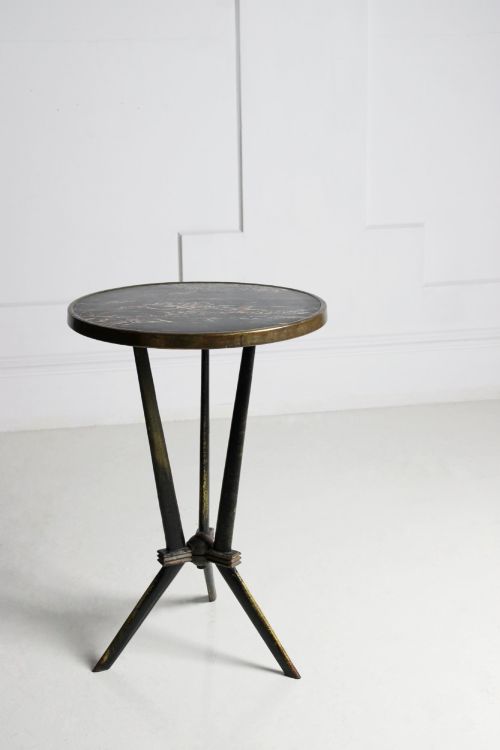
- A three-legged support structure designed to maintain stability on uneven floors. This configuration appears frequently in compact pub and bistro tables.
Industrial Table Base: Frequently Asked Questions
What is an industrial table base?
An industrial table base is a heavy-duty metal support structure originally built for factories, workshops, or commercial establishments during the nineteenth and early twentieth centuries. These pieces utilise robust materials like cast iron and iron to provide exceptional stability for work surfaces.
Today, buyers seek them out for their durable construction and distinctive aesthetic, often pairing them with wooden tops to create functional dining, console, or coffee tables.
How were industrial table bases used?
These bases originally supported heavy equipment, sewing mechanisms, or utilitarian work surfaces in commercial and industrial environments. Pubs, butcher shops, and drapery displays also utilised these sturdy iron and brass frames to withstand punishing daily tasks.
In contemporary spaces, they transition into domestic roles as dining tables, desks, and side tables, anchoring modern interiors with heavy structural character.
How do you style an industrial table base?
Styling an industrial table base involves balancing its raw, utilitarian metalwork with complementary interior elements like exposed brick, reclaimed timber, or leather seating. Pairing the base with a contrasting top, such as polished oak or mahogany, softens the heavy aesthetic while highlighting the original iron engineering.
Placing these tables in dining rooms, kitchens, or home offices allows the functional architecture of the Victorian and Edwardian eras to serve as a visual focal point.
How can you tell the period of a table base?
Dating a table base relies on examining the casting techniques, fastener types, and design motifs characteristic of Victorian, Edwardian, or Art Deco periods. Heavier ornamentation and specific foundry marks often point to nineteenth-century production, while cleaner geometric lines suggest early twentieth-century manufacture.
Matching the base style with documented manufacturing eras helps confirm whether a piece originates from the 1880s, 1900s, or later modernist movements.