





Industrial Shop Drawers
Industrial shop drawers are utilitarian storage pieces built for trade, offering robust capacity and straightforward utility that suit contemporary interiors.
Industrial Shop Drawers
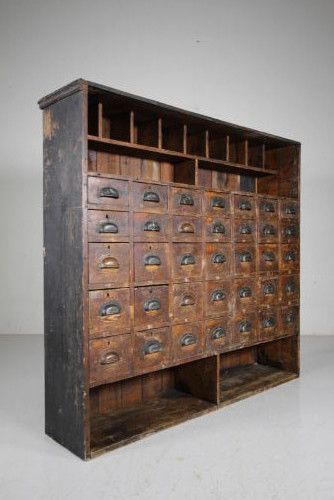
Industrial shop drawers encompass heavy timber and metal storage units originally built for commercial premises such as drapers, haberdashers and butchers. Buyers seeking these items find robust banks of drawers and shop fittings designed to hold stock efficiently rather than for domestic display.
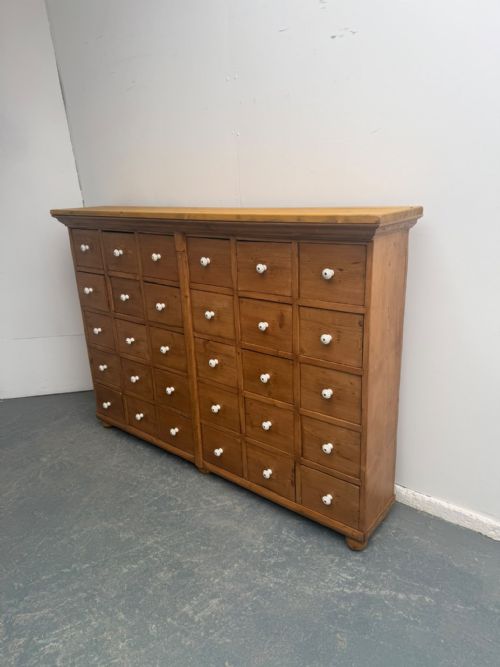
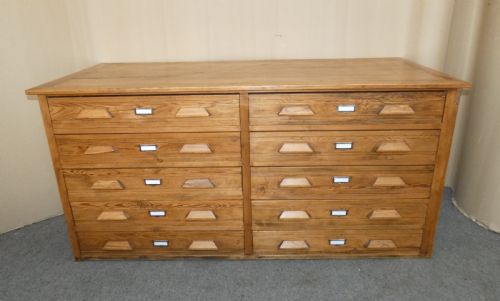
The pieces on this page span the nineteenth century up to the nineteen-twenties, incorporating Victorian designs alongside early twentieth century utility examples. Forms range from extensive banks containing dozens of smaller compartments to large chests, haberdashery cabinets and butchers blocks.
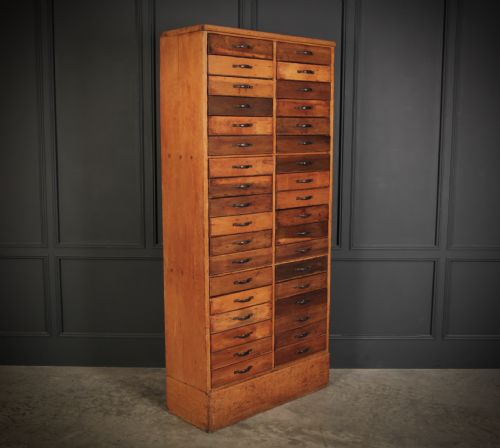
Origins vary between English workshops and continental makers, with specific examples originating from commercial enterprises like Luxmore's of Ilfracombe and Trussant and Cie. Common structural formats include tall banks of twenty or more drawers, painted shop fittings and fruitwood chests.
Materials and construction
Makers utilised durable timbers such as pine, mahogany and fruitwood to construct the primary carcases and drawer boxes, ensuring the furniture withstood daily commercial demands. Secondary elements incorporated metal, iron, cast iron and brass for handles, label holders and structural reinforcement.
Surfaces frequently display applied paint finishes, including light green schemes, alongside bare timber treated with traditional oils or waxes. Joinery prioritised strength and utility, producing heavy drawer banks and shop fittings built to endure decades of heavy retail usage.
Industrial Shop Drawers Retail Price Guide 2026
Typical asking prices for industrial shop drawers among the pieces listed under this phrase on Sellingantiques today, from the lower quarter to the upper quarter. They describe what is for sale here now, not the wider market.
Some drawers still retain faint traces of the haberdashery dust and textile scents gathered during decades behind nineteenth-century shop counters.
Assessing the work
Quality in these commercial pieces rests upon the integrity of the original construction and the scale of the drawer formation. Larger banks with numerous matching drawers and substantial timber thickness demonstrate greater commercial ambition than smaller domestic conversions.
The presence of original hardware, such as brass label holders and iron pulls, distinguishes a piece retained in its working state. Surviving maker stamps, painted shop nomenclature and untransformed workshop surfaces elevate the historical character of the furniture.
Luxmore's of Ilfracombe·Trussant and Cie
The Industrial Shop Drawers Glossary
- Bank of drawers
- A large multi-drawer storage unit built for commercial inventory. These tall structures feature numerous individual compartments arranged in rows and columns.
- Haberdashery drawers
- Shallow compartmentalised storage designed for ribbons, threads and small textile goods. These cabinets often incorporate glass fronts or numerous small pulls.
- Drapers chest
- A commercial storage chest utilised by cloth merchants. Such pieces provided deep capacity for folded fabrics and heavy stock.
- Shop fitting
- Custom furniture built specifically for a retail interior. These permanent or semi-permanent fixtures integrated directly into the merchant premises.
Industrial Shop Drawers: Frequently Asked Questions
What were industrial shop drawers used for?
These units served as functional storage within nineteenth and early twentieth century retail establishments. Merchants utilised the numerous compartments to organise stock, tools and dry goods for customers.
Over time, surviving examples transitioned from commercial environments into domestic and studio spaces where large-capacity storage remains useful.
How do I date these pieces?
Dating relies on material selection, construction techniques and stylistic markers recorded in Victorian and early twentieth century pieces. Nineteenth century examples often utilise heavier timber framing and hand-cut joinery.
Later pieces from the nineteen-twenties show shifts toward simpler utility construction while retaining commercial proportions.
What timbers were used?
Makers selected hard-wearing woods capable of enduring heavy retail traffic and frequent daily handling. Pine, mahogany and fruitwood appear regularly across the available stock.
Metal components like iron, cast iron and brass were incorporated into handles, pulls and internal framework for added strength.
Are these pieces suitable for home use?
Their substantial capacity and narrow profiles make them practical for modern living spaces requiring structured organisation. They function effectively as storage chests or feature pieces in hallways and kitchens.
Buyers should measure access points carefully, as these banks of drawers are exceptionally heavy and bulky.