


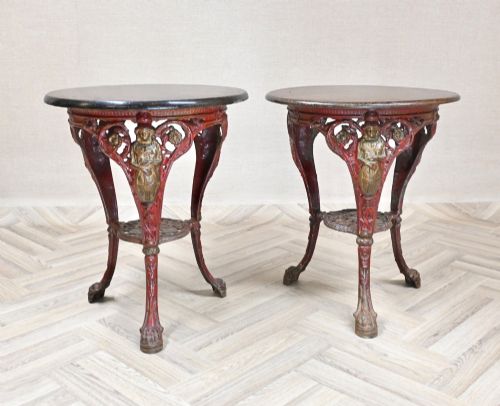


Industrial Pub Furniture
Industrial pub furniture brings the robust utility of nineteenth-century drinking houses into modern spaces through sturdy timbers and heavy metal framing.
Industrial Pub Furniture
Industrial pub furniture encompasses heavy-duty tables and seating designed for commercial hospitality settings during the Victorian and Edwardian eras. Buyers searching for industrial pub furniture seek pieces that combine utilitarian durability with authentic period character.
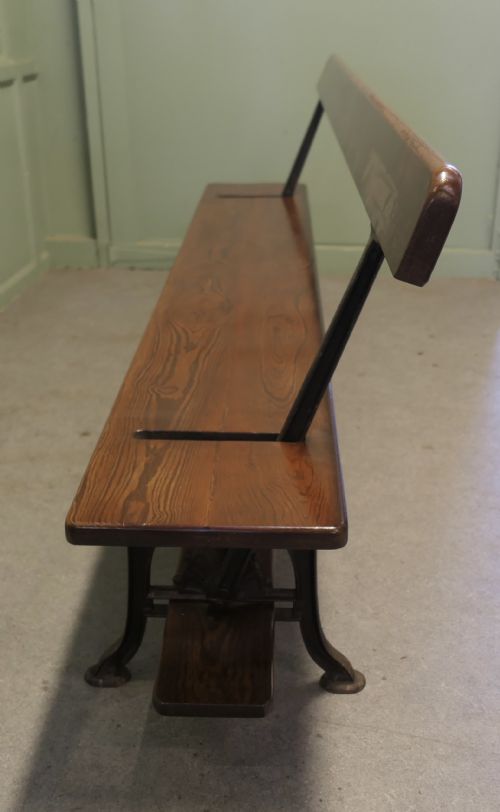
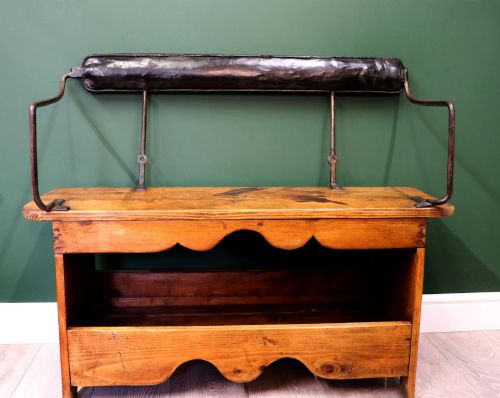
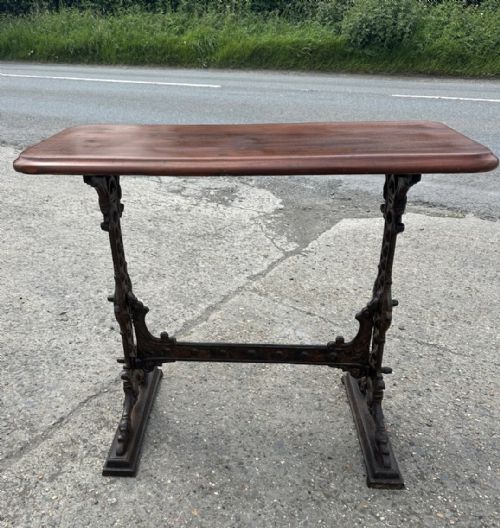
The pieces on this page are predominantly pub tables, long tavern tables, and benches anchored by robust cast iron bases. These forms survive alongside occasional coffee tables and hall seats created from repurposed transit or marine fittings.
Most examples date from the nineteenth century, specifically around eighteen eighty, utilising timber tops paired with elaborate metal frames. Mahogany, pine, oak, and pitch pine appear frequently as the primary surfaces for these commercial tables.
How they were made
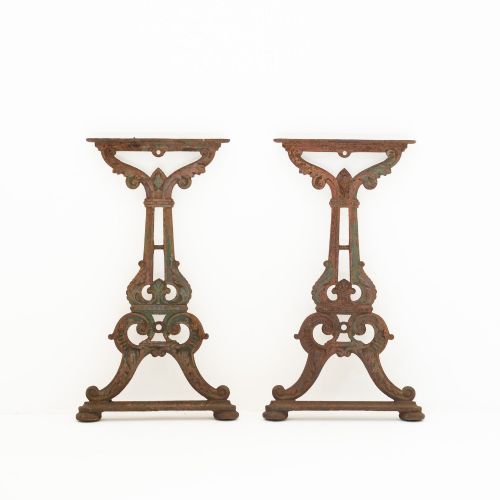
Makers constructed these commercial pieces using heavy cast iron for structural bases, which provided the necessary weight to prevent tipping in busy taverns. Foundries cast intricate designs, including Britannia figures and lion motifs, directly into the iron supports.
Thick timber tops in mahogany, oak, and pine were secured to the metal frames using robust mechanical fasteners to withstand constant daily use. Woods like pitch pine and standard pine supplied durable surfaces for heavy-duty pub environments.
Industrial Pub Furniture Retail Price Guide 2026
Typical asking prices for industrial pub furniture among the pieces listed under this phrase on Sellingantiques today, from the lower quarter to the upper quarter. They describe what is for sale here now, not the wider market.
One listed seat preserves a novel tram or trolley bus reversible mechanism from the Victorian era.
What varies in quality
Quality separates plain functional framing from decorative foundry work, particularly where manufacturers cast figurative elements like lions or Britannia figures into the iron. Sharp casting detail and original timber tops command greater attention than replaced planks or crude iron replacements.
The relationship between the original timber top and the cast iron base dictates the integrity of each piece. Surfaces retaining their genuine period patination and unaltered structural fixings represent the higher end of the range.
The Industrial Pub Furniture Glossary
- Britannia
- A popular Victorian cast iron table base design featuring the figure of Britannia. This style became standard in nineteenth-century British public houses.
- Pitch pine
- A resinous, durable softwood utilised extensively for nineteenth-century commercial furniture. It offers significant resistance to heavy wear.
- Cast iron
- An iron-carbon alloy poured into moulds to create rigid structural bases. This material forms the heavy foundations of Victorian tavern tables.
- Occasional table
- A small, movable table used for secondary placement in a room. These complement larger pub tables within residential layouts.
Industrial Pub Furniture: Frequently Asked Questions
What is industrial pub furniture?
Industrial pub furniture comprises heavy commercial tables and seating from the Victorian and Edwardian periods, built for durability in taverns and public houses.
These pieces typically combine robust cast iron bases with solid timber tops made from mahogany, oak, or pine.
How were cast iron bases used?
Foundries manufactured heavy iron supports to anchor public house tables firmly to the floor and prevent tipping during busy trading hours.
Designs ranged from simple industrial columns to ornate figures such as Britannia or lions.
Which woods appear most often?
Nineteenth-century makers relied on dense hardwoods like mahogany and oak alongside durable softwoods including pine and pitch pine.
These timbers provided hardwearing surfaces capable of enduring constant daily use in public drinking establishments.
How do I style these pieces?
Industrial pub tables and benches suit modern dining areas, kitchens, and open-plan spaces requiring robust seating and surface space.
Their utilitarian design contrasts effectively with contemporary interiors while retaining genuine nineteenth-century character.