

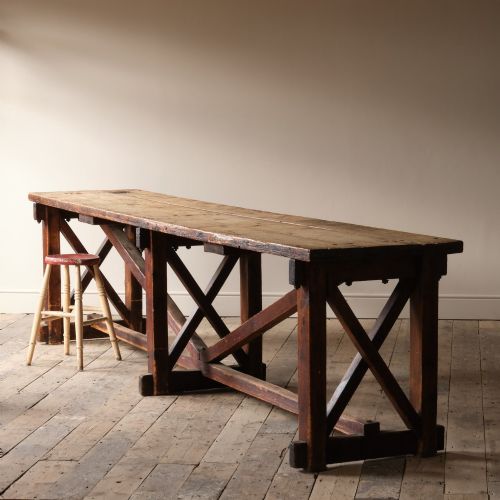

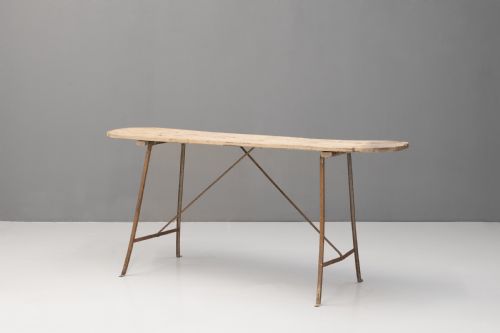
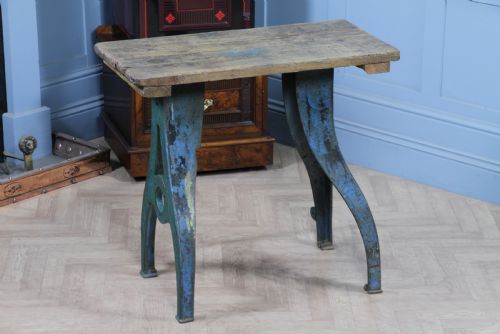


Industrial Pine Table
An industrial pine table brings utilitarian grit into a domestic room through timber tops and robust metal framing.
Industrial Pine Table
An industrial pine table combines sturdy timber surfaces with metal framing, emerging from functional workspaces rather than polite parlours. These surfaces serve multiple domestic roles across dining rooms, hallways, and kitchens.
The selections available here span diverse forms including workbenches, prep tables, console tables, tavern tables, and garden tables. Most examples date from the nineteenth century, the Edwardian era, or around nineteen-twenty, reflecting practical origins.
Makers constructed these objects for bakers, carpenters, foundry workers, and publicans who required hard-wearing surfaces. Buyers encounter rustic farmhouse aesthetics alongside heavy industrial utilitarian designs that show genuine working wear.
How they were made
Craftsmen built these tables using thick pine tops, often utilising reclaimed timber, paired with heavy bases of cast iron, wrought iron, or brass. Metal components included up-cycled machine bases, trestle supports, and Britannia frames.
Makers secured wooden boards with metal bindings, bolts, and heavy bracing to withstand daily manual labour. Some surfaces retained traces of painted finishes from their workshop or commercial pasts.
Industrial Pine Table Retail Price Guide 2026
Typical asking prices for industrial pine table among the pieces listed under this phrase on Sellingantiques today, from the lower quarter to the upper quarter. They describe what is for sale here now, not the wider market.
Listings feature pine, cast iron, wrought iron, brass, and painted wood across nineteenth-century and early twentieth-century forms.
What varies in quality
Quality rests in the proportional balance between the timber top and the industrial metal base, alongside the integrity of the joins. Tables with genuine workshop provenance show harmonious integration rather than arbitrary assembly.
The character of the pine top, whether scrubbed clean or showing layers of historic paint and wear, dictates visual weight. Iron and brass elements display varying degrees of casting crispness and structural heft.
The Industrial Pine Table Glossary
- Pine
- A soft timber utilised extensively for furniture tops and structural carcases due to its availability and resilience. It absorbs the marks of daily use and develops a rich patina over decades.
- Cast iron
- An iron-carbon alloy poured into moulds to create heavy, rigid machine bases and decorative frames. This material provided the unyielding stability needed for industrial work tables.
- Trestle
- A structural support consisting of a horizontal beam supported by two pairs of sloping legs. This configuration allows maximum legroom underneath long work surfaces.
- Britannia metal
- A tin-based alloy often associated with nineteenth-century pub and tavern table bases. It offers a dull silvery lustre distinct from raw iron.
- Workbench
- A heavy table used by artisans such as carpenters and bakers for manual labour. These forms frequently retain vices, tool wells, and surface scars from trade use.
Industrial Pine Table: Frequently Asked Questions
How do I clean a pine top?
Wash the surface gently with warm water and mild soap, avoiding harsh chemical strippers that remove historic character.
Dry the timber thoroughly afterwards to prevent moisture damage and preserve the natural grain.
Can I use an industrial table outside?
Certain designs like garden tables with iron bases tolerate outdoor environments if protected from prolonged dampness.
Pine tops generally require indoor conditions to prevent warping and degradation of the wood.
What is a prep table?
A prep table is a utilitarian work surface originally used in bakeries or kitchens for food preparation.
These pieces feature thick timber boards designed to endure heavy chopping, kneading, and daily scrubbing.
How do I date an iron base?
Inspect the casting seams, bolt types, and foundry marks to determine manufacturing methods.
Nineteenth-century ironwork typically displays rougher casting textures and hand-finished components compared to later machine-made examples.