






Industrial Metal Light
An industrial metal light brings utilitarian edge to a room, offering robust construction and purposeful illumination born from factories, railways and workshops.
Industrial Metal Light
Every industrial metal light serves a practical function, evolving from utilitarian origins into desirable fixtures for contemporary interiors. Buyers seek these pieces for their unpretentious forms and honest engineering.
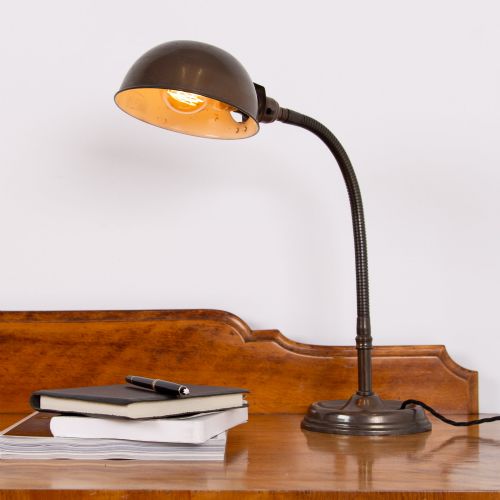
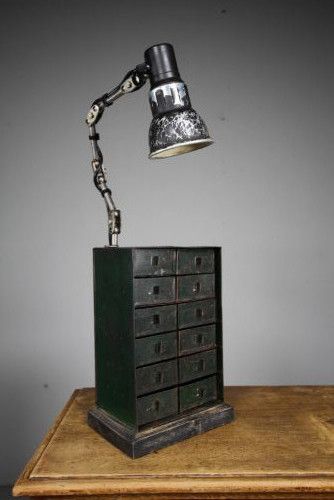
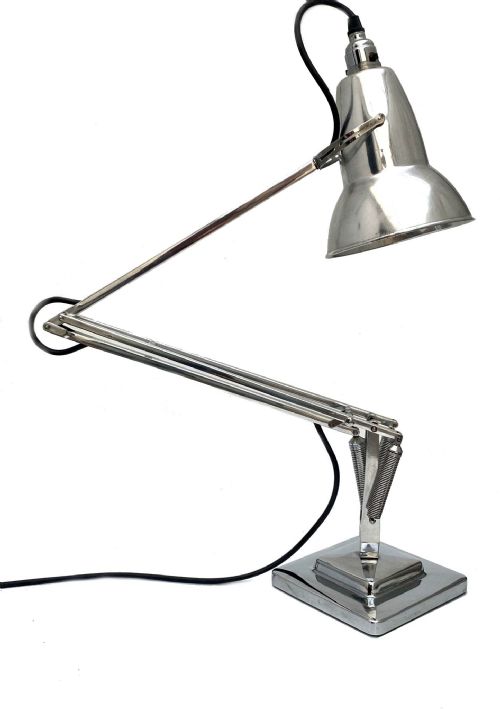
The selection ranges widely across decades and uses, spanning heavy cast iron ceiling lights, adjustable chrome desk lamps and enamelled factory pendants. Pieces stretch from Victorian workshops through the 1920s and 1930s into the mid-century.
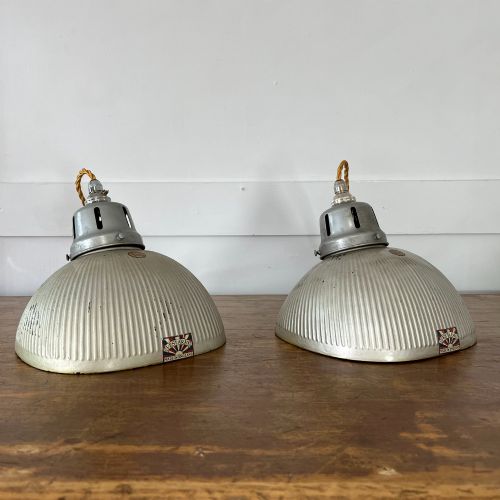
Pendant lights and adjustable desk lamps dominate the offerings, often bearing the marks of British, French or American industrial heritage. These fixtures bridge the gap between heavy engineering and domestic utility.
Materials and construction
Construction relies heavily on robust metals such as steel, cast iron, brass, chrome and aluminium, paired frequently with thick pressed or moulded glass. These materials were chosen for resilience in demanding environments like factories, railways and auction houses.
Manufacturing techniques combine utilitarian casting, spinning and pressing of sheet metal with articulated joints and adjustable arms. Fixtures often feature enamelled finishes designed to withstand harsh workshop conditions while maximising light reflection.
Industrial Metal Light Retail Price Guide 2026
Typical asking prices for industrial metal light among the pieces listed under this phrase on Sellingantiques today, from the lower quarter to the upper quarter. They describe what is for sale here now, not the wider market.
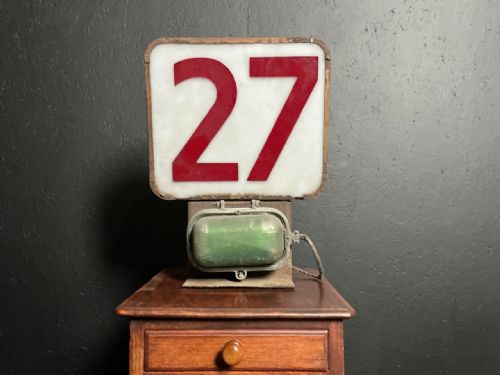
Even fish auction bidders needed proper illumination, as proven by the surviving metal number and light combinations.
Judging quality in metal lighting
Quality rests upon the integrity of the original engineering, the weight of the metal and the retention of authentic factory components. Superior pieces demonstrate precise articulation in adjustable arms and high-grade casting without unnecessary ornamentation.
The presence of maker marks, original enamel finishes and untouched patina elevate a piece above standard utility items. The best examples balance industrial severity with refined proportion and balanced mechanical movement.
Herbert Terry·Pirouette·Dressel·Holophane
The Industrial Metal Light Glossary
- Anglepoise
- A type of balanced arm lamp utilising springs to maintain position, famously produced by makers like Herbert Terry in the 1930s. This design revolutionised task lighting through mechanical precision.
- Enamel
- A fused glass coating applied to metal substrates to provide a durable, wipe-clean and reflective surface. It frequently appears on industrial pendant shades from the early twentieth century.
- Holophane
- A brand of scientific glass prisms designed to diffuse and direct light efficiently. These ribbed shades are prized for their optical qualities.
- Trench art
- Objects fashioned by soldiers or civilians from war debris, including shell cases and metal scraps. They represent a distinct subset of early twentieth-century metalwork.
- Spelter
- An alloy of zinc used as a cheaper substitute for bronze or brass in decorative castings. It often mimics heavier metals while requiring careful handling.
Industrial Metal Light: Frequently Asked Questions
How do I wire an old industrial light?
Most vintage metal fixtures require rewiring with modern cable to meet current safety standards while retaining their original lampholders and switches.
Consult a qualified electrician to ensure the internal components safely accommodate contemporary bulbs without altering the exterior aesthetic.
Can I use these lights in a modern kitchen?
Enamelled pendant lights and factory shades suit contemporary kitchen islands and workspaces brilliantly, providing focused downward illumination.
Their robust metal construction introduces an authentic textural contrast to sleek modern cabinetry.
How do I date an industrial lamp?
Dating relies on identifying specific switches, flex types, manufacturing patents and material shifts from iron to aluminium or chrome.
Stylistic cues from the Arts and Crafts movement through Art Deco and Bauhaus also help place a piece within a specific decade.
What is the difference between brass and chrome finishes?
Brass finishes often point towards earlier Edwardian or Arts and Crafts contexts, offering a warmer metallic tone that develops a natural patina.
Chrome plating gained prominence during the Art Deco and Bauhaus eras, introducing a bright, reflective industrial surface suited to task lighting.