




Industrial Hanging Light Fixture
These industrial hanging light fixture examples combine utility with enduring design, bringing utilitarian strength to modern interiors.
Industrial Hanging Light Fixture
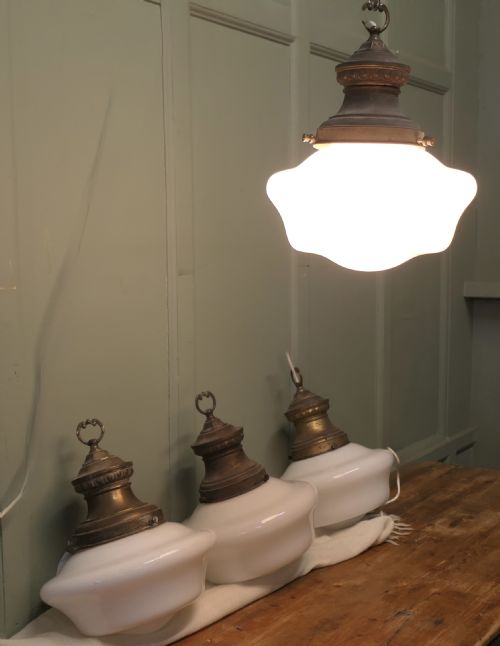
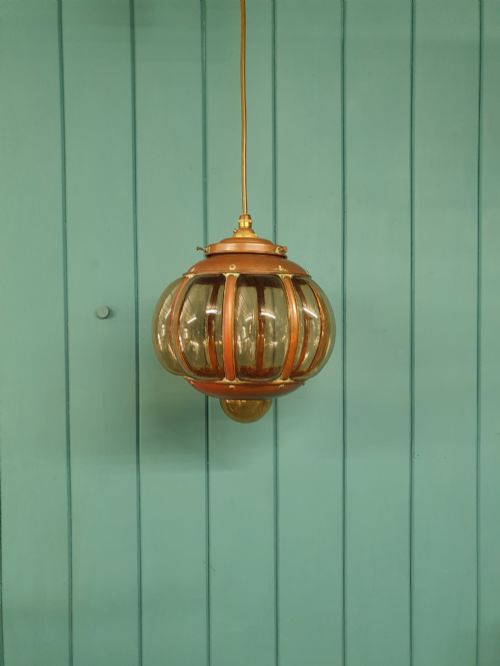
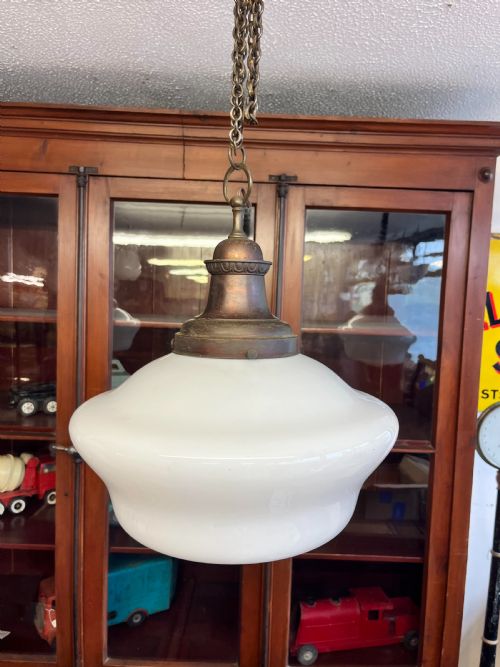
An industrial hanging light fixture brings functional workspace design into domestic and commercial interiors. These pieces encompass pendant lights, ceiling lights, and chandeliers originating from periods such as the Edwardian era, 19th Century, 1900, 1910, 1920, and 1930.
How they were made
Manufacturers utilised robust materials like steel, brass, copper, cast iron, and wrought iron to construct durable frames and fittings. Vitreous enamel and chrome galleries were applied to metal components to provide protective finishes and utilitarian appeal.
Shades and diffusers were formed from glass, opaline glass, smoked glass, and mirrored glass, often incorporating light-diffusing prisms. Components like the Holophane shade design were engineered specifically to optimize illumination in factories and public buildings.
What varies in quality
The calibre of an industrial hanging light fixture depends upon the integrity of its original metalwork and the preservation of its glass shades. Heavier cast iron frames and intact opaline or mirrored glass elements distinguish higher-tier examples from standard utility fittings.
Design distinction also dictates quality, where specialised forms like nautical pendants or branded prismatic shades display superior manufacturing ambition. The harmony between original metal galleries, suspension hardware, and shade proportions defines the finer pieces in this range.
The Industrial Hanging Light Fixture Glossary
- Holophane Shade
- A type of glass shade moulded with prismatic ribs designed to diffuse light evenly while reducing glare. These were widely utilised in industrial and municipal settings.
- Opaline Glass
- A milk-white translucent glass that softens light sources and provides a smooth, glowing appearance when illuminated. It frequently appears on early twentieth-century pendants.
- Vitreous Enamel
- A material created by fusing powdered glass to a substrate by firing, producing a durable, glossy coloured coating. This finish protected factory lights from corrosion.
- Gallery
- The metal collar or mount that holds a glass shade in place and connects it to the suspension rod or chain. These fixtures often feature brass or chrome finishes.
- Witches Hat
- A descriptive term for a wide, conical shade profile resembling a pointed cap, commonly seen on large cast iron or enamel ceiling lights.
Industrial Hanging Light Fixture: Frequently Asked Questions
How do I hang these heavy lights?
Most industrial hanging light fixtures require secure ceiling joist fixings or appropriate wall plugs due to their substantial metal and glass construction. Using a qualified electrician ensures the weight of cast iron or steel fittings is supported safely.
Suspension height should be adjusted carefully depending on whether the fixture hangs over a dining table, kitchen island, or open hallway space. Ensure the chain or cord length complements the room proportions.
Can I use modern LED bulbs?
Modern LED lamps fit standard holders easily while producing less heat and consuming significantly less energy than historical bulbs. This makes them practical for daily domestic use inside vintage glass shades.
Choosing warm white LED filaments preserves the traditional aesthetic associated with early twentieth-century lighting designs. The frosted or clear quality of the glass will influence how the bulb output disperses.
What rooms suit an industrial pendant?
These fixtures suit kitchens, hallways, and living spaces where utilitarian character adds visual contrast to contemporary interiors. Large opaline or enamel shades provide strong downward task lighting over surfaces.
Chandeliers and multi-light configurations work well in larger rooms with high ceilings to anchor the overhead space. Smaller nautical pendants function effectively in more compact areas.
How do I identify the period?
Dating relies on examining the manufacturing materials, shade styles, and electrical gallery designs typical of specific decades. Edwardian and early twentieth-century pieces often display heavier brass or iron components alongside specialised prismatic glass.
Later 1930s examples frequently introduce streamlined Art Deco silhouettes and steel construction. Comparing the gallery fixings and glass types helps narrow down the era of production.