


Industrial Desk Lamp
An industrial desk lamp brings utilitarian metal and functional engineering straight to the workspace, offering robust task lighting built for genuine daily service.
Industrial Desk Lamp
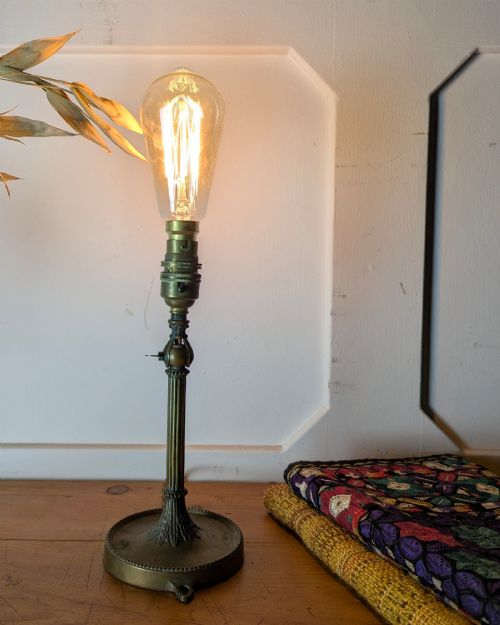
An industrial desk lamp draws on decades of heavy-duty workplace design, ranging from early twentieth-century metal task lights to adjustable articulating arms. You will frequently encounter brass, chrome, and iron constructions hailing from the 1920s and 1930s, reflecting utilitarian efficiency and early modernism.
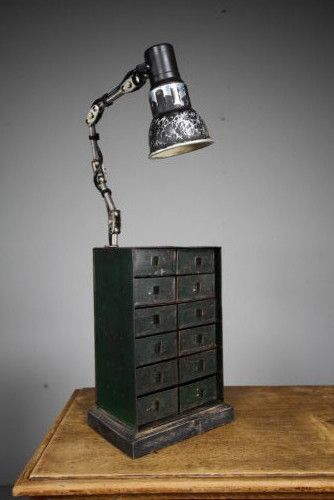
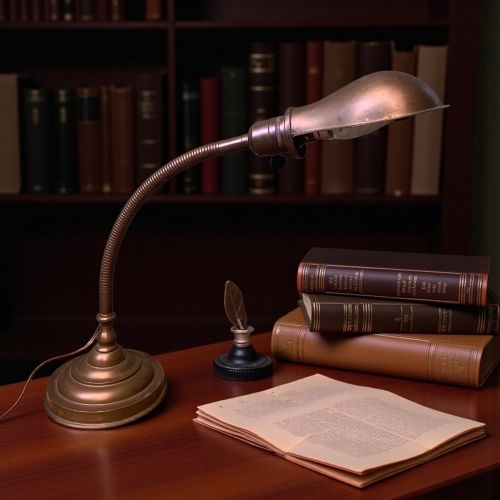
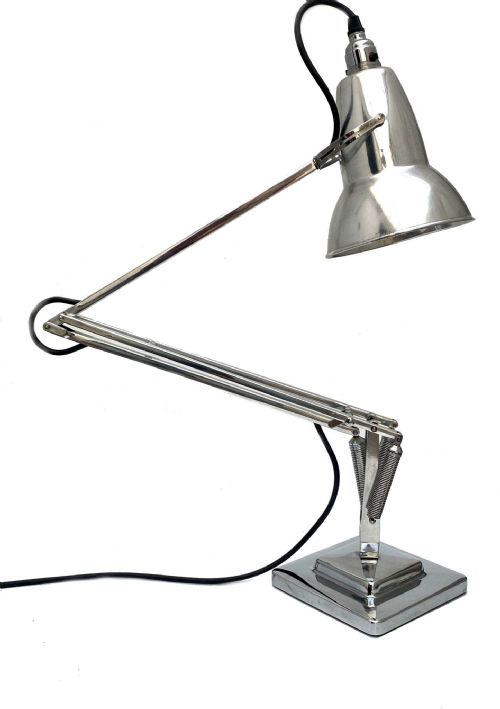
The selection encompasses specialist forms such as bankers lamps, adjustable anglepoise models, and converted marine gimbal lights. These pieces bridge the gap between factory utility and domestic study aesthetics, often incorporating weighted iron bases and functional swivel joints.
Origins vary between British workshops, French studios, and German Bauhaus-influenced design, showing how diverse European makers adapted heavy engineering materials for desk use. Most surviving examples display the honest wear of past offices and workshops, retaining their original metal patination.
Materials and Construction
Makers relied heavily on durable metals like brass, cast iron, steel, and chrome to build rigid structures capable of withstanding constant adjustment. Heavy cast bases provided necessary counterweights for articulating arms, while spun metal and glass shades directed task illumination precisely where needed.
Articulation mechanisms often utilised exposed springs, threaded joints, and pivoting gimbals derived from maritime and factory equipment. Enamelled iron finishes and polished chrome coatings protected the underlying steel from workshop corrosion while defining the distinct aesthetic of the era.
Listings feature durable materials including brass, chrome, steel, cast iron, and glass spanning from the nineteenth century through the 1940s.
Assessing Quality
Quality rests in the precision of the mechanical joints and the robustness of the original metal components rather than mere decorative flash. Superior examples retain their original maker markings, balanced tension springs, and uncompromised structural alignment through decades of movement.
Finer pieces showcase sophisticated engineering, such as internal counterbalancing or specialised shade mountings, as seen in works by recognised design houses. The integrity of the surface finish - whether original black enamel, polished brass, or brushed chrome - further distinguishes exceptional survivors from lesser alterations.
Herbert Terry·Guilmet·Wilhelm Wagenfeld·Pirouette·Dugdills
The Industrial Desk Lamp Glossary
- Anglepoise
- A type of balanced arm lamp utilising tension springs to hold the light in various positions. This mechanical system revolutionized adjustable desk lighting in the early twentieth century.
- Gimbal
- A pivoted ring mounting that allows a lamp to remain level regardless of the motion of its base. It originates from maritime equipment used on rolling ships.
- Spelter
- A zinc alloy frequently used as a substitute for bronze or brass in decorative metalwork. It was often painted or electroplated to imitate richer metals.
- Bauhaus
- A German art school operational in the 1920s that emphasised functionalism and clean industrial lines. Its philosophy heavily influenced modern desk lamp design.
Industrial Desk Lamp: Frequently Asked Questions
How do I rewire an old desk lamp?
Rewiring requires accessing the internal cord through the base or articulating arm, replacing perished vintage wiring with modern insulated cable while retaining original brass lampholders where possible.
Because many vintage pieces feature metal frames, proper earthing is essential to ensure safe daily operation on a modern desk.
Are these lamps safe for daily use?
Most antique metal lamps require professional PAT testing or rewiring before regular domestic use to comply with contemporary electrical standards.
Once updated with modern flex and safety checks, their sturdy metal construction makes them exceptionally reliable for ongoing workspace illumination.
How do I identify a 1920s desk lamp?
Look for characteristic materials like chrome plating, tubular steel, and heavy cast iron bases that reflect the rise of early modernism and machine age aesthetics.
Maker stamps, toggle switches, and specific articulating spring configurations also help date a piece securely to the interwar period.