


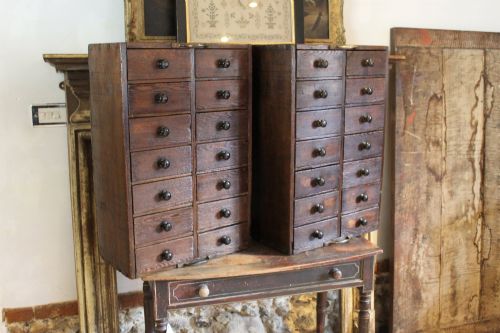


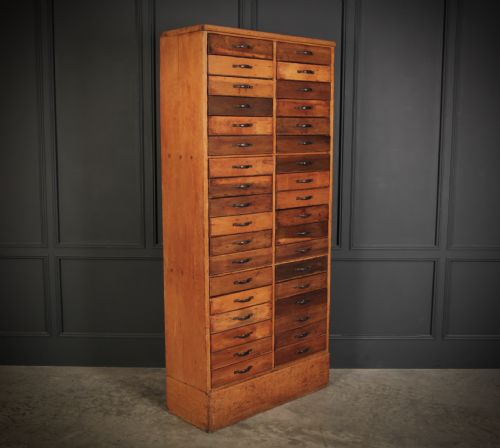


Industrial Chest of Drawers
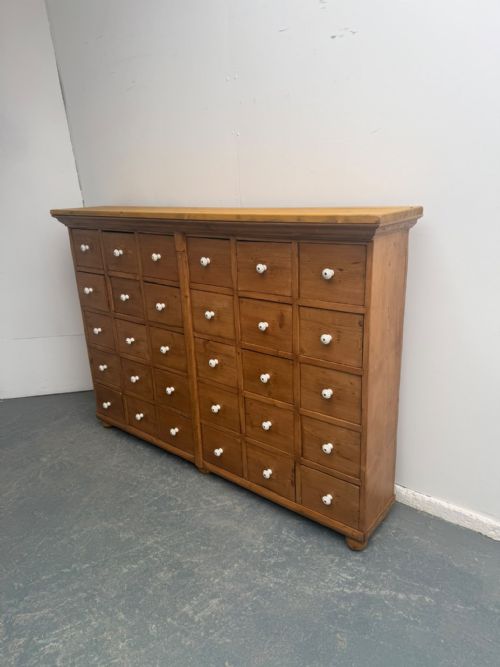
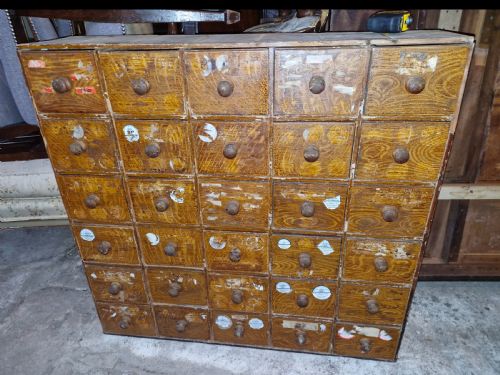
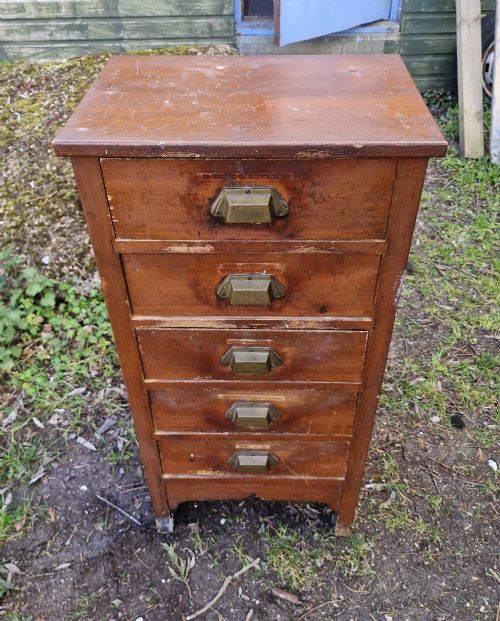
An industrial chest of drawers brings robust utility and honest historic character to modern interiors through multi-drawer banks and robust workshop storage.
Industrial Chest of Drawers
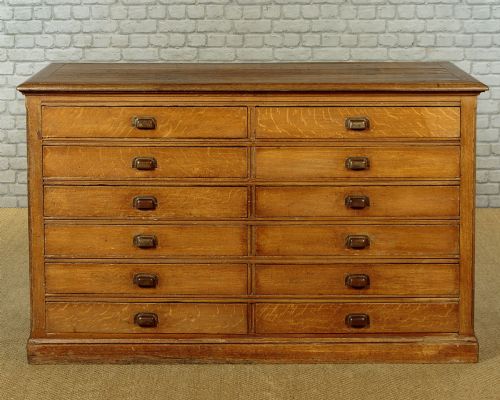
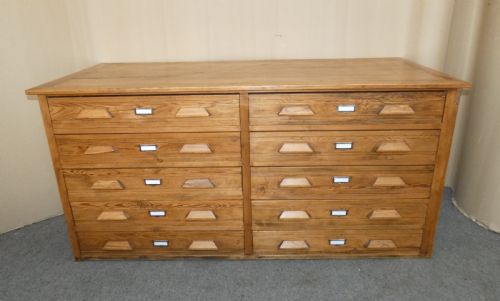
An industrial chest of drawers encompasses heavy-duty storage furniture originating from commercial, workshop, and retail environments spanning the nineteenth century through the mid-twentieth century. Buyers searching for an industrial chest of drawers encounter multi-drawer configurations like banks of drawers, plan chests, and haberdashery units designed originally for specific trades.
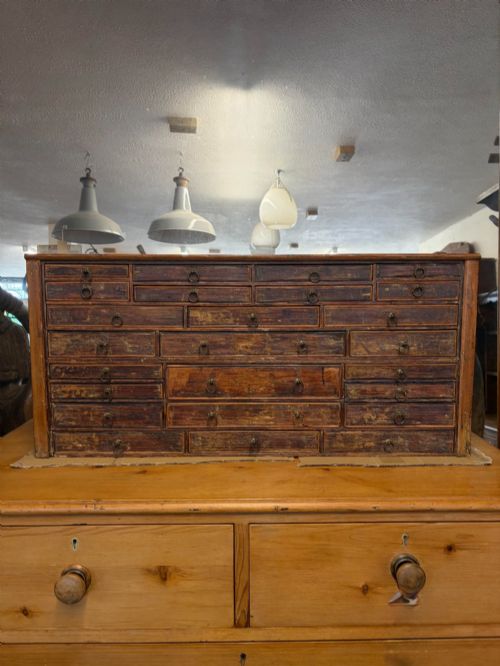
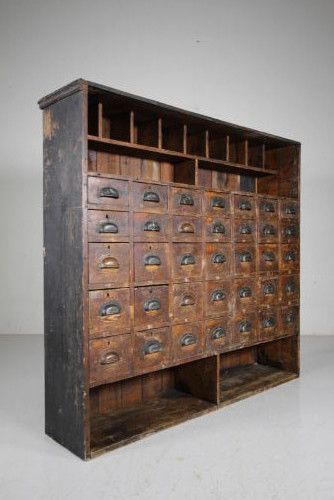
The versions most frequently met on this page include tall pine banks of drawers, pitch pine plan chests, and multi-drawer shop fittings from Victorian, Edwardian, and early twentieth-century periods. These practical storage solutions range from massive hardware and drapery counters to compact watchmaker and jeweller cabinets.
Construction and Materials
Construction relies heavily on durable timbers such as pine, oak, mahogany, fruitwood, and pitch pine, paired with structural iron, steel, and brass fittings. Workshops and factories built these units for endurance rather than display, utilising solid wood carcases and robust drawer framing.
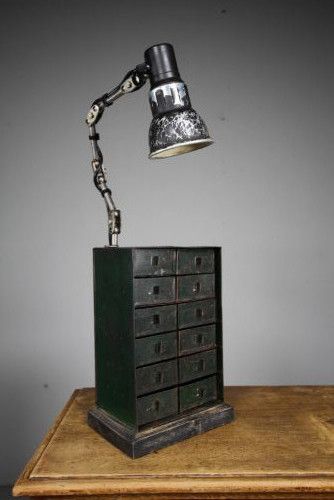
Surface finishes include original paint schemes like light green, natural waxed wood, and patinated metal surfaces that show decades of working use. Hardware elements such as brass handles, label holders, and iron brackets serve as both functional components and mechanical decoration.
Industrial Chest of Drawers Retail Price Guide 2026
Typical asking prices for industrial chest of drawers among the pieces listed under this phrase on Sellingantiques today, from the lower quarter to the upper quarter. They describe what is for sale here now, not the wider market.
Some nineteenth-century drawers still retain faint traces of haberdashery dust and forgotten ironmongery pins deep in their corners.
Quality and Proportion
Quality in these pieces is dictated by the integrity of the original construction, the retention of authentic hardware, and the scale of the drawer formation. Superior examples preserve their original working brass handles, painted surfaces, and maker stamps without intrusive modern restoration.
The complexity and size of the drawer bank also influence the character, with extensive multi-drawer configurations or patent locking mechanisms commanding greater interest. Honest wear from active trade adds visual depth, provided the underlying timber and jointing remain sound and unaltered.
D Napier and Sons·Luxmore of Ilfracombe
The Industrial Chest of Drawers Glossary
- Haberdashers drawers
- A multi-drawer cabinet originally utilised in retail drapery shops for storing ribbons, threads, and small garments. These units typically feature numerous glass-fronted or pull-out shallow drawers.
- Plan chest
- A wide, shallow chest of drawers designed specifically for storing architectural drawings, maps, and large blueprints flat. They appear frequently in pine or mahogany from the nineteenth and early twentieth centuries.
- Bank of drawers
- A large cabinetry unit containing a high density of individual drawers arranged in vertical and horizontal rows. They served commercial and industrial workshops for sorting components.
- Pitch pine
- A resinous, durable softwood derived from North American pine species, frequently utilised in Edwardian and Victorian utilitarian furniture for its strength and distinct grain.
- Ironmongers drawers
- Commercial storage chests originating from hardware and ironmongery stores, built to withstand heavy metal fixings and small tools.
Industrial Chest of Drawers: Frequently Asked Questions
What trades used these chests?
These multi-drawer chests served a wide variety of trades, including drapers, haberdashers, watchmakers, jewellers, architects, and ironmongers. Each trade required specific configurations, from shallow glass-fronted compartments for retail goods to deep banks for hardware.
Over time, these pieces transitioned from commercial workshops into domestic settings where their compartmentalised storage proved equally practical for modern collections.
How do I date a piece?
Dating relies on examining the timber species, construction methods, and hardware styles present on the cabinet. Victorian and nineteenth-century pieces often feature hand-cut dovetails and heavy brass or iron pulls, while early twentieth-century examples incorporate patent filing systems or industrial steel elements.
Maker stamps, patent plates, and retailer labels embedded in the wood or metalwork also provide precise chronological markers for specific units.
Are original painted finishes common?
Original painted finishes appear on select shop fittings and workshop furniture, often surviving in tones like pale green or weathered industrial grey. These layers of paint accumulated through decades of commercial use and carry authentic workplace patina.
Preserved paint adds significant character to the piece, distinguishing working archive furniture from domestic items built later in simulation of the style.
How do I maintain the wood?
Maintenance requires simple cleaning with a dry or slightly damp cloth to remove dust without disturbing the historic wax or dry surface finish. Avoiding modern harsh chemical polishes preserves the natural patina accumulated over a century of use.
Keeping the furniture away from direct heat sources prevents the pine and oak timbers from splitting or warping over time.