
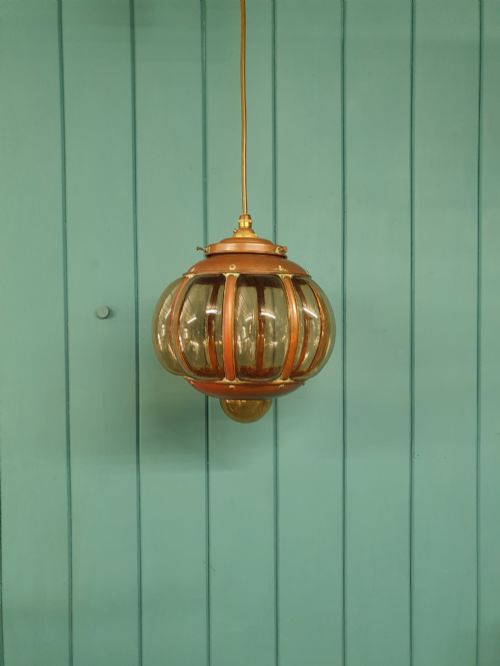


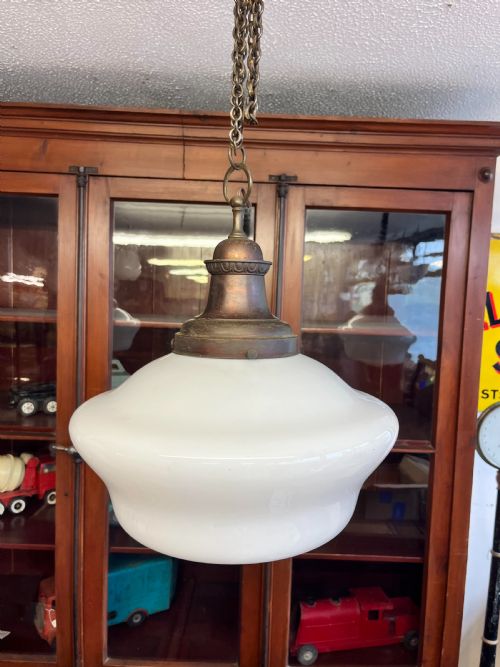

Industrial Brass Pendant Light
An industrial brass pendant light brings utilitarian strength to a room, combining rugged metalwork with focused illumination.
Industrial Brass Pendant Light
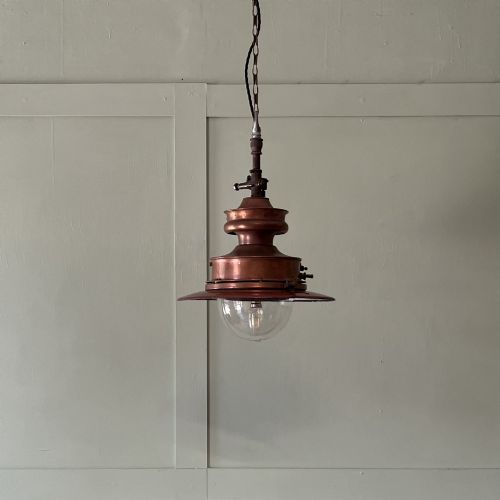
When you search for an industrial brass pendant light, you are looking at overhead fixtures designed for functional workspaces, factories, and railways. These lighting pieces cross several periods, appearing across Victorian, Edwardian, nineteen-twenties, and nineteen-thirties eras, as well as mid-century modern and early twentieth-century designs.
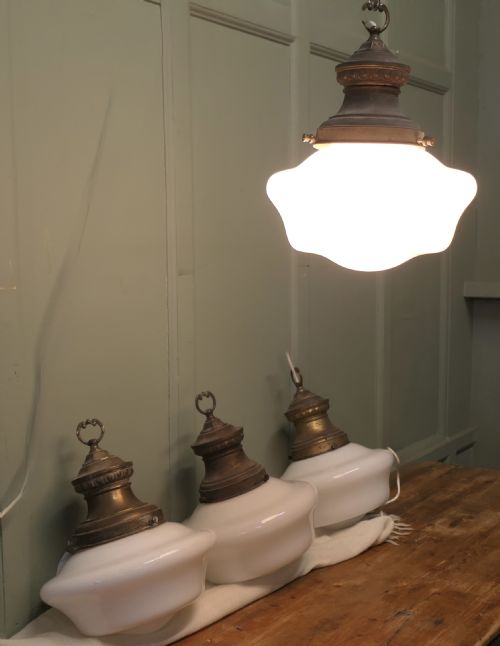
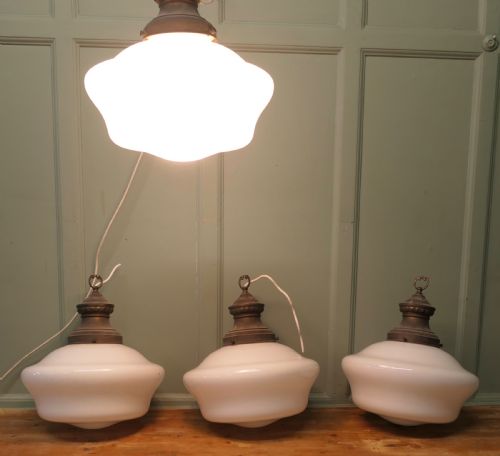
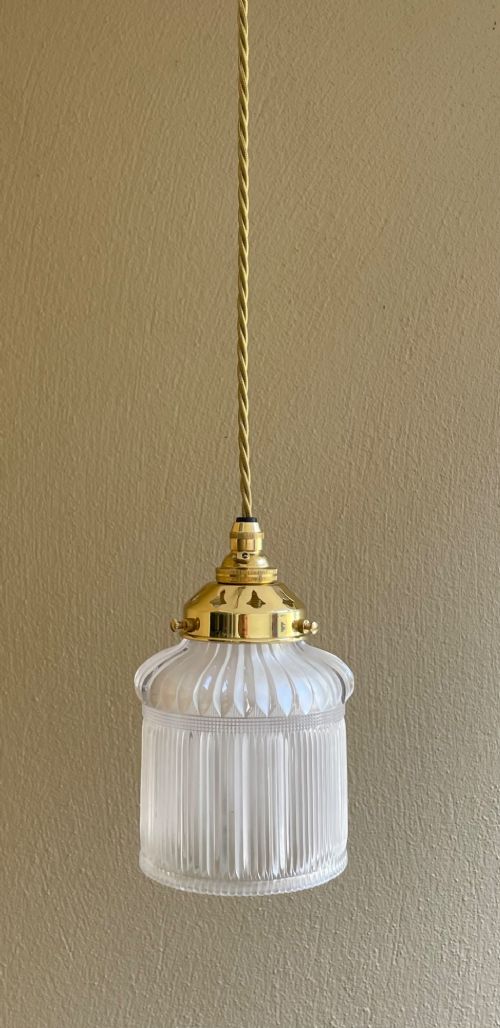
You will encounter various forms on this page, ranging from ceiling lights and hanging lanterns to chapel lights and bell pendants. Many examples integrate specialised shades, such as prismatic and opaline glass, alongside copper and metal constructions.
The aesthetic bridges rough utility and considered design, drawing on industrial, nautical, and art deco styles. Whether housed as a single large fixture or in sets of matching pendants, each piece serves as a direct link to functional historic lighting.
How they were made
Makers utilised durable metals like brass and copper to form the primary structure and housing of these hanging lights. These metals provided the necessary strength to withstand demanding environments in factories, railways, and maritime settings.
Glass elements were cast and moulded into specific functional shapes, including opaline, smoked, mercury mirrored, and prismatic glass. These varied glass types were engineered to diffuse or direct light effectively from a central bulb.
Chapel lights designed for quiet contemplation now find themselves cheerfully illuminating modern kitchen islands.
What varies in quality
Quality rests in the heaviness of the casting and the integrity of the metal components. Substantial brass and copper frames maintain their structural form better than lighter, pressed alternatives.
The sophistication of the glass shades marks another distinction. Thick opaline glass and complex double prismatic or mirrored finishes require greater skill in manufacture than plain panes.
The Industrial Brass Pendant Light Glossary
- Holophane
- A brand of scientific glass shade designed with prismatic ribs to shape and distribute light efficiently without glare. These moulded glass shades are frequently found paired with early twentieth-century metal fixtures.
- Opaline glass
- A milky, translucent white glass used to soften and diffuse illumination evenly across a space. This material was favoured in institutional and industrial settings for reducing harsh shadows.
- Prismatic glass
- Glass moulded with geometric ridges or prisms on the surface to bend and direct light rays. Double prismatic versions feature intricate patterns on both sides for enhanced optical performance.
- Mercury glass
- Double-walled blown glass silvered on the interior with a liquid mercury mixture, creating a reflective, mirrored appearance. It produces a shimmering, metallic glow when lit.
- Pendant light
- A solitary light fixture suspended from the ceiling by a cord, chain, or metal rod. These hanging lights were designed to cast direct task illumination over workspaces and tables.
Industrial Brass Pendant Light: Frequently Asked Questions
Where should I hang an industrial brass pendant light?
These fixtures suit spaces needing direct, focused overhead illumination, such as kitchen islands, dining tables, or hallways. Their utilitarian origins make them practical choices for rooms finished with honest, durable materials.
Ensure the hanging height matches the clearance needs of the room. Larger ceiling lights require higher ceilings to balance their physical presence.
How do I identify the period of a pendant light?
Dating relies on examining the materials, manufacturing techniques, and stylistic cues present in the metalwork and glass. Pieces from the Victorian and Edwardian eras often feature heavier copper and brass castings associated with railway and maritime use.
Later nineteen-twenties and nineteen-thirties examples introduce art deco influences and specific moulded glass shades like Holophane. Comparing the wiring channels, screws, and shade construction helps narrow down the decade of manufacture.
Are these lights suitable for modern electrical systems?
Most vintage pendant lights can be adapted for contemporary domestic wiring by a qualified electrician. The original metal holders and shade fitters generally accommodate standard modern bulb fittings.
It is important to check the internal wiring condition upon acquisition. Rewiring ensures the fixture meets current safety standards while retaining its historic exterior.