

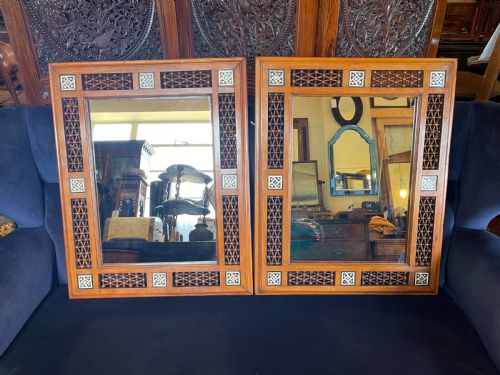


Indian Inlay Mirror
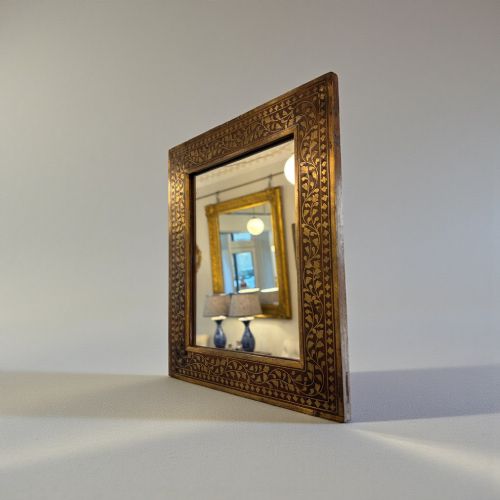
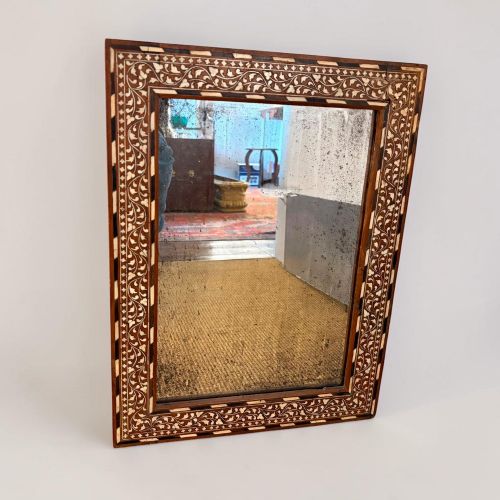
An Indian inlay mirror brings intricate bone, ivory, and brass detail into a room, offering tactile depth and rich pattern.
Indian Inlay Mirror
Stylistic influences in the listings cross between Anglo-Indian taste, Moorish revival, and Ottoman revival patterns. These variations reflect the diverse markets and workshops producing decorative furnishings during the period.
How they were made
Constructed from hardwoods like teak, shisham, walnut, and rosewood, these frames provide a sturdy dark foundation for complex surface decoration. Artisans shaped the timber before recessing delicate elements directly into the wood grain.
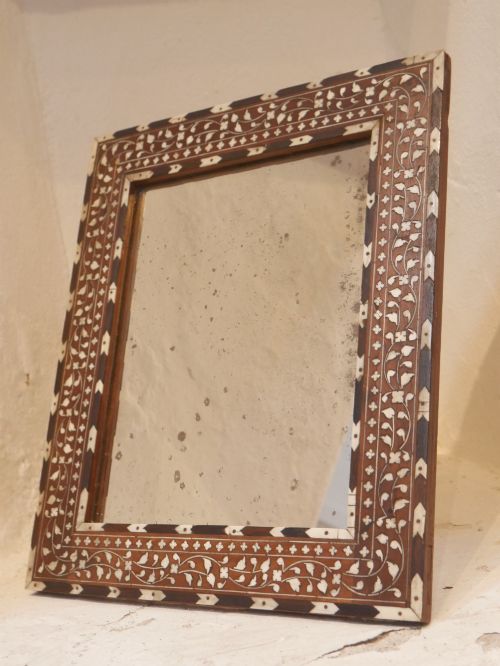
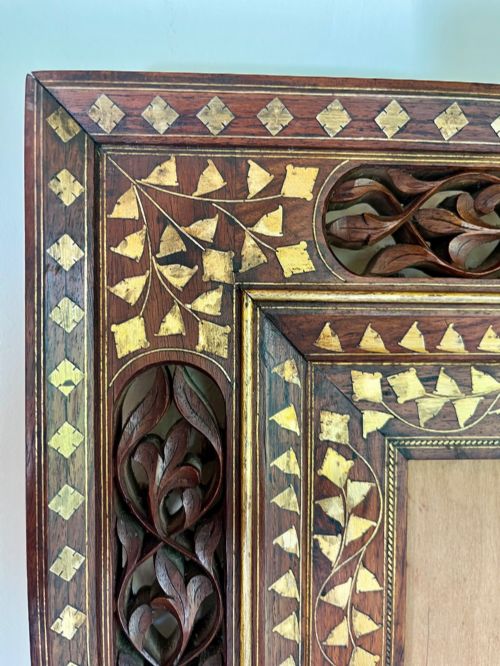
Surface embellishment relies on hand-cut bone, ivory, and brass wire pressed into intricate channels. Kashmiri pieces frequently employ pierced brass edges, while Hoshiarpur workshops specialise in dense floral bone and ivory inlay work.
Indian Inlay Mirror Retail Price Guide 2026
Typical asking prices for indian inlay mirror among the pieces listed under this phrase on Sellingantiques today, from the lower quarter to the upper quarter. They describe what is for sale here now, not the wider market.
Listings feature wall mirrors spanning the nineteenth and early twentieth centuries, utilising materials such as bone, brass, glass, and rosewood.
What varies in quality
The finesse of the surface pattern dictates the distinction between standard production and exceptional craftsmanship. Denser, uninterrupted bone or ivory placement combined with precise brass wirework indicates superior workshop output.
The condition of the timber foundation and the integrity of the fitted mirror glass also determine overall merit. Original glass panes and stable hardwood frames retain greater integrity than heavily restored examples.
The Indian Inlay Mirror Glossary
- Bone inlay
- A technique where small pieces of shaped bone are pressed and glued into carved recesses within a wooden surface to form decorative motifs. This method creates striking contrast against dark tropical hardwoods.
- Hoshiarpur
- A town in Punjab renowned for intricate woodwork and decorative inlay. Items from this region typically feature dense floral or geometric patterns executed in bone and ivory.
- Anglo-Indian
- A descriptive term for decorative arts produced in India during the British colonial period for export or local British residents. These pieces often combine traditional Indian craft techniques with Western furniture forms.
- Moorish Revival
- An architectural and decorative style incorporating elements of traditional Islamic architecture, such as horseshoe arches and intricate geometric strapwork. In mirrors, this translates to arched frames and complex interlaced borders.
- Shisham
- An Indian rosewood prized for its durability and rich grain variation. It serves as a primary structural timber for many nineteenth-century inlaid frames.
Indian Inlay Mirror: Frequently Asked Questions
How do I hang a heavy inlay mirror safely?
These frames utilise dense hardwoods and carry significant weight due to the wooden structure and inset materials. Secure the hanging hardware directly into wall studs using appropriate brackets rather than relying on standard plaster fixings.
Ensure the wire or D-rings attached to the back of the frame match the total weight of the mirror. Professional installation is often advisable for larger nineteenth-century wall pieces.
Where should I place an Indian inlay mirror?
Position the piece in a reception hallway or above a mantelpiece where adequate ambient light can catch the reflective brass wire and bone details. Avoid placing them in direct, harsh sunlight to protect the natural timber and organic inlay components.
Pairing the mirror with plain walls allows the intricate surface patterns to stand out without visual competition from surrounding decor.
How do I tell Hoshiarpur work from Kashmiri work?
Hoshiarpur pieces generally rely on extensive bone and ivory inlay arranged in dense floral or geometric compositions across the entire wooden frame. The focus rests heavily on contrasting light organic material against dark shisham or rosewood.
Kashmiri examples often feature distinctive pierced brass edges and metalwork integrated into the wooden structure. Examining the primary surface medium clarifies the specific regional workshop tradition.