



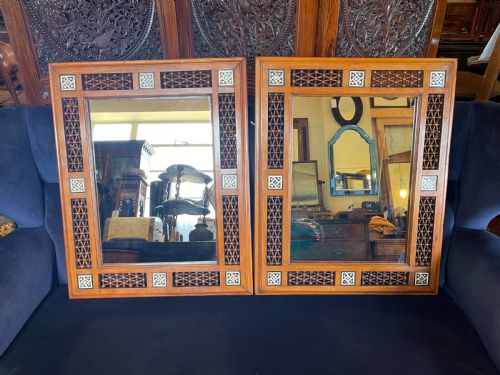


Indian Inlaid Mirror
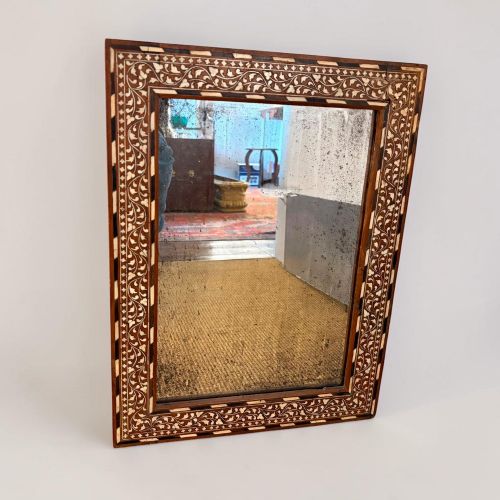
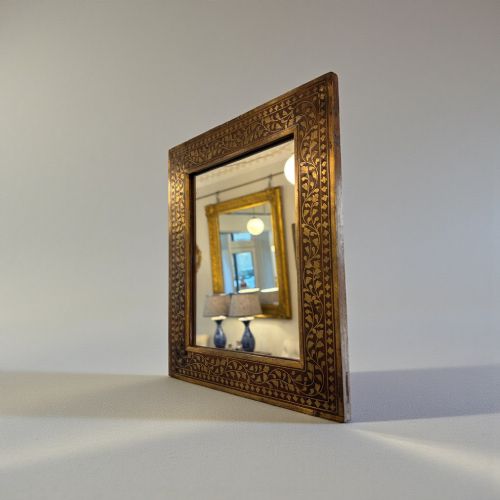
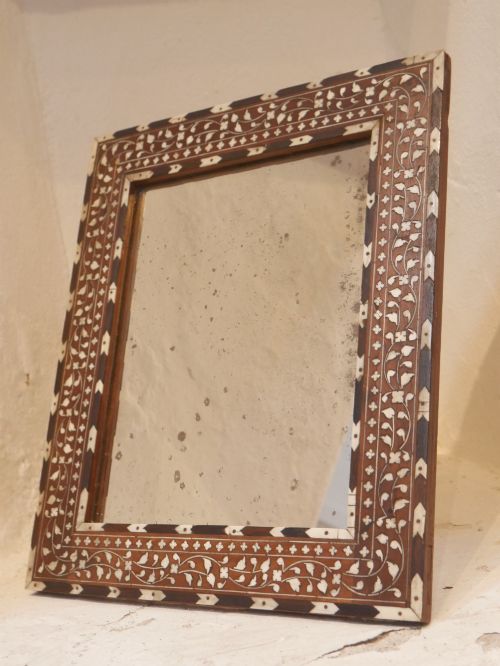
An indian inlaid mirror brings warmth and intricate geometric pattern to a room through traditional bone, ivory, brass and shisham construction.
Indian Inlaid Mirror
An indian inlaid mirror is a decorative wall glass framed in timber and embellished with detailed surface ornamentation. The pieces found here span the nineteenth and early twentieth centuries, capturing traditional craftsmanship from specific regions.
Most examples belong to the Anglo-Indian, Moorish Revival and Ottoman Revival styles. These wall mirrors display intricate surface work that reflects distinct cultural motifs and regional techniques.
The primary forms on this page are single wall mirrors and matched pairs. Buyers frequently encounter frames originating from Hoshiarpur and Kashmir alongside broader nineteenth century Anglo-Indian pieces.
Materials and Construction
Artisans built these frames using dense timbers including hardwood, teak, rosewood, walnut and shisham. These foundational woods provided a stable base for the meticulous application of decorative surface elements.
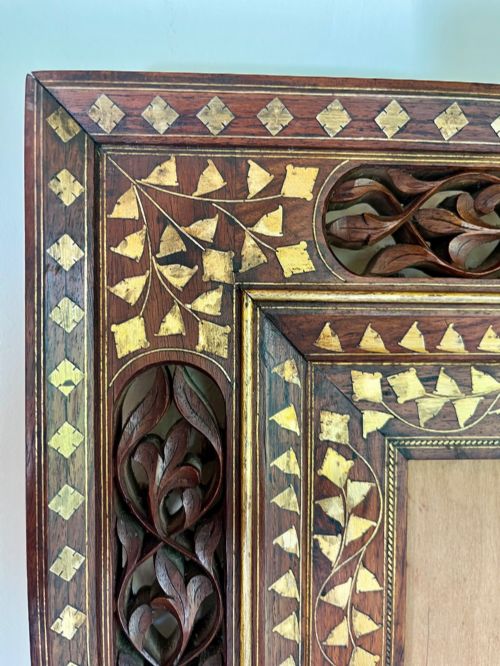
Surfaces feature contrasting inlays of bone, ivory and brass fitted directly into the timber. Pierced edge work and fine metal wire embellishments often accompany the intricate bone and ivory sections to create dense, textured patterns.
Indian Inlaid Mirror Retail Price Guide 2026
Typical asking prices for indian inlaid mirror among the pieces listed under this phrase on Sellingantiques today, from the lower quarter to the upper quarter. They describe what is for sale here now, not the wider market.
Intricate bone inlay work meant artisans spent hours breathing in bone dust while carving floral motifs by hand.
Assessing Quality and Execution
Quality rests entirely in the density and precision of the surface decoration. Superior examples display tightly fitted bone, ivory or brass inlays with no gaps in the surrounding timber channels.
The complexity of the carving defines the upper tier of these pieces. Pierced edge designs and balanced geometric schemes require advanced artisan skill compared to simple linear borders.
The Indian Inlaid Mirror Glossary
- Hoshiarpur
- A town in Punjab renowned for its distinctive wood carving and inlay work using bone and ivory. Pieces from this centre often feature dense floral and geometric motifs.
- Shisham
- A durable Indian rosewood frequently utilised as the primary timber base for inlaid furniture and mirror frames. It provides a rich dark ground that contrasts with lighter bone and brass decorations.
- Anglo-Indian
- A descriptive term for decorative arts created in India during the British period, combining British furniture forms with traditional South Asian craftsmanship. These objects blend European utility with local ornamental styles.
- Moorish Revival
- An architectural and decorative style that draws inspiration from North Asian and Spanish Islamic design elements. Mirrors in this style incorporate characteristic arches and complex geometric tracery.
Indian Inlaid Mirror: Frequently Asked Questions
What is the best way to clean bone and ivory inlay?
Maintenance requires a dry, soft cloth to remove dust from the intricate recesses of the carved surface. Moisture can loosen old adhesives holding the inlay in place.
Avoid chemical polishes and liquid cleaners entirely. Gentle brushing with a dry artist brush helps clear debris from tight crevices.
How do I date an antique Indian mirror?
Dating relies on examining the backing boards, the type of mirror glass and the style of the timber framing. Nineteenth century examples often show hand-beveled glass and traditional joinery.
Compare the specific inlay materials, such as bone versus synthetic substitutes, to help establish the period of manufacture. Regional traits recorded in the framing style also provide clear chronological markers.
Where should I place an inlaid mirror in my home?
These decorative pieces function effectively in hallways, living rooms and bedrooms as focal points. The reflective glass combined with detailed frames adds depth and texture to plain walls.
Position the frame away from direct sunlight and excessive humidity to protect the timber and delicate inlay work. Ambient room lighting enhances the contrast of the brass and bone elements.