



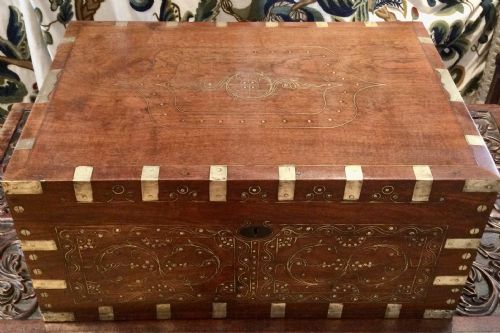


Indian Brass Inlay
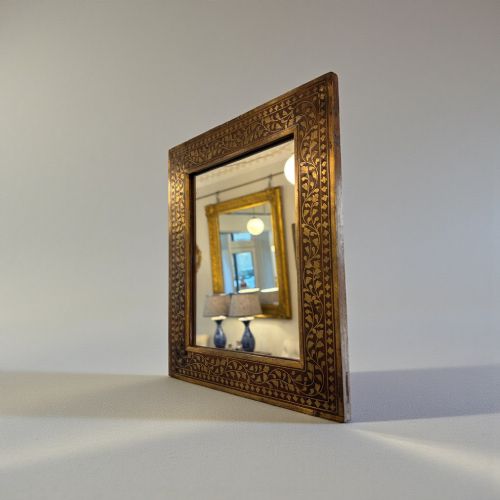
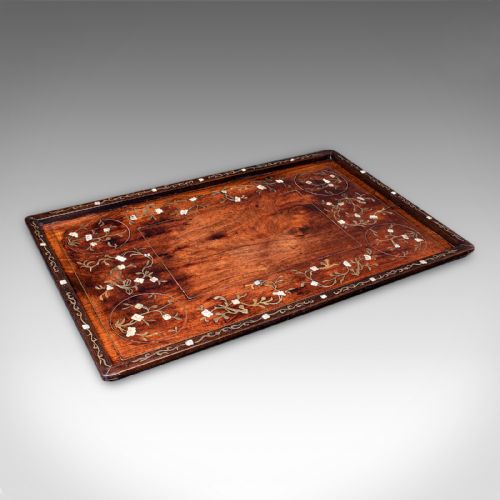
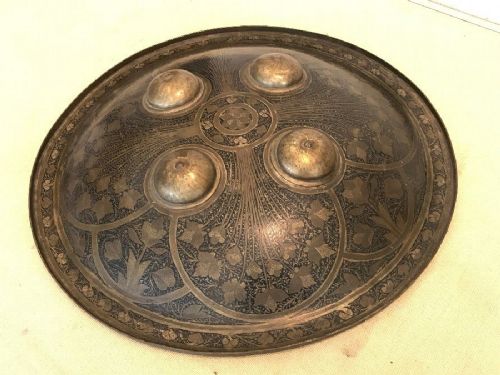
These Indian brass inlay pieces bring dense botanical patterns and striking metalwork into a room.
Indian Brass Inlay
When you search for Indian brass inlay, you encounter furniture and decorative objects adorned with meticulous metal wire and sheet insertions. These items span functional household objects like side tables and serving trays alongside mirrors and storage chests.
The objects frequently cross stylistic boundaries, including Anglo-Indian and Indo-Persian designs created across the nineteenth and early twentieth centuries. Tables, mirrors, and blanket boxes form the bulk of what appears.
Woods such as teak, padouk, and rosewood serve as the dark foundation for the pale gleaming metalwork. Pieces range from small occasional furniture to large dowry chests and firearms decorated with bone as well as brass.
How they were made
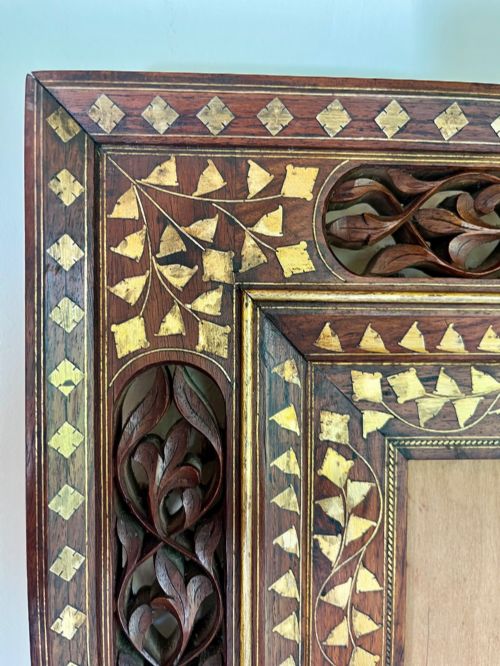
Artisans carved intricate geometric and floral channels into dense hardwoods like teak and rosewood before hammering thin brass wire or cut sheet metal securely into the recesses. Bone and mother-of-pearl also appear as complementary contrasting inlays alongside the brass.
Structural elements rely on traditional joinery suited to campaign furniture and heavy chests, while mirrors and tables feature pierced woodwork and detailed surface engraving. Iron components and copper or silver details occasionally supplement the primary brass decoration.
Indian Brass Inlay Retail Price Guide 2026
Typical asking prices for indian brass inlay among the pieces listed under this phrase on Sellingantiques today, from the lower quarter to the upper quarter. They describe what is for sale here now, not the wider market.
What varies in quality
The precision and density of the brass work distinguish finer examples from simpler work, particularly in the crispness of the floral and geometric motifs. Complete brass wire retention without missing sections marks a higher standard of preservation.
The choice and stability of the underlying timber, such as solid teak or padouk rather than secondary woods, dictate the structural integrity and weight of the piece. Masterwork execution shows in the seamless flush fit between the metal inlay and the surrounding wood surface.
The Indian Brass Inlay Glossary
- Anglo-Indian
- A design style produced during the British colonial period in India, combining European furniture forms with traditional Indian decorative techniques.
- Hoshiarpur
- A town in Punjab renowned historically for its intricate wood carving and extensive brass, bone, and wire inlay work on tables and mirrors.
- Campaign
- Portable furniture designed for military officers on the move, typically featuring folding mechanisms, brass corners, and recessed handles.
- Padouk
- A heavy, durable tropical hardwood with a reddish-brown hue utilised for nineteenth-century chests and campaign furniture.
- Matchlock
- An early type of firearm ignited by a burning match held in a clamp, often decorated with extensive bone and brass inlay.
Indian Brass Inlay: Frequently Asked Questions
How do I clean brass inlaid wood?
Dust surfaces gently with a soft, dry cloth to prevent dirt from lodging in the crevices around the metal work. Avoid liquid polishes that can seep into the wood or stain the surrounding grain.
Use a dry cotton swab to clear stubborn dust from intricate engraved brass channels. Preserving the natural dry patina of the hardwood keeps the contrast sharp against the metal.
Are these tables sturdy enough for daily use?
Most occasional tables and side tables serve well for holding lamps or decorative items rather than heavy loads. The joint construction reflects traditional craftsmanship suited to domestic environments.
Check the stability of the legs and the flatness of the top surface before placing heavy objects on them. Placing them away from direct heat sources prevents the timber from shrinking and loosening the inlay.
How do I date an inlaid chest?
Examine the wood species, construction methods, and the style of the brass decoration to determine the likely era of manufacture. Nineteenth-century pieces often utilise solid teak or padouk with dense geometric patterns.
Look at the interior linings, hinges, and fastening nails for clues regarding age and origin. Regional variations, such as work from Hoshiarpur, display distinct carving signatures typical of specific decades.
Where were Hoshiarpur items made?
These pieces originated from the Punjab region in northern India, where master carvers specialised in intricate surface ornamentation. Workshops there developed distinctive styles combining dense woodwork with metal wire.
Items from this centre frequently include folding tables, mirror frames, and small occasional furniture exported during the late nineteenth and early twentieth centuries. The signature densely packed floral patterns remain instantly recognisable.