

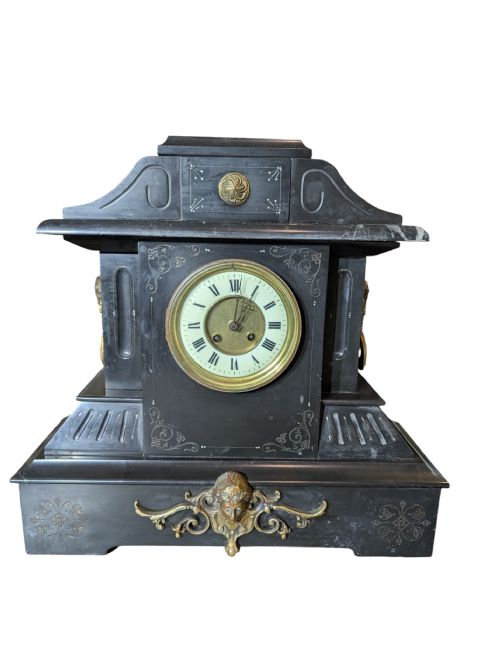


Incised Slate Clock
These heavy incised slate clock examples bring architectural presence and Victorian engineering to a mantelpiece.
Incised Slate Clock
An incised slate clock represents the heavier domestic timepieces of the Victorian era, spanning dates from eighteen sixty to eighteen ninety. These heavy objects combine architectural forms with functional clockwork to anchor a room.
The variations seen on this page focus on marble and slate constructions, often styled with Victorian Classical Revival details and High Victorian embellishments. Most examples function as mantel clocks or larger clock garnitures designed for prominent display.
Materials and construction
The primary structure relies on heavy black slate and marble, shaped into architectural blocks and cases. Craftsmen cut and polished the stone surfaces before adding incised decoration.
Incised Slate Clock Retail Price Guide 2026
Typical asking prices for incised slate clock among the pieces listed under this phrase on Sellingantiques today, from the lower quarter to the upper quarter. They describe what is for sale here now, not the wider market.
Materials across the listings include black slate, marble, brass, glass, enamel, and malachite.
Judging the quality
Quality rests in the precision of the stone cutting and the complexity of the inlaid materials. Simpler slate blocks stand apart from heavily inlaid marble pieces featuring contrasting geometric or floral motifs.
The integration of matching garnitures and the crispness of the incised lines indicate superior workshop production. Better examples display balanced proportions across large block marble bodies.
The Incised Slate Clock Glossary
- Garniture
- A set of matching decorative objects, typically a central clock flanked by two matching side ornaments for a mantelpiece.
- Mantel clock
- A portable clock designed to sit on the shelf above a fireplace. These domestic timepieces range from simple wooden boxes to monumental stone structures.
- Inlay
- A decorative technique where pieces of contrasting material are embedded into a recessed surface. This method creates geometric or floral patterns across stone cases.
- Enamel
- A glassy substance fused to metal surfaces under high heat. Clock dials use this material to provide a smooth, durable white background for numerals.
Incised Slate Clock: Frequently Asked Questions
How heavy is an incised slate clock?
These clocks are exceptionally heavy due to the solid black slate and marble used in their construction.
Buyers need a sturdy mantelpiece or shelf capable of supporting significant stone weight safely.
What periods do these clocks date from?
The available pieces date from the nineteenth century, specifically between eighteen sixty and eighteen ninety.
This places them firmly within the Victorian era and the High Victorian design movement.
Do these clocks come with side pieces?
Some listings include clock garnitures, which consist of the main clock alongside matching side ornaments.
These sets were designed to create a balanced arrangement across a fireplace mantel.
What materials decorate the stone cases?
Makers utilised brass mounts, glass dial covers, and coloured stones such as malachite for inlay work.
Enamel appears on the clock faces to provide a clean surface for the numbers.