








Impressionist Woodland Landscape Art
Impressionist woodland landscape art captures dappled light and natural scenery through loose brushwork, offering buyers a serene window into natural rural environments.
Impressionist Woodland Landscape Art
Buyers seeking impressionist woodland landscape art encounter oil paintings, watercolours, and pastels spanning the nineteenth century through the mid-twentieth century. The selection ranges from Victorian and Edwardian British scenes to French naturalist works and mid-century interpretations.
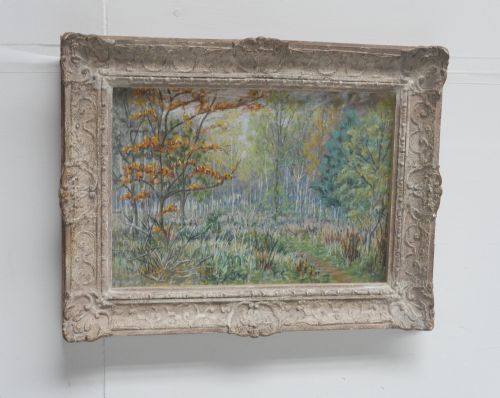
The most frequent pieces on this page are oil paintings on canvas or wood panels depicting trees, wooded paths, and country lanes. These works often originate from British and French regional traditions, reflecting diverse local landscapes from Yorkshire river valleys to French forests.
Materials and methods of construction
Artists painted primarily with oil paint or watercolour applied to canvas, wood panels, gesso grounds, or paper supports. Gold leaf occasionally frames or enhances the presentation of these works.
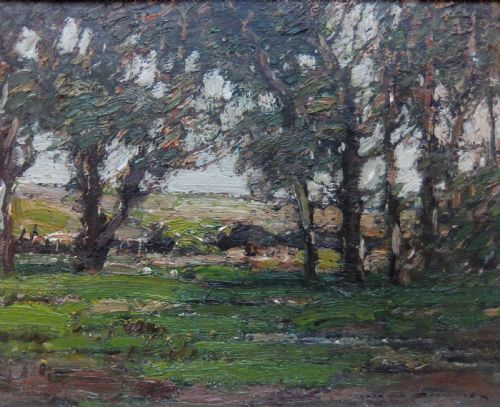
Brushwork focuses on capturing atmospheric effects rather than botanical precision, utilising layered pigments to build depth in foliage, water, and shadow. Canvases are frequently stretched over wooden frames, whilst watercolours utilise paper supports.
Impressionist Woodland Landscape Art Retail Price Guide 2026
Typical asking prices for impressionist woodland landscape art among the pieces listed under this phrase on Sellingantiques today, from the lower quarter to the upper quarter. They describe what is for sale here now, not the wider market.
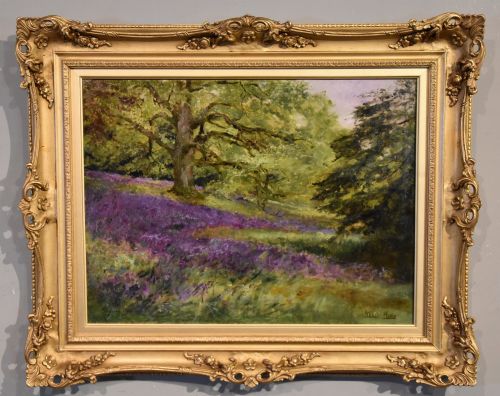
Several woodland scenes specifically capture bluebells and fairy woods, proving that nineteenth-century artists were just as susceptible to woodland enchantment as modern walkers.
Distinctions in quality
Quality rests in the handling of light and atmosphere rather than the mere recording of botanical detail. Superior works demonstrate a confident modulation of tone that suggests movement and air within the woodland canopy.
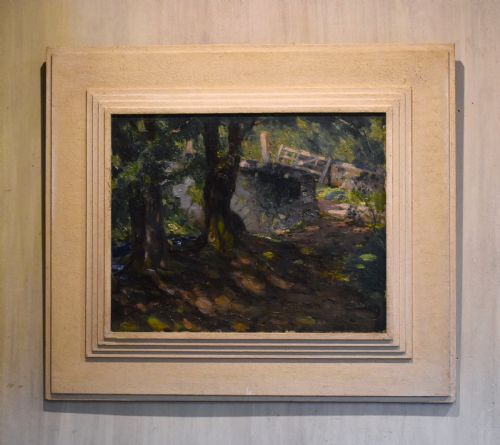
The handling of the medium distinguishes standard decorative paintings from masterworks. Strong compositions manage complex shadows and dappled sunlight with purposeful, expressive brushstrokes that give the wooded scene vitality.
Paul Désiré Trouillebert·Henri Joseph Harpignies·Thomas Bromley Blacklock·Owen Bowen·Ernest Higgins Rigg·Herbert Royle·Hans Kappel Øvre·Charles Edmond Rene His
The Impressionist Woodland Landscape Art Glossary
- Barbizon School
- A French art movement of the mid-nineteenth century focusing on realism in landscape painting, emphasising direct observation of nature. This group heavily influenced later impressionist approaches to woodland scenery.
- Gesso
- A plaster-like mixture applied to wood panels or canvases to prepare a smooth surface for painting. It provides a stable white ground that helps reflect light up through oil layers.
- Pastel
- A dry painting medium consisting of powdered pigment and a binder rolled into sticks. Pastel paintings on paper offer immediate, vibrant colour application without drying times.
- Impressionism
- A nineteenth-century art movement characterised by relatively small, thin, yet visible brush strokes and an emphasis on accurate depiction of light. Artists working in this style prioritize transient atmospheric effects.
Impressionist Woodland Landscape Art: Frequently Asked Questions
What defines an impressionist woodland painting?
These works focus on capturing transient effects of light filtering through trees rather than strict botanical accuracy. Painters utilise visible brushstrokes and luminous palettes to convey the atmosphere of a forest or lane.
The style prioritises mood and natural illumination, often depicting specific locations such as British river valleys or French country paths during different seasons.
How do I care for antique oil paintings?
Keep paintings away from direct sunlight, extreme temperature fluctuations, and high humidity to protect the canvas and oil pigments. Dust surfaces gently with a soft, dry brush without applying pressure.
Avoid using water or chemical cleaners on the painted surface or gesso frame. Professional conservators should handle any deep cleaning or canvas repairs.
How can I date a landscape painting?
Examine the materials used, such as the type of canvas weave, stretcher frames, and ground preparation like gesso. Signatures, framing styles, and artist biographies provide reliable chronological markers.
Stylistic shifts also offer clues, moving from Victorian academic precision toward looser twentieth-century impressionist brushwork and mid-century palettes.
Where were these woodland scenes typically painted?
Artists often worked out of doors directly in nature, capturing rural spots in Britain, France, and Canada. Common subjects include bluebell woods, riverbanks, and shaded country lanes.
Regional artist colonies in places like Yorkshire or French rural provinces frequently inspired repeated visits to specific woodland environments.