





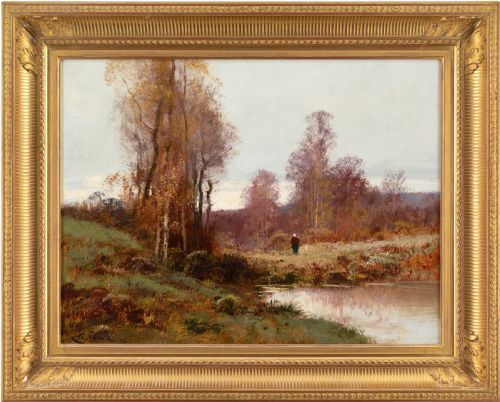
Impressionist Rural Canvas
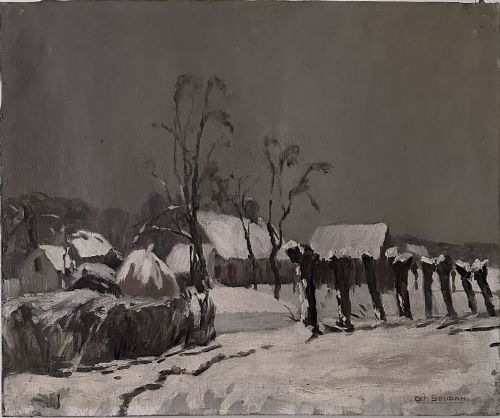
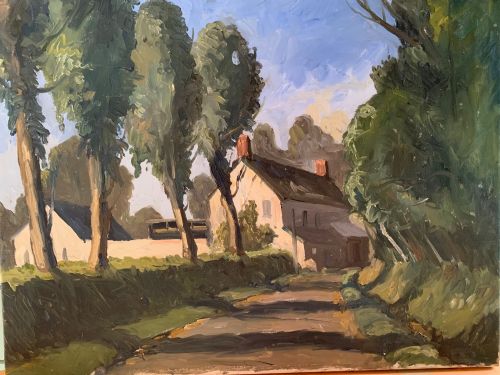
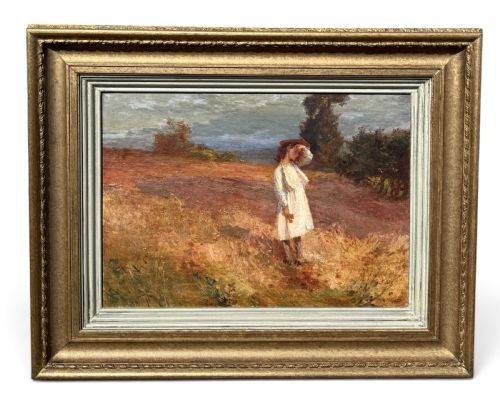
An impressionist rural canvas captures fields, rivers and farmsteads through loose brushwork and natural light.
Impressionist Rural Canvas
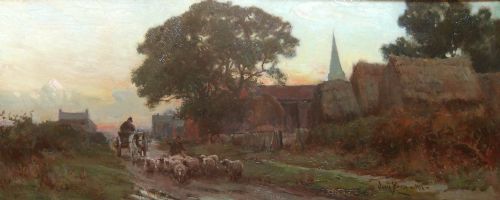
An impressionist rural canvas presents pastoral scenes, agricultural labour and quiet country villages painted in oils. Buyers exploring this category encounter works depicting hayfields, grazing sheep and woodland paths executed during the late nineteenth and early twentieth centuries.
The selection ranges from British regional landscapes and Scottish views to French provincial scenes and French School compositions. These oil paintings record rural life and topography through the distinct lens of Impressionism and Post-Impressionism.
Materials and construction
Artists painted primarily with oil paint on stretched canvas, often housed within timber frames finished in gilt wood or gesso. The physical support consists of woven textile primed to receive oil pigments applied with brushes or palette knives.
Makers utilised the medium to build texture and capture shifting daylight across landscapes, farmyards and riverbanks. The combination of canvas, oil and occasionally carved wood frames constitutes the standard physical form of these artworks.
Impressionist Rural Canvas Retail Price Guide 2026
Typical asking prices for impressionist rural canvas among the pieces listed under this phrase on Sellingantiques today, from the lower quarter to the upper quarter. They describe what is for sale here now, not the wider market.
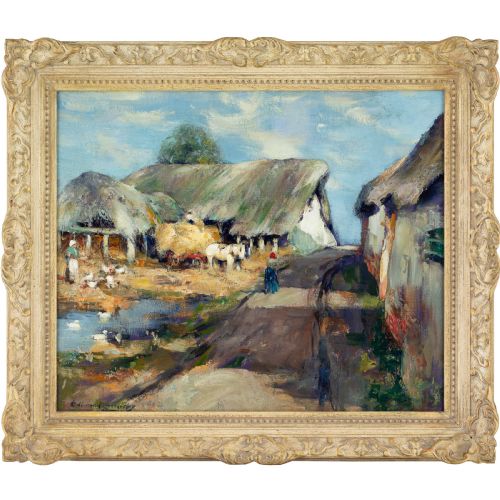
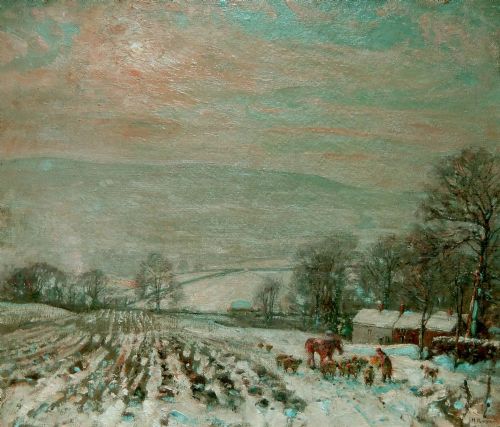
Several canvases faithfully record the quiet presence of horses, sheep and domestic fowls sharing the rustic workload.
Distinctions in quality
Quality rests in the confidence of the handling and the fidelity with which the painter captures light and atmosphere. Stronger works demonstrate a sure command of tone and composition, rendering fields and figures with economy and precision rather than mere repetition.
The integration of the painted surface with the surrounding frame also marks the standard of a piece. Original gilt wood or gesso surrounds that complement the palette enhance the integrity of the surviving artwork.
Hugh Barry Scott·George Graham·Herbert Royle·Eric Brown·Ernest Higgins Rigg·Umberto Volpato·John Horace Hooper·Owen Bowen·Charles Clair·Harry Freckleton·Raimond Louis Lecourt·Reginald Grange Brundrit·William Greaves·Willem Anton Alexander Knip·Majorie Hoare·Frederick W Jackson·William Grant Murray·James William Booth·Ralph Dorrance·Lorenzo Headley·Helmut Reuter·Arthur Winter Shaw
The Impressionist Rural Canvas Glossary
- Canvas
- A heavy woven fabric used as a surface for oil painting. It is stretched tightly across a wooden frame before application of the ground and pigments.
- Gesso
- A plaster-like mixture applied to wood or canvas to prepare a smooth surface for painting or gilding. It provides a stable base for decorative frames.
- Impressionism
- A nineteenth-century art movement characterised by relatively small, thin yet visible brush strokes and an emphasis on accurate depiction of light. It prioritises open compositions and ordinary subject matter.
- Post-Impressionism
- A predominantly French art movement that developed from Impressionism, extending its limitations while retaining its use of vivid colours and thick application of paint. Artists reject strict naturalism in favour of expressive forms.
- Oil paint
- A slow-drying paint made of particles of pigments suspended in a drying oil, commonly linseed oil. This medium allows for rich blending and textured impasto work.
Impressionist Rural Canvas: Frequently Asked Questions
What subjects appear on these canvases?
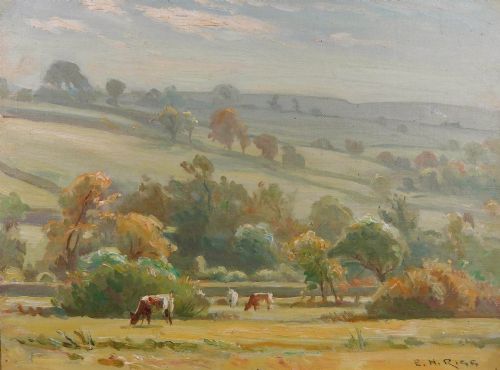
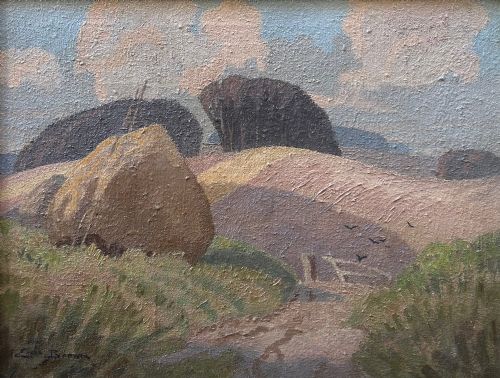
The canvases predominantly display rural subjects such as haymaking, farmsteads, rivers, livestock and village lanes. Painters recorded agricultural daily life and open country views across various regions.
Scenes range from Yorkshire valleys and Scottish highlands to French provincial courtyards. Each piece reflects the specific topography and rural routines observed by the artist.
How do I date an oil painting?
Dating relies on stylistic evidence, artist signatures, biographical records and the physical characteristics of the canvas and frame. Many works bear inscriptions or signatures directly on the front or reverse.
Comparative analysis of regional schools, clothing styles in figures and framing techniques helps narrow the decade of creation. Written documentation on the stretcher or frame provides additional chronological markers.
How should I display these paintings?
These works suit interior spaces that benefit from natural light, away from direct sunlight and excessive humidity. Proper placement protects both the oil pigment and the wooden or gesso frame.
Matching the frame to the room's character helps integrate the artwork into a home. Secure hanging hardware suited to the weight of the canvas and frame ensures safe wall mounting.
What defines a French School landscape?
A French School landscape reflects the specific aesthetic approaches and training characteristic of French academies and plein air painters. These works often emphasise atmospheric light and provincial rural architecture.
Artists working in this tradition employed lighter palettes and looser brushwork to capture Normandy or southern French countryside. The execution mirrors the broader shifts in European painting around the turn of the twentieth century.