

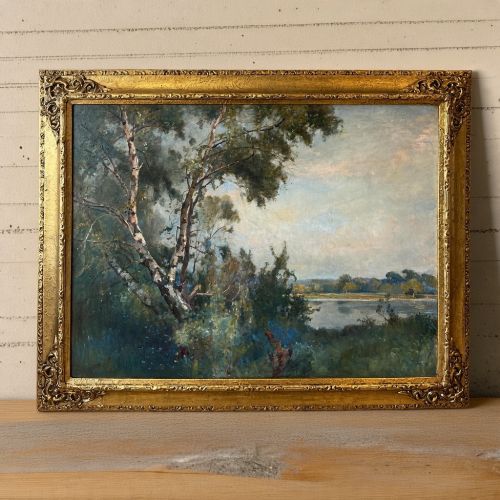
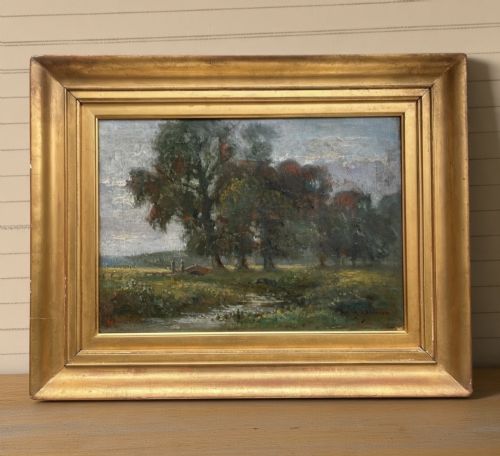


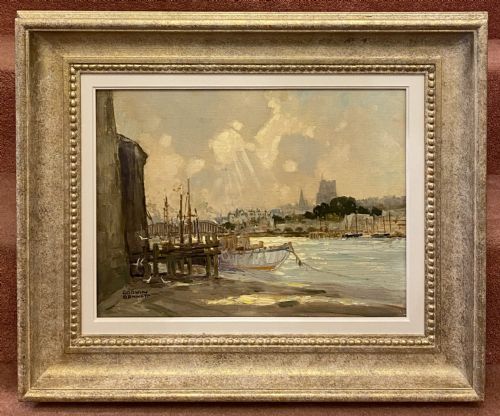

Impressionist River Scene Picture
An impressionist river scene picture brings water, light and atmosphere into a room through loose brushwork and lively colour.
Impressionist River Scene Picture
An impressionist river scene picture captures waterways, bridges, barges and rural banks across the nineteenth and twentieth centuries. The selection includes British, French and Canadian works spanning the Victorian era through the mid-century modern period. You will encounter oils on canvas and wood panel alongside pastels on paper under glass.
Makers represented range from regional British painters to French plein air artists working by the Loire and the Seine. Subjects stretch from Gloucestershire landscapes and Rochester to Parisian views and Canadian lagoons. Formats vary from panoramic canvases to intimate panel paintings.
How they were made
Artists built these works using oil paint on stretched canvas or prepared wood panels, capturing changing light outdoors. Others worked with pastel on paper to achieve softer textures in landscapes and bird studies. Canvases and panels sit within wood frames, often protected behind glass when executed in pastel.
Brushwork remains loose and visible rather than smooth, recording the immediate visual impression of water reflections and skies. Painters applied pigments directly to render the movement of rivers, canals and lakes without heavy preliminary blending.
Impressionist River Scene Picture Retail Price Guide 2026
Typical asking prices for impressionist river scene picture among the pieces listed under this phrase on Sellingantiques today, from the lower quarter to the upper quarter. They describe what is for sale here now, not the wider market.
The site listings span seven decades of the nineteenth and twentieth centuries, featuring oil on canvas, wood panel and pastel.
What varies in quality
Quality rests in the handling of light, brushwork energy and the conviction of the spatial composition. Works showing confident plein air observation stand apart from more rigid studio copies or generic topographical views. The integration of colour to render water and atmosphere defines the stronger examples.
The choice of support and framing also contributes to the overall character of the piece. Well-preserved surfaces retain their original pigment vibrancy without excessive retouching or structural damage to the canvas, wood or pastel paper.
Hubert Wellington·Ron Folland·Berthe des Clayes·Edmond Defonte·Godwin Bennett·Augustus William Ennes·Arthur Netherwood
The Impressionist River Scene Picture Glossary
- Plein air
- Painting outdoors directly from the subject to capture transient natural light and atmosphere. This method defined much nineteenth and twentieth-century landscape work.
- Oil on canvas
- Pigment suspended in drying oil applied to a woven fabric stretched across a wooden frame. It forms the primary medium for most historic paintings.
- Wood panel
- A flat wooden board used as a rigid painting support instead of fabric. Artists often selected panels for smaller outdoor sketches.
- Pastel
- A dry drawing medium composed of powdered pigment and a binder formed into sticks. Pastels produce velvety surfaces that require framing under glass.
- Post-Impressionism
- An artistic movement following impressionism that explored expressive colour and structure. It builds upon the loose brushwork of earlier landscape traditions.
Impressionist River Scene Picture: Frequently Asked Questions
How do I date an impressionist river painting?
Dating relies on stylistic clues, framing materials, artist signatures and any recorded biographical dates for the painter. Canvas types and stretcher construction also offer chronological indicators.
Compare the handling of light and pigment to dated works by the same maker or period. Written inscriptions on the reverse of the canvas or panel frequently confirm the year of creation.
Are pastels as durable as oil paintings?
Pastels consist of pure pigment held together by a minimal binder, making them physically delicate compared to oil paint. They require continuous protection behind glass to prevent smudging or atmospheric damage.
Oil paintings utilise drying oils that polymerise into a resilient paint film over time. While oils tolerate ambient environments better, both mediums benefit from stable indoor humidity and light levels.
What is the difference between canvas and panel works?
Canvas provides a flexible woven support that accommodates larger compositions and yields slightly under the brush. Wood panels offer a completely rigid surface that prevents cracking associated with flexing fabric.
Panels often indicate portable plein air studies painted directly on location. Canvases typically represent more finished studio compositions intended for formal exhibition.