
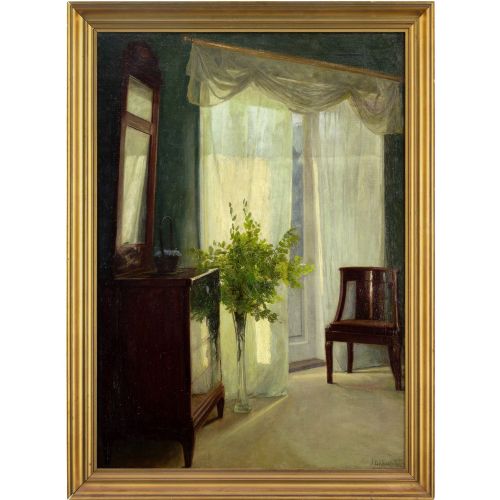


Impressionist Garden Scene Artwork
Impressionist garden scene artwork captures fleeting light and domestic flora on canvas or paper, offering buyers a bright window into early twentieth-century domestic landscapes.
Impressionist Garden Scene Artwork
An impressionist garden scene artwork brings together loose brushwork and natural daylight, focusing on walled gardens, artists' plots and sunlit doors. These works span from the Edwardian era through the mid-century, reflecting shifts in British and Scandinavian taste.
The pieces on this page appear primarily as oil paintings on canvas or board, alongside delicate watercolours on paper. Subjects range from named Yorkshire gardens and Parisian parks to anonymous rural retreats and floral compositions.
Buyers will encounter framed oils and watercolours that celebrate domestic horticulture and outdoor leisure. Each piece documents a specific moment in twentieth-century painting, from 1900 to the 1950s.
How they were made
Artists apply oil paint directly to canvas, wood or board to build textured surfaces that catch the light. Watercolours rely on fluid washes of pigment on paper to create luminous, translucent depictions of foliage and sunlight.
Makers occasionally incorporate mixed media or subtle gold leaf accents to enhance specific elements within the composition. Support structures vary from traditional stretched canvas to sturdy wooden boards chosen for durability outdoors or in the studio.
Listings feature works created between 1900 and 1950, executed in oil paint, watercolour and mixed media on canvas, paper and wood.
What varies in quality
Quality rests in the confidence of the brushwork and the artist's handling of natural light across botanical subjects. Superior examples demonstrate a sure command of tone, whereas weaker pieces struggle with depth and proportion in the foliage.
The strength of the provenance and the clarity of the composition elevate certain works above standard decorative pieces. Masterful handling of paint creates an immediate sense of atmosphere that lesser hands miss entirely.
John Lübschitz·Lilian Stannard·Owen Bowen·William Hatherell·Herbert Royle·Edgar Bundy·Hermoine Hammond·William Greaves
The Impressionist Garden Scene Artwork Glossary
- Oil paint
- A slow-drying medium made by mixing pigments with oils such as linseed, allowing artists to build rich, textured layers. This medium dominates the twentieth-century canvas works found here.
- Watercolour
- A paint consisting of water-soluble pigments used on paper to create transparent washes of colour. It offers a lighter, more immediate touch than oil.
- Board
- A rigid wooden or composite flat support used by artists in place of stretched canvas. It provides a firm foundation for plein air painting.
- Canvas
- Woven fabric stretched across a wooden frame to serve as a durable painting surface. It is the primary support for traditional oil paintings.
- Gold leaf
- Extremely thin gold beaten into sheets and applied to surfaces for decorative effect. It adds metallic highlights to selected areas of a composition.
Impressionist Garden Scene Artwork: Frequently Asked Questions
What defines an impressionist garden scene artwork?
These works focus on outdoor domestic spaces, floral plots and sunlit architecture rendered through loose, expressive brushwork.
They capture specific moments of daylight using oil or watercolour on canvas, paper or board between 1900 and the 1950s.
How do I care for these paintings?
Keep works on paper and canvas away from direct sunlight and damp environments to protect the pigments and supports.
Ensure stable indoor temperatures and consult a professional conservator before attempting any cleaning of oil surfaces or delicate watercolours.
Are these works painted outdoors?
Many Edwardian and mid-century painters worked directly from nature in plein air settings to capture immediate shifts in light.
Others developed their compositions in the studio using initial watercolours or observational sketches gathered in private and public gardens.
How are periods identified?
Dates rely on stylistic markers such as Edwardian dress, mid-century framing conventions and documented painting techniques.
Signatures, artist records and inscriptions on the reverse of the canvas or board provide further chronological context.